
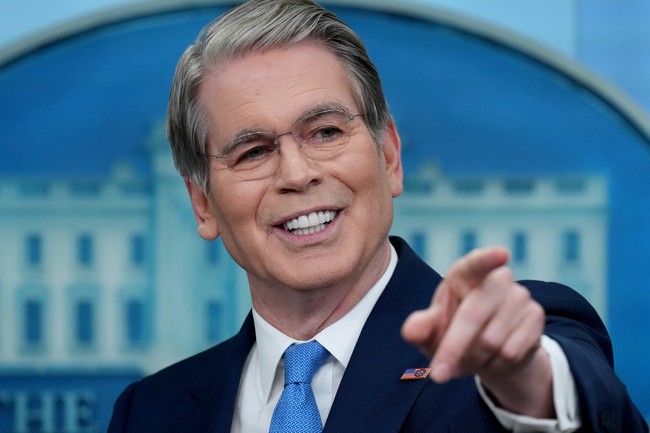
I’ll describe how Treasury Secretary Scott Bessent handled a contentious White House briefing in the press secretary’s absence, highlight his sharp responses to the press and to Gov. Gavin Newsom, note his comments about Iran’s economy, and preserve the key quotes and embeds from the original report.
With White House Press Secretary Karoline Leavitt on leave after welcoming a baby, other officials have stepped in for briefings and shown they can handle the heat. Marco Rubio and JD Vance previously filled in and navigated tough questions, and Treasury Secretary Scott Bessent continued that trend with a confident, controlled turn at the podium. The session covered Iran, domestic political theater, and a few pointed rips at legacy media and California politics. Bessent’s tone was calm, occasionally sardonic, and very much in line with a Republican emphasis on clarity and toughness.
On Iran, Bessent echoed President Trump’s assessment, warning that Iranian actions in the Strait of Hormuz would not be tolerated and describing the regime’s economic position bluntly. He posted on X that their economy was “now in free fall,” stressing the pressure the U.S. and partners are putting on Tehran. That line reinforced the administration’s message that pressure, not appeasement, is the path to changing hostile behavior. Such directness undercuts narratives that equivocate when American interests are at stake.
Bessent also demonstrated an ease with media theater, turning sniping questions into moments that highlighted the absurdity of some reporting. When a reporter fixated on his notes from a recent Cabinet meeting and asked why he had written “resilience” down, he didn’t stumble. He answered with a quick, humorous jab that exposed the performative nature of the question and prompted laughter in the room.
“So people could look over my shoulder, photograph them, and think they got a scoop,” he shot back, as everyone laughed. That line landed because it called out the theater without sounding defensive, showing how a short, witty reply can deflate a scripted hit. It also reminded the press corps that officials are not at their mercy, and that quick thinking matters when narratives are being spun.
The session moved beyond the White House bubble when a reporter raised a state-level proposal floated by California Governor Gavin Newsom, suggesting a 100 percent state tax on money paid out from a particular fund. Bessent didn’t waste time on euphemisms. His blunt assessment cut straight to the point and framed the proposal as politically out of touch with taxpayers and economic reality.
“There’s no cure for stupid,” Bessent said without missing a beat. That line spread quickly because it was short, vivid, and exactly the kind of plainspoken rebuke that resonates with people frustrated by policies that sound punitive rather than constructive. Coming from a senior administration official, the remark also underscored a broader view that policy debates should focus on results, not political stunts.
The brief exchange also highlighted how California political signaling often collides with market realities. Bessent referenced the fallout from a spate of California press moments, where messaging misfires only reinforced opponents’ points about taxation and higher prices. Pointing out those contradictions is a classic conservative move: show how rhetoric produces unintended consequences, especially when officials urge boycotts or penalties that end up proving the original economic argument.
Throughout the briefing, Bessent handled legacy media probes with a steady hand, redirecting attention to substance and policy rather than theatrics. He answered questions about potential legislation and about the administration’s economic posture with concise, forceful language that aimed to cut through spin. In doing so, he modeled an approach Republicans favor: focus on facts, call out performative politics, and keep messaging tight when the spotlight is on the administration.
https://x.com/RapidResponse47/status/2060067497110331422
The exchanges also offered a reminder about optics and messaging in politics. A well-timed retort or a calm factual correction can sway public perception far more than long-winded defenses. Bessent used humor and bluntness in equal measure to frame the debate on his terms and to make critics look pettily political. That combination of firmness and wit is useful when defending policy and exposing when opponents prioritize scorekeeping over solutions.
Bessent’s performance shows how a senior official can dominate a briefing without grandstanding, using sharp lines to deflate bad-faith questions and to emphasize the administration’s priorities. The result was a short, pointed session that underscored competence and pushed back against both media framing and outlandish state-level proposals. It’s the kind of communication style that Republicans often praise for being decisive, unvarnished, and effective.

Add comment