
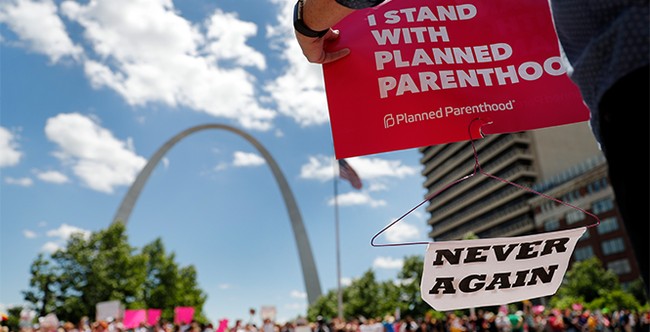
The 1st Circuit Court of Appeals has again intervened to stay a district court injunction that blocked a federal limit on Medicaid payments tied to certain abortion providers, most notably Planned Parenthood. This latest decision reverses a December preliminary injunction from Massachusetts District Judge Indira Talwani, siding with the administration’s view that the One Big Beautiful Bill provision is likely lawful and not an invalid retroactive condition on Medicaid funding.
Federal courts are familiar with fights over Medicaid conditions, but this dispute has moved fast and has drawn attention because the provision at issue, Section 71113, temporarily withholds Medicaid reimbursement to certain “prohibited entities” tied to Planned Parenthood. The initial flurry of litigation included multiple plaintiffs and separate injunctions, and the 1st Circuit has stepped in more than once to correct the district court’s approach. That pattern matters because it shows how appellate courts are weighing statutory text and precedent against emergency injunctions from trial judges.
The states that sued argued Section 71113 violates the Spending Clause by imposing new conditions on Medicaid dollars after states’ plans were already approved. They sought to enjoin enforcement of the provision while the legal challenge proceeds. The district court agreed and issued a preliminary injunction on December 2, but the Court of Appeals quickly granted a stay, finding the administration likely to succeed on the merits and that the balance of equities favored allowing enforcement of the statute for now.
The appeals panel made a concise legal point: Congress retained the power to alter or amend Medicaid, and the program has always been treated as subject to incremental changes that may require states to modify their plans. The court drew on prior case law and statutory context to reject the idea that this provision imposes an impermissible retroactive condition merely because states had previously received CMS approval for their plans. That statutory backdrop matters when courts decide whether a change is a permissible condition or an unconstitutional retroactive penalty.
[b]ecause Congress has reserved in the Medicaid Act the power to ‘alter’ or ‘amend’ the Medicaid program, states have had fair notice that Congress may make incremental changes to Medicaid…and the Medicaid program contemplates that participating states may have to amend their plan to conform to federal law, even after they have been approved.
The panel that issued the stay included Chief Judge David Barron, Judge Gustavo Gelpi, and Judge Lara Montecalvo, representing a mix of appellate appointees from different administrations. That composition undercuts any simple partisan reading of the decision: these judges are not fringe ideologues and yet they concluded the government showed a strong likelihood of success. Their short, focused opinion emphasized statutory interpretation and precedent rather than broad policy pronouncements.
There are a few practical takeaways. First, emergency relief at the district court level can be vulnerable when an appellate court perceives a clear statutory answer and controlling precedent. Second, defendants facing injunctions tied to federal statutory conditions should expect courts to scrutinize the Spending Clause framework and the extent to which Congress anticipated plan adjustments. Third, litigation over health-care funding often turns on fine points of statutory text and regulatory structure rather than headline political rhetoric.
Judge Talwani’s injunction was the latest step in a larger clash over federal policy and reproductive health providers, but the 1st Circuit’s move to stay it demonstrates how appellate courts can temper district court remedies when they believe the legal standard for preliminary relief has not been met. The court’s reasoning was narrow and technical, focusing on notice, congressional authority under the Medicaid Act, and precedent about conditional federal funding. That narrowness makes the stay easier to justify legally while still leaving open the underlying constitutional questions for full briefing and decision on the merits.
For the states and the District of Columbia that brought this challenge, the stay means the one-year prohibition on Medicaid reimbursements to specified “prohibited entities” will remain in effect while the case proceeds. For providers affected by the statute, the stay preserves the federal government’s ability to implement the funding restriction in the short term, heightening uncertainty about reimbursement and compliance obligations. That uncertainty is common in high-stakes statutory litigation that proceeds by stages: preliminary injunctions, stays, and ultimately merits rulings.
Expect further filings and possible full merits briefing as the case advances, since the constitutional question tied to the Spending Clause and the limits of federal conditions on state-administered programs is unlikely to disappear. For now, the 1st Circuit has put a hold on the district court’s order and supplied a crisp explanation for why the administration cleared the low bar for a stay: likelihood of success on the merits and alignment with established Medicaid precedent. The dispute is ongoing, and the legal arguments are moving up the ladder for a more definitive resolution.

Any pajama wearing judge that puts a TRO against the president needs to have skin in the game he must also submit a hundred thousand dollar bond of his own personal money on anything that prevents the Trump administration from going forward with a executive order from the president. This will stop all these fraudulent lawsuits that cost taxpayers millions of dollars to keep arguing these bogus claims in court. If the supreme court’s decision is to reverse the judges TRO he forfeited his personal property and money. This will stop these asshole judges from just signing anything put in front of them because there is no consequences for these judges to just slow down the process of making America move forward with a president’s decision. These rouge democrat judges need to be held accountable financially or removed from the bench immediately and find out who is funding these corrupt judges. Time to start investigating these corrupt judges and find out what’s buried under the sheets. Hundreds if not thousands of them have skeletons in their closets and it’s time to expose all of the democrats corruption. The American people voted for Trump and his agendas not some schmuck of a judge.