

Checklist: Clarify media claims about where were killed, report official rebuttals and Pentagon comments, reproduce key quoted statements exactly, remove source links and credits, and keep the focus on Operation Epic Fury and U.S. force protection.
The media erupted Monday with sharp, specific claims about the location where were killed during Operation Epic Fury, and questions immediately followed about how well that site was defended. Two major outlets described the site as makeshift and suggested its defenses were inadequate, even though officials warned families first and withheld detailed location information for 24 hours. That sequence set off a public debate over reporting standards, force protection and whether the initial descriptions were fair.
https://x.com/CENTCOM/status/2028576582445437039
CNN named a precise location in Kuwait and tied the fallen to a particular command, despite CENTCOM’s guidance about waiting until families were notified before releasing particulars. The network and another outlet used phrases that painted the site as improvised, and those descriptions circulated quickly on social platforms. The shorthand wording fed into a narrative that American troops were operating in exposed, ramshackle conditions rather than in hardened positions.
CBS characterized the site as “makeshift office space” in a report that cited three unnamed U.S. military officials. The story included the line, “The first American service members to die in the U.S.-Israeli war with Iran were killed in an apparent Iranian drone attack on a makeshift office space in Kuwait, three U.S. military officials with direct knowledge of Iran’s attack told CBS News.” Later in the same report, CBS itself noted that a triple-wide trailer used for offices is “a common setup at U.S. bases abroad,” which complicates the initial framing.
Officials from the Department of War pushed back sharply against that portrayal, calling the reporting wrong and misleading. Assistant Secretary of War Sean Parnell issued a direct rebuttal that insisted the facility was a fortified Tactical Operations Center, not an improvised office. His statement emphasized both physical protections around the site and the broader defensive posture in the region.
"This “reporting” from CBS is not true.

A Tactical Operations Center is not a “makeshift office space.” The secure facility was fortified with 6-foot walls.

Here are the facts:

1. We have the most extensive Air Defense umbrella in the world over the Middle East right now and control of the skies is increasing with every wave of airpower. The Iranian Navy has been devastated, and our military is dominating.

2. Every possible measure has been taken to safeguard our troops — at every level. The Department is prepared for this engagement and has hardened our defenses. We’ve moved a significant number of our troops off the X and will always protect our bases and people from a significantly weakened Iran.

We will continue fighting in a way that honors our six fallen: no apologies, no hesitation. Epic fury for them and for every American lost at the hands of Iranian radicals.
At the Pentagon briefing, Secretary of War Pete Hegseth explained that even hardened sites can sometimes be struck when a weapon penetrates layered defenses. He described the incident in plain terms and reminded listeners that air defenses intercept most threats but not every single one. His comment underscored the reality of high-end conflict: well-prepared positions can still be vulnerable to a weapon that “gets through.”
"You have air defenses, and a lot's coming in, and you hit most of it. Every once in a while, you might have one, unfortunately, we call it a squirter, that makes its way through. And in that particular case, it happened to hit a tactical operations center that was fortified, but these are powerful weapons."
CBS and CNN quoted anonymous sources who said the structure’s perimeter protections were typical for overseas bases but would not stop overhead strikes. Those anonymous descriptions focused on concrete barriers and T-walls, noting their utility against vehicle-borne threats while questioning effectiveness versus aerial munitions. Officials countered by stressing that air defense systems and site hardening are part of a comprehensive approach and that planning aimed to mitigate multiple types of attack.
Opponents of the media narrative argue the emphasis on “makeshift” undercuts public confidence in the Department of War and unfairly suggests negligence. Supporters of the reporting maintain that anonymous sourcing can reveal important gaps and that the public deserves scrutiny when servicemembers die. The tension between operational security, timely reporting, and public accountability is playing out in real time as authorities continue to brief families and the American people.
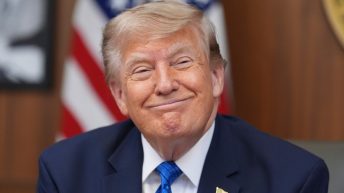
One paragraph in circulation quoted a notable presidential remark about the fallen but was originally presented as a link; that line is now being shared plainly: “Trump: ‘As One Nation, We Grieve For the True American Patriots Who Have Made the Ultimate Sacrifice'”. The comment reflects the national-scale response and the political stakes attached to how the deaths are described.
The conversation has also raised questions about past decisions on protective systems and how force posture evolved after previous withdrawals and repositionings. Critics pointed to earlier gaps in asset disposition and logistics that, they say, left certain capabilities thin in key moments. Officials insist current deployments and defensive layers are robust and are being continuously refined to respond to Iranian threats.
All sides agree on the human cost: six Americans died and families deserve clear answers delivered with respect and discretion. The dispute now centers on labels and context: were the reports fair and accurate, or did they rush to a judgment that undercuts the complexity of modern base defense? That debate will shape how future incidents are covered and how the public understands the risks U.S. forces face overseas.
Editor’s Note: For decades, former presidents have been all talk and no action. Now, Donald Trump is eliminating the threat from Iran once and for all.
Add comment