
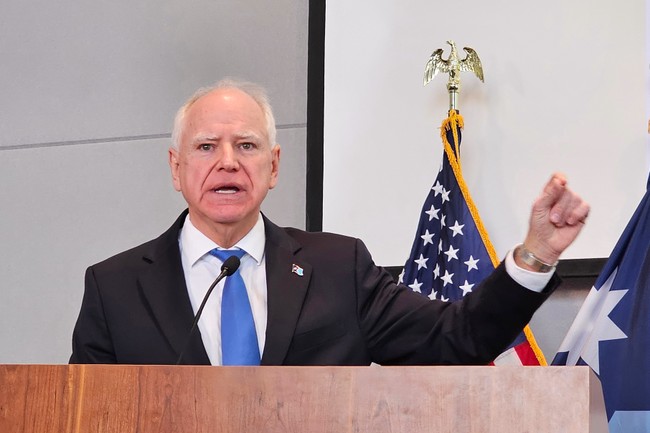
This article reports on the fallout from a viral video showing apparently empty daycare centers in Minnesota and the defensive statement issued by Governor Tim Walz’s office, outlining the claims, public reaction, investigation steps, and political pushback.
The governor’s spokesperson pushed back late Sunday after a long-form video surfaced showing multiple childcare sites that appeared deserted despite being licensed and funded. The footage raised urgent questions about state oversight, contract payments, and how millions in taxpayer dollars were allocated to programs with few or no children present. From a Republican perspective, the scene looks like a failure of oversight and accountability that demands immediate answers.
Walz’s office told reporters that the administration has “worked for years to crack down on fraud and ask the state legislature for more authority to take aggressive action,” and it listed hires, prosecutions, and program closures as evidence. “The governor has worked for years to crack down on fraud and ask the state legislature for more authority to take aggressive action,” the spokesperson said. “He has strengthened oversight — including launching investigations into these specific facilities, one of which was already closed.”
The statement continued that the governor “hired an outside firm to audit payments to high-risk programs, shut down the Housing Stabilization Services program entirely, announced a new statewide program integrity director, and supported criminal prosecutions.” That reads like a checklist meant to reassure the public, but critics say it does not explain how so much money reached facilities with no visible services. Republicans will argue that words alone aren’t enough; independent audits and prosecutions need to follow promptly and transparently.
Walz tried to shift the narrative by posting positive rankings for Minnesota on X, highlighting safety, jobs, and quality-of-life metrics as proof of his record. The post touted Minnesota as “#8 state for safety. #5 state to live in. #3 state for jobs. #2 state to raise a family, and #2 state to retire,” and the governor added, “We’ve made progress, but there’s more to do to deliver security, opportunity, and freedom to every Minnesotan. I won’t quit fighting until we’re #1.” That message landed badly when the viral video painted a different picture for taxpayers.
The independent videographer behind the 42-minute exposé has now seen tens of millions of views, and his footage shows multiple apparently empty childcare centers along with other licensed providers. One of the most striking images was a daycare sign reading “Quality Learing Center” on a building licensed to serve up to 99 children. That center reportedly received millions in federal funds in recent years, a fact that has angered citizens and lawmakers across the aisle.
The video prompted national responses from public figures and lawmakers. Elon Musk demanded , while Vice President JD Vance described the situation as a “of the immigration fraud”. House Majority Whip Tom Emmer (MN-6) went public with a pointed question about accountability and spending: “4 million dollars of hard-earned tax dollars going to an education center that can’t even spell learning correctly. Care to explain this one, Tim Walz?” That direct line of questioning reflects a broader Republican demand for accountability.
This controversy sits on top of broader allegations tied to social services fraud in Minnesota, where some investigations and reports suggest large-scale abuses that may have cost taxpayers billions. Accusations include sophisticated schemes redirecting public benefits and, in some claims, funneling money beyond state lines. Republicans see this as a warning about weak oversight in programs that touch vulnerable families and public funds alike.
Walz’s damage-control messaging reads like a familiar playbook: emphasize reforms, point to investigations under way, and highlight unrelated positive statistics. That approach can slow political momentum for critics, but it won’t erase the visual impact of the video or the anger of taxpayers watching government pay for services that appear not to exist. For Republicans, the key questions remain: who signed off on payments, who audited those disbursements, and when will independent investigators produce testable, public results?
Until investigations produce clear, documented findings and accountability measures, criticism will keep building. Republicans will press for criminal probes where warranted, stronger legislative oversight, and tighter rules on payments to high-risk programs. The viral footage changed the conversation from theory to a vivid, taxpayer-focused grievance that demands more than talk.

Add comment