
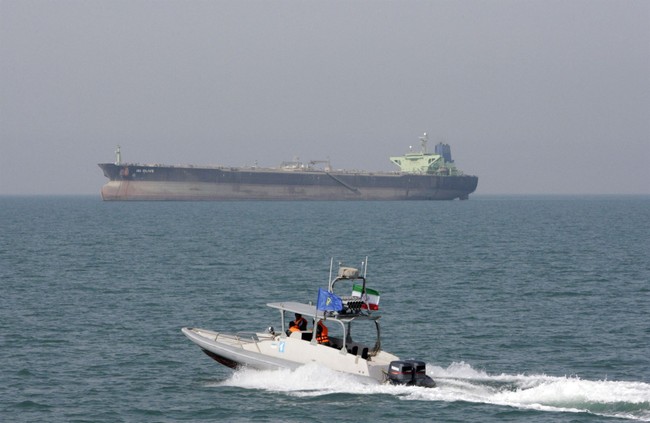
The United States has imposed a blockade on Iranian ports and Tehran has responded with threats and a handful of fast attack boats. This piece looks at what those threats actually mean, why speedboats are a poor substitute for a real navy, how the U.S. compares in force and readiness, and why treating these boats like cartel smuggling vessels makes sense from a tactical standpoint.
Iran’s naval posture today is a shadow of what it once pretended to be, and the country’s recent bluster reflects desperation more than capability. The bulk of Iran’s larger surface fleet has been effectively neutralized, and what remains are small, fast craft better suited to coastal harassment than blue-water engagements. These speedboats are noisy, visible, and vulnerable to modern naval ordnance, but they are still armed and could pose localized risks if misjudged.
President Trump made the administration’s posture clear in a public message, comparing Iran’s speedboats to drug-smuggling vessels and warning of immediate elimination if they threaten the blockade. He said, in part:
Iran’s Navy is laying at the bottom of the sea, completely obliterated – 158 ships. What we have not hit are their small number of, what they call, “fast attack ships,” because we did not consider them much of a threat. Warning: If any of these ships come anywhere close to our BLOCKADE, they will be immediately ELIMINATED, using the same system of kill that we use against the drug dealers on boats at Sea. It is quick and brutal. P.S. 98.2% of Drugs coming into the U.S. by Ocean or Sea have STOPPED! Thank you for your attention to this matter. President DJT
The core point is practical and straightforward: treat these boats the way you would any armed smuggling craft that threatens U.S. assets. That does not mean underestimating them, but it does mean recognizing their limitations. Speedboats can carry heavy machine guns and even short-range anti-air or anti-ship missiles in some cases, so caution is warranted, but their survivability against carrier air wings, modern destroyers, or close air support is minimal.
On the strategic level, Iran’s reliance on small craft makes their position untenable against a full U.S. posture in the region. The U.S. fields nuclear carriers, advanced surface combatants, and both strategic and tactical aircraft that can operate with relative freedom in the area. When an adversary has only motorboats to throw against that order of battle, the outcome is predictable—and it favors the United States.
There is a useful analogy in how the U.S. has previously countered maritime drug trafficking: swift, decisive force applied at sea to deny freedom of movement. That precedent informs current rules of engagement and tactical thinking. If a craft attempts to close on a blockade or attack U.S. vessels, the response will be proportionate, rapid, and designed to remove the immediate threat without creating ambiguity about deterrence going forward.
Operationally, this approach minimizes risk to U.S. personnel while maximizing the deterrent effect. A small, armed motorboat can be neutralized by naval gunfire, precision-guided munitions, or close air support, depending on circumstances and rules of engagement. The goal is not to escalate unnecessarily but to make clear that aggression will be met with overwhelming and effective force.
Iran’s leadership, meanwhile, faces a political problem at home and abroad. Public threats using hollow assets like speedboats are aimed at saving face and signaling resistance, but they do little to change the military balance. When a state’s options are reduced to asymmetric surface harassment, its strategic leverage has already been sharply diminished.
The comparison to cartel boats is also instructive because it highlights the trade-offs of speed and stealth versus firepower and protection. Smugglers favor low cost and mobility, not survivability in a contested environment. Iran’s forces are now operating with similar constraints: a low-cost platform that can bother shipping but cannot stand up to sustained, modern naval countermeasures.
That leaves Tehran with difficult choices: escalate in ways that invite significant retaliation, or back down and preserve what remains of its maritime forces. Given the U.S. posture, and the public warnings that mirror law-enforcement strategies against maritime smugglers, escalation would be a costly gamble for Iran. For now, the message from Washington is clear: attempts to challenge the blockade with small craft will be handled decisively.
For commanders on the scene, the calculus is simple: apply tactics that neutralize the immediate threat while avoiding unnecessary broader conflict. That means using appropriate force packages—surface fire, aircraft, or a combination—tailored to the threat profile of small, fast attack boats. The intent is deterrence backed by capability, not theater grandstanding.
Iran’s speedboat posture may still allow limited nuisance attacks, but nuisance is all it is in the face of the U.S. force mix now committed to enforcing the blockade. That reality, and the blunt warnings accompanying it, make clear who holds the cards at sea in this confrontation.


Add comment