
Checklist: Brief the emergency Iran update to congressional leaders; report what was said about Iran’s nuclear program and timeline; note Iran’s official public stance verbatim; explain why those statements conflict and why trust is low; mention the political context of the State of the Union and anticipated presidential remarks.
With hours to go before President Trump’s State of the Union address, top national security officials gave a closed-door update to congressional leaders about Iran. Secretary of State Marco Rubio and CIA Director John Ratcliffe joined lawmakers for a classified briefing that aimed to frame where negotiations and military options stand. The meeting came after special envoys were sent to Tehran and on the heels of public warnings about Iran’s expanding nuclear capabilities.
The briefing reportedly covered both the diplomatic effort and the potential military window, and it included members of the so-called Gang of Eight. Officials discussed resumed talks with Iran and the American push for full denuclearization and limits on ballistic missiles. Lawmakers heard that envoys Jared Kushner and Steve Witkoff had led recent talks that did not yield a definitive deal.
Secretary of State Marco Rubio and CIA Director John Ratcliffe will brief top congressional leaders on rising tensions in Iran on Tuesday ahead of President Donald Trump’s annual State of the Union address.
Ratcliffe and Rubio, who also serves as Trump’s national security advisor, will brief the so-called “Gang of Eight,” congressional leadership as well as top lawmakers on the Intelligence committees, from the White House Tuesday at 3 p.m.
The closed-door session comes as the administration weighs next steps in the escalating standoff with the Islamic Republic. Talks with Iran, where the U.S. is pushing for full denuclearization and a limit on its ballistic missile program, are scheduled to resume on Thursday. White House envoys Jared Kushner and Steve Witkoff led talks last week with Iran that did not result in a tangible deal.
Public reporting after the briefing filled in a few concrete points but left one crucial omission that matters to national security. Officials talked timelines and warning estimates, including assertions that Tehran’s program has reached a dangerous threshold. That makes the next moves — diplomatic or otherwise — urgent and heavily scrutinized in both Capitol Hill halls and on military planning maps.
Rubio and Ratcliffe spoke with top lawmakers, including House Speaker Mike Johnson (R-La.), Senate Majority Leader Chuck Schumer (D-NY) and House Minority Leader Hakeem Jeffries (D-NY).
Trump, who will deliver his annual State of the Union speech Tuesday night, continued to keep the world guessing — amid widespread reporting this week that Gen. Dan Caine, chairman of the joint chiefs of staff, warned him about the risks of being drawn into a sustained conflict, which Trump denied.
At the same time, those on the ground in the diplomatic track warned that the window for a negotiated settlement may be collapsing. The timeframe for possible action has reportedly stretched as envoys shuttle between capitals, but some intelligence and public declarations suggest Tehran is racing toward material that would drastically shorten the decision window. That reality pressures policymakers to choose between containment, strikes, or renewed negotiations under far worse circumstances.
The timeframe for a possible attack has stretched as Trump dispatches his special envoy Steve Witkoff and son-in-law Jared Kushner to negotiate with Iranian officials — after the pair defied skeptics to broker a Gaza peace deal last October.
Witkoff said Saturday on Fox News that Iran was “probably a week away from having industrial-grade bomb-making material” — drawing speculation that the window for negotiations may be effectively over.
Iran’s own public messaging, posted by its foreign minister, framed its position as peaceful while insisting on technological rights. “Our fundamental convictions are crystal clear: Iran will under no circumstances ever develop a nuclear weapon; neither will we Iranians ever forgo our right to harness the dividends of peaceful nuclear technology for our people.” The same statement also urged that diplomacy be prioritized.
Meanwhile, Iran is digging in. Foreign Minister Abbas Araghchi posted on X Tuesday: “Our fundamental convictions are crystal clear: Iran will under no circumstances ever develop a nuclear weapon; neither will we Iranians ever forgo our right to harness the dividends of peaceful nuclear technology for our people.”
In a message directed at the American side, he added: “A deal is within reach, but only if diplomacy is given priority.”
Those two positions cannot both be true in practice: claiming to eschew weapons while accelerating fuel and material production is a contradiction that strains credulity. From a Republican standpoint, reliability matters; Iran’s regime has repeatedly broken promises and exploited negotiated pauses to advance capabilities. Given that pattern, skepticism about Tehran’s intentions is not paranoia but prudent policy.
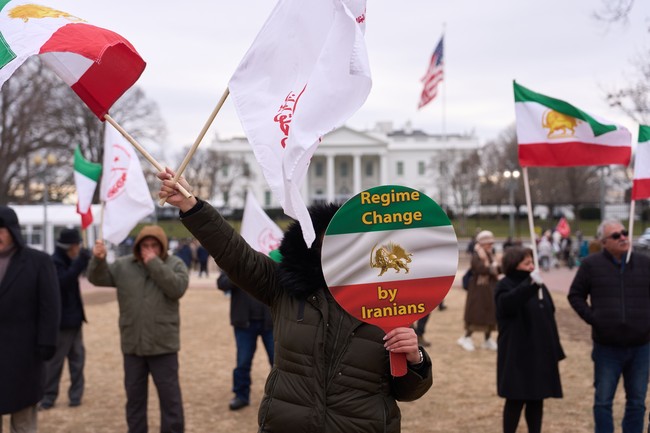
Beyond weapons, the larger political problem remains the theocratic structure that rules Iran. The regime will not step aside simply because diplomats ask, and many inside Iran continue to press for change in the streets. Until the mullahs are gone and Tehran embraces modern governance, the risk of proliferation and regional aggression will remain high, and U.S. strategy should recognize that reality.
President Trump’s upcoming address will be watched for how he frames these threats and what actions he signals. Lawmakers in the briefing expected clarity on timelines and choices, and the nation wants to hear a clear plan that defends American interests while backing the Iranian people who seek something different from their rulers.

Add comment