
President Trump announced that, at his request, an interim Venezuelan regime released several political prisoners and sealed an oil investment deal that he says will bring billions in American business to Venezuela; the move is being framed as a show of leverage, pressure working, and a strategic win for U.S. interests in the hemisphere.
Trump framed the prisoner releases as a direct result of pressure applied by his administration and his willingness to use strong leverage. He also said he was canceling a planned “second wave of attacks” while keeping naval assets in place to ensure security. This combination of coercion and conditional cooperation is being presented as the centerpiece of the strategy.
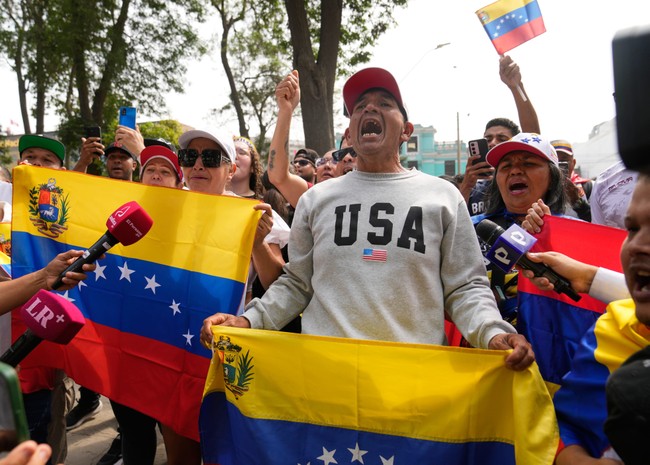
The announcement named specific opposition figures reportedly freed as part of this gesture of “seeking peace,” with advocates and family members sharing emotional scenes of reunions. “Soon I will be with you all,” one released detainee declared while video-calling relatives, according to published reports. The optics of families chanting “Libertad! Libertad!” on Caracas-area streets underscore how politically potent these releases are.
Reports describe a mix of Venezuelan opposition leaders and foreign nationals among those freed, and observers say more names trickled out into the night. Videos posted by journalists showed released prisoners embracing loved ones and celebrating on the streets outside detention facilities. Those moments matter politically: they provide concrete evidence that pressure can force concessions.
Trump has tied the releases to an emerging economic arrangement involving major oil investment, telling supporters that “At least 100 Billion Dollars will be invested by BIG OIL, all of whom I will be meeting with today at The White House. Thank you for your attention to this matter!” That language signals an intent to leverage private capital to reshape economic ties and reduce Venezuela’s dependence on hostile powers.
Beyond the headline dollar figure, Trump emphasized American-made goods and services as part of the deal, insisting Venezuelan purchases will be primarily from U.S. producers. He specifically mentioned agricultural products, medicines, medical devices, and equipment to improve Venezuela’s electrical and energy systems. The aim, as stated, is to force economic reorientation toward the United States and away from adversaries.
This approach mixes hard and soft power: military deterrence and naval presence on one side, economic incentives and private-sector deals on the other. Conservatives who prioritize national security will see the strategy as pragmatic: apply pressure to extract concessions while offering a path for economic integration under terms favorable to U.S. firms. It is an effort to turn geopolitical leverage into tangible economic and humanitarian outcomes.
There’s a note of healthy skepticism in official commentary, acknowledging that interim authorities are not fully trustworthy and that compliance could be temporary. Still, the release of detainees is being treated as proof that the pressure campaign is producing results. That practical proof matters politically, especially for those who argued for a tough stance rather than appeasement.
Critics will argue about motives, timing, and whether private oil investment truly serves long-term democratic outcomes in Venezuela. Supporters counter that realpolitik must sometimes mix with idealism: if the immediate effect is fewer political prisoners and a shift in trade patterns toward American suppliers, that is progress. The question now is whether this momentum can be sustained and translated into durable reforms.
Whatever the long-term judgment, the administration has presented a simple narrative: pressure worked, prisoners walked free, and an economic pivot toward the United States is possible through private investment. That message will play well with voters who want decisive action and tangible wins, especially when framed as both a security move and a boost for American industry.
Videos and eyewitness accounts of released detainees breathing the open air again have dominated social feeds, lending drama to the policy announcement. Journalists posted clips of liberated prisoners hugging family members and speaking with visible relief, humanizing what otherwise might be abstract diplomacy. Those images reinforce the political claim that forceful diplomacy produced immediate humanitarian results.
The deal’s economics remain to be fully detailed, and there will be intense scrutiny about who benefits and under what legal and ethical safeguards investments proceed. Conservatives advocating for American energy dominance will applaud the prospect of U.S. companies taking lead roles. At the same time, skeptics will press for transparency and guarantees that money won’t flow to corrupt hands.
For now, the combination of freed prisoners and the promise of major American investment is being sold as a win: a proof point that U.S. pressure and leverage can produce results in our own hemisphere. Whether this translates into lasting, democratic change in Venezuela or remains a tactical pause depends on follow-through, oversight, and sustained engagement.


Add comment