
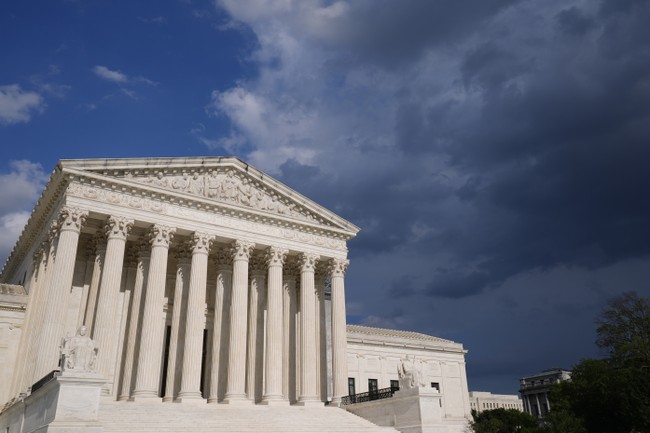
The Supreme Court this week said federal inmates may bring successive habeas corpus petitions, reversing a split among appeals courts and changing how challenges to federal convictions are handled under the Antiterrorism and Effective Death Penalty Act of 1996.
The opinion came down 5-4 and clarified that a provision commonly applied to state prisoners does not automatically block federal inmates from refiling claims. The case at the center of the decision is Bowe v. United States, and the ruling resolves disagreements that had left petitioners facing different rules depending on the circuit that reviewed their cases. The Court’s analysis focused on the statutory language and how Congress referenced state and federal procedures differently in the 1996 law.
Justice Sonia Sotomayor wrote the majority opinion, pointing out the separate paths prisoners use to seek relief in federal court. The opinion noted that Section 2244(b)(1) refers to state prisoners filing under section 2254, while federal prisoners proceed through motions under Section 2255. That textual distinction led the Court to conclude that the old-claim bar does not plainly extend to federal inmates.
“When interpreting statutes, the Court presumes that differences in language like this convey differences in meaning,” Sotomayor wrote. The majority read the 1996 statute as deliberately drawing lines between state and federal habeas procedures, rather than issuing a blanket rule across both systems. Extending the old-claim restriction to federal motions would require importing language Congress chose not to include, the opinion said.
The case arose from the repeated filings of Michael Bowe, who is serving a 24-year federal sentence for armed robbery. Since 2016, Bowe has filed five very similar challenges to his conviction, arguing that later Supreme Court decisions undercut the firearm count that followed his 2008 plea. The Eleventh Circuit repeatedly denied him authorization to proceed, following a view that treated successive filings as off limits for federal inmates under that statutory provision.
Other circuits split on the question, with six courts reading the statute as barring repeat federal petitions and three allowing refiling in some circumstances. That division produced inconsistent results nationwide and raised the prospect that a prisoner’s ability to seek relief depended more on geography than uniform legal principle. The Supreme Court took the case to resolve that circuit conflict and provide a single rule.
The majority made clear that its ruling does not eliminate serious barriers for federal petitioners who seek second or later filings. Federal prisoners still must meet demanding criteria to get a new petition heard, such as proving newly discovered evidence of innocence. Alternatively, they must show that a new rule from the Supreme Court applies retroactively to their case, and those standards are narrow.
Time limits remain another major obstacle; filing windows and strict procedural rules can defeat claims regardless of the underlying merits. Courts enforce filing deadlines and procedural gatekeeping mechanisms designed to prevent endless litigation over old convictions. So while the door may be open in principle, many petitions will still fail on procedural grounds.
The decision sends the case back to the Eleventh Circuit with instructions to assess Bowe’s latest motion under the federal standards the Supreme Court clarified. That court must now apply Section 2255 principles rather than treating Section 2244(b)(1) as an automatic bar. The outcome will depend on whether Bowe can meet the high hurdles the majority reiterated for successive petitions.
Practically speaking, the ruling affects thousands of federal inmates who had been precluded from refiling in some circuits. Some petitioners will gain a renewed chance to press claims pointing to new legal developments or new evidence. Defense lawyers and federal prosecutors alike will need to adjust litigation strategies to the clarified statutory framework.
Lower courts will also contend with how to implement the decision’s text-focused approach across varied factual contexts. Judges will weigh whether a given claim amounts to a proper successive motion under Section 2255 or whether it nonetheless runs afoul of other procedural doctrines. That work will shape how the Supreme Court’s clarification plays out in practice over the coming months and years.
The split decision highlights how much can turn on statutory drafting and the particular labels Congress uses when it reforms federal procedures. By zeroing in on the statute’s wording, the Court emphasized textual limits on judicial inference. Critics and supporters of the ruling will litigate the broader policy implications, but the immediate effect is a legal reset for federal habeas practice.
As cases go back through the system, courts will refine when a second motion asserts genuinely new grounds versus when it repeats previously denied arguments. That line drawing will require careful attention to precedent and to the specifics of each prisoner’s claim. The Supreme Court’s ruling ensures those determinations flow from Section 2255 standards rather than the state-focused bar the majority found in Section 2244(b)(1).
The decision marks a significant procedural shift without changing the substantive limits of relief available to federal prisoners. Relief remains hard to win, constrained by retroactivity doctrine, evidentiary standards, and tight deadlines. Still, for some inmates, the clarified path to refile could open a crucial, if narrow, route to revisit their convictions.



Add comment