
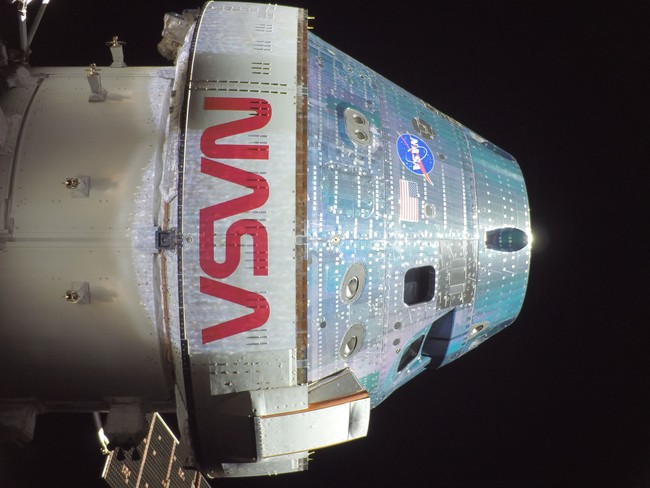
President Trump phoned the Artemis II astronauts after their record-setting lunar flyby, praising their feat and inviting the crew to the Oval Office; the astronauts replied warmly, with Captain Reid Wiseman, Victor Glover, Christina Koch, and Jeremy Hansen echoing gratitude for the teams that made the mission possible and expressing hope the flight sparks sustained American leadership in space exploration.
Trump called the crew “modern-day pioneers” and used the moment to highlight American achievement and grit. From a Republican perspective, this kind of leadership and celebration of national accomplishment matters—especially when it shows us reclaiming bold goals in space. The call came right after the crew traveled farther from Earth than any humans since Apollo 13, a milestone worth recognizing and defending.
The President told the astronauts, “We have a lot of things to be proud of lately, but there’s nothing like what you’re doing – circling around the moon for the first time in more than a half a century and breaking the all-time record for the farthest distance from Planet Earth.” Those words underline how rare and significant this moment is for science and national pride. It also sends a clear message that American ambition in space remains a priority.
Trump added, “At long last, America is back, and America is back in many ways stronger than ever before.” That line reads like a political pitch, sure, but it also reflects a simple truth: when government, industry, and skilled Americans unite behind a mission, remarkable things happen. The crew’s achievement is useful proof that focused effort and support produce results.
Conversation during the call got personal and curious. The President asked about emotions and the technical quirks of flying beyond the moon, including the 40-minute blackout when the crew passed behind the lunar far side. In response to “What was your feeling when you had no communication?” referencing the loss of contact, Victor Glover said, “I said a little prayer, but then I had to keep rolling.”
Glover went on to explain, “I was actually recording scientific observations of the far side of the moon. We were busy up here working really hard, and I must say, it was actually quite nice.” That reply shows professional poise under pressure and underscores that even in unknowns, astronauts keep their focus on mission objectives and data gathering.
President Trump extended a personal Oval Office invitation to the entire crew, a classic presidential gesture that recognizes service and achievement. The crew accepted on the spot and returned the salute, a small but powerful exchange that reinforces mutual respect between civilian leadership and mission professionals. The Canadian crew member, Jeremy Hansen, joined the salute, emphasizing the international partnership angle even as the conversation highlighted American leadership.
“I really look forward to, when we can, I look forward to seeing you in the Oval Office,” Trump said, promising “a big salute” and even requesting autographs. “I don’t really ask for autographs much, but you deserve that,” he quipped, blending presidential ceremony with plainspoken appreciation. The crew answered in kind: “Thank you for that, Mr. President. And when you want us, we will be there.”
“And thank you for your leadership … really thank you for taking the time out today to visit NASA. It’s really special for us, but it’s really special for the team on the ground,” Victor Glover added, pointing to the many people behind the mission. He stressed the global team effort and framed the mission as a culmination of years of work, calling it “the thrill and honor of a lifetime.” That emphasis on teamwork complements the presidential praise.
Another striking note came from NASA leadership framing the mission as a turning point for public belief in possibility. As the astronauts traveled “252,756 miles away,” the flight set a new mark for human distance from Earth and started conversations about future lunar campaigns and Mars missions. The flight’s success serves as momentum for further exploration that conservatives can point to as smart investment in national prestige and technological capability.
Public words during the call included humility and long-term optimism. “Before they left, they said they hoped this mission would be forgotten, but it will be remembered as the moment people started to believe that America can once again do the near-impossible and change the world,” one official observed, tying the mission to a broader narrative of American comeback. That narrative matters politically and culturally because it frames space as both inspiration and strategic value.
For Republicans who prioritize American strength and technological leadership, this mission is a clear win to showcase: a successful flight, a grateful crew, and a commander-in-chief who publicly honors achievement. The Oval Office invite and shared salutes are small symbols, but symbols matter when they reinforce commitment to exploration and to the teams who make it happen.


Add comment