
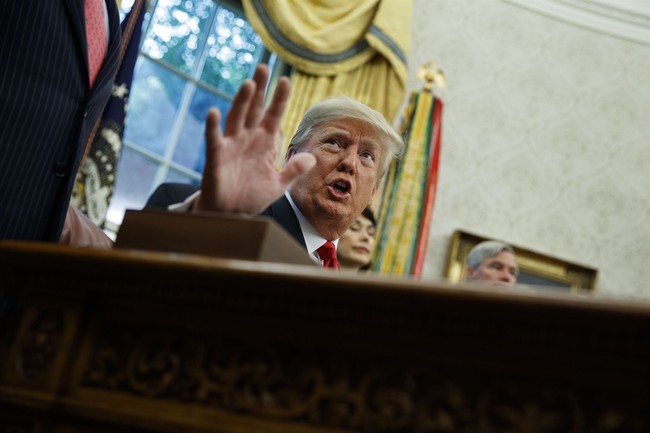
The Trump administration has unveiled a USPS rulemaking plan to tie mail ballots to state voter lists and unique barcodes, shifting the Postal Service from a passive carrier to an active verifier of ballots, and prompting immediate legal threats from Democrats and activist groups.
The proposal would require states to submit voter names, addresses, and unique ballot barcodes for federal elections so the Postal Service can match outgoing and return envelopes. This is meant to introduce chain-of-custody verification for mail ballots, a level of accountability advocates say is standard for other sensitive documents. The administration argues the step is necessary because mail voting currently lacks consistent, enforceable verification. That argument is the core justification behind the executive action the president signed.
Trump signed the underlying executive order himself.
https://x.com/EricLDaugh/status/2061167943309041784
“There’s been massive cheating that’s gone on.”
Will Scharf, senior associate counsel to the president, described the problem as bloated voter rolls and a mail system that offers almost no reliable checks. The rule would move responsibility for certain verification tasks from local offices to a federal system that can compare databases and flag anomalies. The administration frames this as a common-sense fix to ensure ballots are sent to eligible voters and returned by the same people.
“We’re going to take federal data, we’re going to ensure that each state’s election officials are provided with a comprehensive view of who the eligible voters in their jurisdiction actually are, allowing them to properly verify that everybody voting in their elections is legally able to vote.”
Under the proposal, states would transmit voter lists tied to unique barcodes printed on every outbound and return ballot envelope. USPS would then compare those outbound mailings to returned envelopes and signal discrepancies for review, a form of tracking election mail end-to-end. Proponents point out that this is fundamentally about chain-of-custody, not voter suppression, and that many Americans support basic election security measures like verification and ID.
“…it orders the Postmaster General and the US Postal Service to take bold new measures to verify that ballots both being sent to people are being sent to people who are eligible to vote, and then that ballots being returned are being properly returned by eligible voters only.”
The rule would also standardize Election Mail logos and require envelope designs to meet federal guidelines, while a new Federal Ballot Mail Portal would manage state-specific participation lists. Ballots not tied to a state-submitted list or that fail to meet the new standards could be intercepted before they ever reach election offices, according to the proposal. That centralization is deliberate: it creates a unified verification process rather than leaving everything to a patchwork of local practices.
Historically, local election officials handled mail-voter lists, ballot packet design, and then handed materials to the Postal Service with minimal oversight. The proposal flips that relationship, giving USPS a role in determining whether mailings qualify as Election Mail under nationwide rules. Critics call that federal overreach, while supporters say it stops chaos and closes obvious gaps in accountability.
The rule is being pursued through formal rulemaking with a 30-day public comment period before finalization, and the administration is pressing ahead without waiting on Congress. A practical question remains: can USPS build the systems and infrastructure fast enough for the upcoming general election when some states mail ballots roughly 60 days before Election Day? The administration appears confident it can move rapidly, even if skeptics raise logistical concerns.
Legal challenges sprang up almost immediately. A federal judge declined to block the executive order on the grounds that the challenge was premature because the policies were not yet implemented. Predictably, Democrats and left-leaning advocacy groups announced plans to sue, and Senate Minority Leader Chuck Schumer offered the familiar criticism that the move amounts to an attempt to intimidate voters.
“Mail-in voting is safe and secure — period. This new rule is just another malicious attempt by the Trump administration to suppress the votes of millions and try to throw the election results.”
Opponents argue the rule is unworkable or unlawful, and activist groups vowed to contest it vigorously in court. Plaintiffs have promised to pursue full adjudication and labeled the order illegal and impractical. The White House, meanwhile, reiterated its commitment to enacting measures it says protect election safety and security.
“We are confident we will prevail in the end when this illegal and completely unworkable executive order is fully adjudicated.”
The USPS rule and parallel legislative efforts like the SAVE America Act, which proposes photo ID and citizenship proof for federal voter registration, are moving on separate tracks but share the same policy aim. The administration is advancing administrative and legislative options simultaneously, arguing the combination of reforms will shore up trust in the process. Expect continued court battles, fundraising from activist groups, and heated media coverage as the rulemaking proceeds.

Add comment