
This article explains why several Democratic-led states are refusing to follow a new federal tax change that exempts overtime and tipped wages, how Republican leaders reacted, the options states face, and the responses from affected workers and state officials.
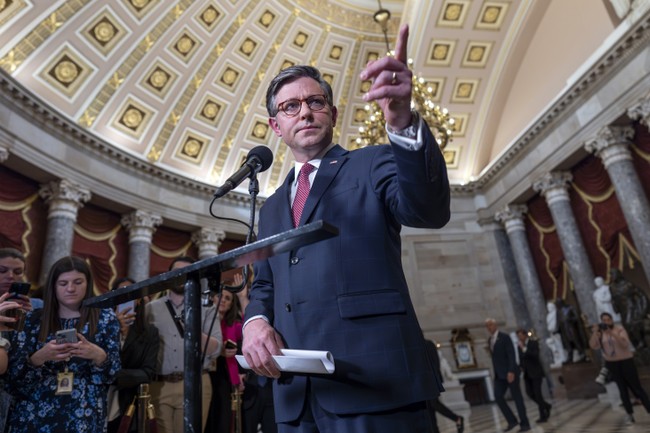
House Speaker Mike Johnson called out Democratic governors and legislatures after the One Big Beautiful Bill Act, also called the Working Families Tax Cut Act, exempted federal taxes on overtime pay and tipped wages starting January 1. He criticized states that choose not to adopt the federal change at the state level, arguing those leaders are turning their backs on the working class. Johnson’s comments landed in the middle of a heated debate about whether state tax codes should conform to the new federal rule.
In a post on X on Monday, Johnson reacted to a piece about how Democrat-run states like California, New York, and Illinois have declined to give hardworking Americans a state-level tax break after the One Big Beautiful Bill Act (OBBBA) (aka the “Working Families Tax Cut Act”) exempted federal taxes on overtime pay and tipped wages. The provision takes effect January 1.
“Most working Americans can anticipate the largest tax refunds in history this year — but, incredibly, Democrat-controlled states are refusing to allow President Trump’s popular No Tax on Tips or Overtime!” Johnson wrote. “IT’S OUTRAGEOUS,” he added in all caps. “Once again — as they pay lip service to an ‘affordability’ issue they caused — when Republicans give them the opportunity to actually make life more affordable, Democrats turn their backs on the working class.”
State responses are not monolithic. Tax experts explain that states generally have three paths: full conformity with federal tax changes, selective conformity where some federal provisions are adopted and others are not, or non-conformity where a state deliberately decouples from the federal changes. That framework means some states will automatically mirror the federal break while others will need to pass affirmative legislation to extend the benefit to residents.
A number of states already align closely with the federal code and will see the new treatment of tips and overtime apply without much fuss. Other states start from adjusted gross income or use their own definitions of taxable income, which prevents the federal deduction from flowing through unless the state legislature acts. That creates a patchwork across the country where a worker in one state could see a substantial tax change while a neighbor across the border sees nothing.
Several states have signaled openness or support for at least part of the federal change, while a handful have explicitly declined. For workers in service industries who rely on tips, the difference is tangible. Restaurants and bars often employ staff who depend on tip income for their livelihoods, so a state decision to tax tips differently can change take-home pay and savings prospects in a meaningful way.
On the ground, workers are already reacting. A bartender in Midtown told a reporter bluntly, “Screw her,” referring to a governor who declined to enact the state-level break. Other tipped workers describe losing about $1,000 a month to taxes on tips and say that relief would help them cover basic costs and avoid extra shifts. Those firsthand accounts have fueled public criticism of officials who won’t extend the federal change to state taxes.
Some governors and their spokespeople say they understand the concerns and will study the federal changes as part of the budget process. Officials emphasize they must weigh budget impacts and other trade-offs before adopting new tax rules. That cautious stance frustrates workers and Republican leaders who see an obvious and immediate way to put more money back in people’s pockets.
Tax policy specialists note that the mechanics matter: in states that default to federal taxable income, most of the new deductions flow through automatically unless a lawmaker opts out. In states that use different bases for taxation, lawmakers must actively vote to adopt the change. That distinction explains why the debate has shifted from abstract policy to practical choices in state capitols.
The political optics are clear. Republicans frame the refusal to enact the break as a choice by Democratic officials to deny tax relief to working families, while some Democrats say their hands are tied by budget priorities or fiscal concerns. As the January effective date approaches, expect the pressure to increase from both worker groups and party leaders urging state action or defending their reasons for inaction.



Add comment