
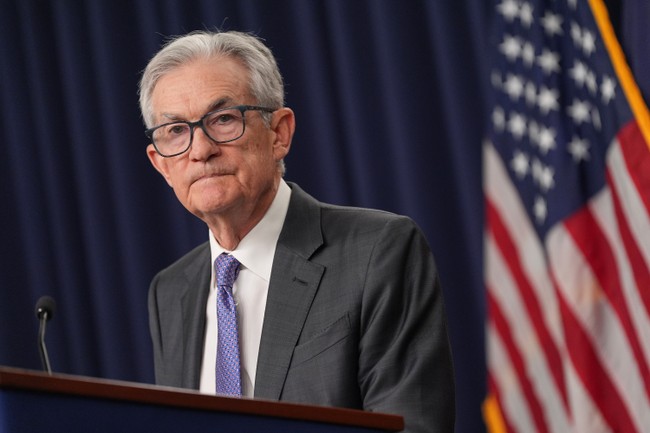
The Department of Justice has opened a criminal probe into Federal Reserve Chair Jerome Powell over the Fed’s $2.5 billion headquarters renovation and his congressional testimony about the project, raising sharp questions about accountability, the scope of oversight, and whether Americans will get clear answers about public spending and institutional integrity.
Federal prosecutors have reportedly issued grand jury subpoenas tied to Powell’s June testimony about the multi-year renovation of the Fed’s Washington buildings. The inquiry centers on whether Powell misled Congress about the project’s cost and scope, a serious allegation given the Fed’s central role in shaping monetary policy. Republicans have been vocal about the need for transparency when taxpayer funds or public institutions are involved.
Costs for the renovation rose from early 2021 estimates of $1.9 billion to roughly $2.5 billion, according to public Fed records. The Fed cites ordinary factors—inflation, construction delays, asbestos abatement and blast-resistant security upgrades—as reasons for the increase. Those explanations are plausible, but they do not eliminate the obligation to provide clear, consistent information to congressional overseers and the American people.
Powell issued a video statement calling the investigation a threat to the Fed’s independence: “The threat of criminal charges is a consequence of the Federal Reserve setting interest rates based on our best assessment of what will serve the public, rather than following the preferences of the President.” He framed the matter as a choice between evidence-driven policy and political pressure, insisting that the investigation risks politicizing monetary policy.
Justice Department officials have declined to discuss details publicly, while saying the attorney general wants to “prioritize investigating any abuse of tax payer dollars.” That line echoes a basic Republican concern: oversight matters when public money or trust is potentially at stake. The involvement of the U.S. Attorney’s Office for the District of Columbia, under a Trump appointee, adds a political layer that opponents will decry and supporters will defend as necessary scrutiny.
Powell defended the Fed’s efforts to keep Congress informed about the renovation through testimony and public disclosures, calling the investigation “not about Congress’s oversight role; the Fed through testimony and other public disclosures made every effort to keep Congress informed about the renovation project.” Even so, mixed messages or shifting estimates create fertile ground for legal and political challenge, especially when costs climb by hundreds of millions over initial projections.
The probe arrives as Powell’s term as Fed chair approaches its end in May 2026, and as the White House signals it already has a successor in mind. That timing raises obvious questions about motive and consequence, since moves against a sitting Fed chair could affect not just personnel decisions but markets and confidence in central-bank independence. Republicans pressing the matter argue that accountability should not be sacrificed for institutional immunity.
Beyond the renovation, the backdrop includes the Fed’s broader policy decisions: inflation has cooled but still exceeds the 2% target, and labor-market indicators show softening. Republicans will point out that monetary policy matters to everyday Americans, and any hint of partisan interference or lack of candor at the Fed deserves rigorous oversight. The DOJ inquiry could help establish whether there was a factual basis for the claims made about the renovation or whether accountability is required.
Powell says the investigation will not deter him: “I will continue to do the job the Senate confirmed me to do, with integrity and a commitment to serving the American people.” That pledge matters, but it will not alone settle legal questions or satisfy those who want full transparency. The path forward likely involves legal review, potential testimony, and careful public explanation of how the renovation budget evolved over time.
The case puts institutional independence and prosecutorial oversight on a collision course in the public eye, and it asks whether the norms that protect central-bank decision making can coexist with demands for fiscal responsibility. For Republicans, the key takeaway is simple: oversight should be robust, facts should be clear, and public officials must answer for how they use resources entrusted to them.
Add comment