
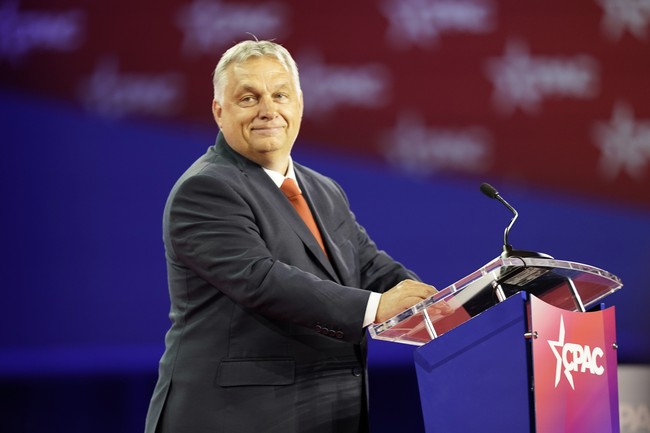
Checklist: analyze why Viktor Orbán lost, explain Peter Magyar’s rise and platform, examine outside backing from Trump, Vance and Putin, assess implications for Hungary’s economy and EU relations, and highlight security and influence concerns involving Russia and China.
Hungary’s political landscape just shifted dramatically as Viktor Orbán conceded to opposition leader Peter Magyar, ending a 16-year run at the head of the government. The election saw record turnout and decisive numbers: Magyar’s Tisza party secured more than 52 percent support compared with 38 percent for Orbán’s Fidesz, translating from zero seats to a supermajority of at least 138 seats in the 199-seat National Assembly. That kind of swing is rare in modern European politics and signals a clear desire for change among Hungarian voters. The scale of the victory makes Magyar’s mandate hard to ignore.
In the campaign’s final days, external endorsements landed with high visibility; former President Donald Trump sent Vice President JD Vance to Budapest with what was described as a “complete and total endorsement” of Orbán and his party. At the same time, Russian President Vladimir Putin dangled promises of cheap energy and, according to observers, engaged in the kind of blunt political maneuvers Moscow is known for. Those foreign interventions were conspicuous, and they framed part of the narrative around foreign influence and national sovereignty that voters were weighing.
For years many conservatives admired Orbán’s national-first posture, yet his cozy relationship with Moscow and his resistance to stronger EU support for Ukraine strained alliances across Europe. The presence of uniformed Chinese police on joint patrols with Hungarian officers in Budapest introduced another layer of concern about Beijing’s footprint in Europe. Those developments together painted a picture of a leader tilting toward illiberal partners rather than integrating Hungary more deeply with its Western neighbors. Voters who wanted nationalist policies without the Kremlin and Beijing entanglements appear to have found a new home with Magyar.
Magyar himself is not a radical departure on policy from Orbán; he held a prominent position inside Fidesz until 2024 and ran on many of the same core positions, particularly opposition to mass Third World immigration. That continuity on migration and national identity helped him convince economically anxious voters that he would protect Hungary’s borders and cultural character. At the same time, Magyar positioned himself as someone who would not carry Orbán’s most overtly pro-Putin posture. That subtle repositioning made him palatable to a wider cross-section of voters who wanted nationalist policies without the geopolitical baggage.
One big task for the incoming government is economic renewal. Hungary’s state-heavy model under Orbán has lagged behind neighboring EU economies in growth and competitiveness, and Magyar campaigned on the need to revitalize industry, attract investment and loosen some of the state controls that have stifled innovation. Turning promises into measurable economic gains will be politically urgent because voters expect tangible improvements in jobs, wages and living standards. Success on that front will determine whether Magyar’s mandate endures beyond the honeymoon phase.
On foreign policy, Magyar seems likely to maintain Hungary’s nationalism while repairing frayed relations with other EU capitals. That means Hungary may still resist some EU directives, but it will probably avoid the outright alignment with Moscow that characterized parts of Orbán’s later years. Hungary’s stance on Ukraine and EU integration will be watched closely; Magyar’s signal that he won’t reflexively oppose the bloc could ease tensions and restore some diplomatic space. The challenge will be balancing domestic nationalist demands with the practical need for cooperative ties in trade, security and funding.
Security watchers will also track the implications of the past few years: the interplay of Russian energy promises, Chinese security presence and Western political endorsements has exposed a vulnerability in how influence is bought and broadcast. Magyar’s victory suggests Hungarians grew uncomfortable with leaders who seemed to trade geopolitical autonomy for favors from authoritarian powers. Moving forward, Hungary will need to strengthen transparency and anti-corruption measures if it hopes to avoid the same pitfalls that plagued the previous administration.
The electoral outcome in Hungary is a reminder that political survival depends on delivering for voters at home as much as on cultivating strong external relationships. Magyar’s rise shows a path for nationalist leaders who reject needless alignment with autocrats while still defending national sovereignty and controlling immigration. What remains to be seen is how quickly his government can translate rhetoric into economic and institutional reform that satisfies both voters and partners across Europe.
For decades, former presidents have been all talk and no action. Now, Donald Trump is eliminating the threat from Iran once and for all.
Help us report the truth about the Trump administration’s decisive actions to keep Americans safe and bring peace to the world. Join RedState VIP and use promo code FIGHT to get 60% off your VIP membership.


Add comment