
The Nexstar acquisition of Tegna sparked an odd public fight where traditional left-wing regulators and a conservative media executive both sought to stop the merger, raising questions about principle, competition, and the use of government to shape media markets.
The story starts with Nexstar, a large local television station group based in Irving, Texas, completing its purchase of Tegna. That deal drew swift and vocal opposition from high-profile Democratic officials who routinely scrutinize corporate consolidation. At the same time, a prominent conservative media CEO objected for competitive reasons, creating a rare overlap of interests across the usual partisan divide.
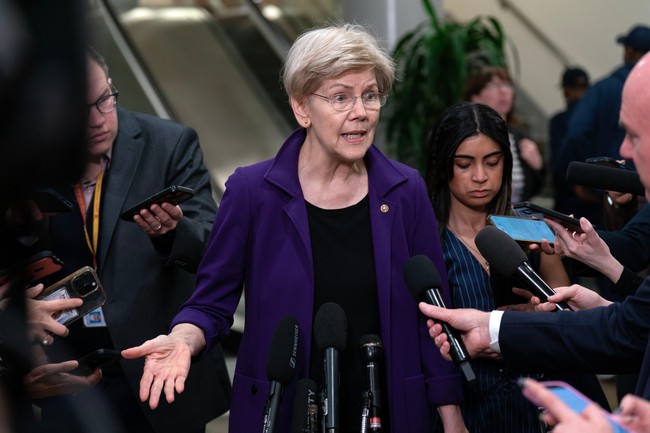
Senator Elizabeth Warren and several state attorneys general moved quickly to challenge the transaction in court. Their objections followed familiar themes: concern about market concentration and the power of big broadcasters to influence terms with distributors. A federal judge in California granted a preliminary injunction, briefly blocking integration while litigation moved forward.
On the conservative side, Chris Ruddy, CEO of Newsmax, stepped into the fray arguing the consolidation would harm smaller channels like his. Ruddy testified before the Senate Commerce Committee and filed a formal petition with regulatory authorities to contest the merger. His position was rooted in competition worries, not the ideological objections voiced by the Democratic officials.
One of the witnesses was Chris Ruddy, the CEO of conservative outlet Newsmax, who has been one of the key figures challenging the Nexstar-Tegna deal, and the notion that broadcasters need to consolidate to compete. He testified that major station groups are still bringing in billions in revenue and use their market power to extract favorable terms from cable operators, at the expense of channels like his.
This convergence of interests is notable because it did not represent a coordinated alliance but rather overlapping incentives. Democrats raised antitrust and public-interest concerns, while Ruddy advanced a narrower claim that consolidation would disadvantage his network commercially. The result was a temporary alignment of goals without any evidence of joint planning or shared strategy.
Critics on the right pointed out the irony of a conservative CEO asking government to intervene on behalf of a private outlet. Leveraging regulatory power to blunt competition sits uneasily with free-market principles that many conservatives champion. Yet corporate leaders routinely turn to agencies and courts when business conditions threaten revenues, and Ruddy’s actions reflect that common playbook.
From the left’s perspective, the suit fit a long pattern of using litigation to slow or reshape large deals. Legal challenges now are a major lever in the toolbox for those who oppose mergers on policy or political grounds. For regulators and state officials, lawsuits offer a way to force concessions, structural remedies, or even to scuttle transactions altogether.
Meanwhile, supporters of the deal argued consolidation was a practical response to a challenging media environment. They said larger station groups can better compete with national streaming platforms and aggregators, preserve local reporting capacity, and negotiate carriage more effectively. The Federal Trade Commission ultimately approved the merger in early 2026, though legal hurdles remained and integration awaited final resolution of injunctions and appeals.
The episode underscores competing visions about media markets: one side emphasizes competition and reduced concentration, while another warns consolidation is necessary to sustain local television in an era of fragmented audiences and rising costs. Both arguments have factual elements, and both are exercised through political and legal channels that shape industry outcomes.
For conservatives who prize market solutions, Ruddy’s turn to regulators was uncomfortable but not unprecedented; business leaders across the ideological spectrum have asked courts and agencies for relief when market forces bite. For progressives, using state power to police mergers fits a broader agenda to check corporate reach and protect public interest concerns.
What this episode makes clear is how naturally transactional these fights can become. Shared objectives do not equal shared values, and tactical alignment between actors on opposite sides of the spectrum can be fleeting. Whether the merger proceeds, and under what terms, will shape local media dynamics in many markets and may influence how future deals are structured or challenged.
The Nexstar-Tegna dispute also offers a reminder that legal and regulatory processes are central battlegrounds for media policy now, not just electoral politics. Lawsuits, petitions, and committee hearings will likely remain the venue where competing interests seek advantage, and where public debate about consolidation and competition continues in earnest.



Add comment