
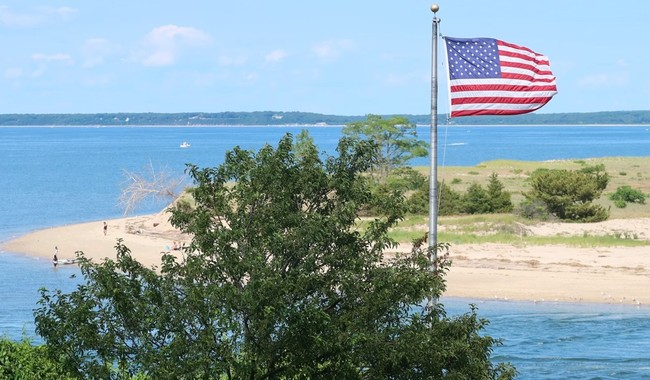
The town of Newbury, Massachusetts told Plum Island residents to consider removing American flags, citing potential disturbance to protected shorebirds, and the response has turned into a fight over property rights, free expression, and how far local authorities can stretch wildlife rules.
More Massachusetts Idiocy: Town Tells Residents to Take Down Their Flags, They Might Annoy the Plovers
As the nation prepares to mark its 250th birthday, a small town decision landed squarely in the spotlight and provoked real anger from residents who say the government went too far. Newbury sent a letter to Plum Island homeowners warning that activities that deter protected shorebirds “may be viewed as harassment or disruption of normal feeding, nesting, or migratory behavior,” and that such actions could trigger federal penalties.
The move reads like an overreach to many locals. People who own property on Plum Island say they were stunned that displaying an American flag could be cast as a potential legal risk, and they quickly pushed back against what felt like bureaucratic heavy-handedness.
The Pacific Legal Foundation, a nonprofit that defends individual liberty and property rights, stepped in to represent longtime resident Marc Sarkady and questioned the town’s basis for the warning. Their letter demanded a clear legal justification and pointed out that the town did not cite any statute, regulation, judicial decision, or agency guidance that supports the claim.
The letter warns “activities intended to deter protected shorebirds from utilizing suitable habitat may be viewed as harassment or disruption of normal feeding, nesting, or migratory behavior,” which violates the federal Endangered Species Act, and “carry significant regulatory and financial penalties.”
“Non-compliance may result in state or federal enforcement actions and, thus, the Town urges residents to comply with applicable state and federal wildlife protection laws,” the notice further read.
After the backlash, town officials softened their tone and said the communication was meant only to remind property owners of responsibilities tied to a sensitive habitat. Newbury Town Administrator Tracy Blais released a statement insisting the letter “merely recited provisions of the law” and that the town was not asserting new control or liability.
https://x.com/libsoftiktok/status/2071655865740915009
The exact quote from the town remains on record and continues to fuel suspicion that the warning was intended to intimidate. Residents say reminders about habitat protection can be handled without suggesting fines or enforcement for someone putting up a holiday flag. The wording left many feeling the town was lecturing citizens instead of engaging them respectfully.
PLF’s response zeroed in on private property rights and the absence of a legal foundation for the town’s threats. Their letter calls out the vagueness and the potential chilling effect on normal uses of private property. It asks the town to identify the specific authority it relies on rather than implying homeowners could be punished for ordinary decorations.
The letter raises significant concerns regarding both private property rights and the legal authority upon which the Town relies. Most notably, the Town appears to suggest that homeowners may face potential state or federal liability for displaying ordinary decorations or engaging in customary uses of their own property if those activities allegedly discourage protected birds from utilizing nearby habitat. Yet the letter identifies no statute, regulation, judicial decision, or agency guidance establishing that proposition.
Local reporters and commentators visited Plum Island and noted that American flags were still flying despite the controversy. One journalist even asked whether the town had selectively enforced anything, such as different standards for Pride flags during Pride Month. Residents are suspicious that the town’s actions reflect preferences rather than neutral enforcement.
Town officials later tried to downplay the exchange and framed the notice as informational, but that explanation has not calmed critics. People who live on the island view their flags as expressions of patriotism and private property choices, not as risks to wildlife, and many see the town letter as an unnecessary escalation.
The dispute has become a flashpoint over local authority, free expression, and how conservation rules are communicated and enforced. Homeowners worry about where the line is drawn and whether vague warnings can become leverage to control everyday behavior on private property.
As the story unfolds, residents and advocates insist on clear legal footing before any penalties are suggested. The government can and should protect wildlife, but doing so without clear citations and open community dialogue risks alienating the very people who own the land and care for it.
“The letter merely recited provisions of the law, and the Town is not asserting any threat or legal liability — merely reminding property owners that they live in a very special place which comes along with certain responsibilities. The Town is not asserting any rights or control it does not have, and I think the Town’s letter is pretty clear on that point.”
Tom Shattuck, an investigative editor who visited the town, reported seeing many flags still flying and raised questions about selective enforcement. His on-the-ground reporting pushed the story into a broader debate about how officials should balance habitat protection with respect for homeowners.
The fight on Plum Island is a reminder that clear rules, respectful communication, and respect for private property matter when conservation goals are pursued. People want protection for local wildlife, but they also want certainty and fairness from the authorities who govern where they live.


Let’s see democrats are the stupidest people on earth they are no worried about American flags when these assholes are building wind turbines all of the place that are killing millions of birds everyday and now think a few American flags are a major problem. Only a democrat can say something that f-in stupid. The real reason is the democrats hate the flag because it brings true American citizens together to support our country and cause. democrats you lost the American people you failed this country go kiss your illegals goodbye because they will be all deported your dream voters are going to be deported before next major election. Truth hurts when you’re caught.