
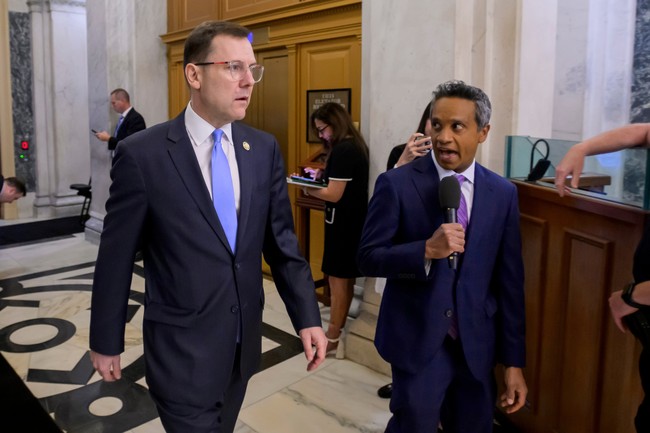
Representative Tom Kean Jr. returned to the House after a prolonged absence tied to a medical diagnosis of depression, and his public remarks put a spotlight on mental health care, constituent service, and the political fallout from time away from office in a competitive district.
Kean had been missing from House votes since early March, a gap that drew attention both locally and in Washington. His absence became a political issue in a blue state with a purple district, where every missed vote can be ammunition for opponents. Republicans see this as a moment to defend the premise that public service demands both transparency and accountability while also recognizing the human side of medical struggles.
When Kean returned to the floor, he spoke plainly about the struggle that kept him away and framed his decision to seek inpatient care as a turning point. He explained how an expected short hospital visit turned into an extended treatment plan after doctors diagnosed him with depression. That candid admission is rare in politics, and from a Republican perspective it matters because it humanizes a lawmaker while not excusing prolonged absences from duty.
In his remarks, Kean opened by acknowledging his discomfort with talking about himself and insisting he owed an explanation to constituents and colleagues. He sought to balance candor about his health with reassurance that his office continued to serve the district during his absence. That approach tries to bridge empathy for personal health with respect for the institutional responsibilities of a member of Congress.
https://x.com/politicianpages/status/2071959545614569925
Kean detailed his diagnosis and his doctors’ recommendation for hospitalization, admitting he initially resisted because of obligations at home and in Washington. He said he had hoped to return in weeks, but recovery did not follow a neat timetable. The message was simple: the path to getting better is often gradual and unpredictable.
Kean began:
“Talking about myself has never come naturally. But I believe that I owe an explanation to the people of New Jersey’s 7th district, to my colleagues in this chamber, and to the American people for this absence.”
Kean went on to explain that depression is more than sadness, describing it as physical and emotional and noting how it had affected his life longer than he realized. He recounted following his doctors’ advice and gradually understanding the seriousness of his condition. Kean emphasized the day-by-day nature of recovery and the reality that medical timelines are often uncertain.
The speech also served as an effort to destigmatize mental health for constituents and colleagues, with Kean drawing on past work on mental health parity from his state legislative days. From a Republican lens, this is a chance to argue for commonsense support systems that help people get well without expanding entitlement programs. Kean thanked medical staff, his family, and his team for their role in his recovery and in keeping his office functioning.
“When people hear the word depression, many people think it simply means feeling sad. But depression is so much more than that. It is physical, it is emotional, and until you experience it yourself, it is difficult to fully understand how powerful this illness can be.
“The doctors recommended that I remain in the hospital to address my illness. They explained to me that this would be the fastest way to recovery. And to be honest, I was hesitant. I didn’t think that I had time for it. I had responsibilities to my family, I had responsibilities to my constituents, I had responsibilities to this institution. And like many people, I believed that I could simply push through. But I agreed to follow my doctor’s recommendation, again, not believing it that it would result in a long-term stay.
“I began to understand not only my diagnosis, but how long depression had been affecting my life.
“When I first informed the public that I was dealing with a medical issue, I was still trying to understand what was happening myself. When I said I hoped to return in a matter of weeks, I believed it. Those were the best estimates the doctors could provide.
“But as the over 48 million of my fellow Americans being treated for this illness have come to discover, there is no timeline for healing, there is no timeline for recovery, only the work of getting better, one day at a time.”
Kean’s opponents were quick to respond, and that is the political reality of a high-profile absence. Critics framed the episode as evidence of neglect or poor judgment, arguing the district deserved uninterrupted representation. Republicans defending Kean point to his transparency and insist that accountability can coexist with compassion for health struggles.
Some critics focused on policy disagreements and votes, using the absence as a chance to revisit Kean’s record on issues such as health care and infrastructure funding. From a conservative viewpoint, attacks should be weighed against the facts of constituent service and whether staff kept offices functioning during the absence. The balance between personal recovery and public duty is what voters will ultimately assess in November.
“Today, I am grateful that I listened to my doctors. And I am grateful for the exceptional care that I received from doctors, nurses, and support staff. I am grateful that I accepted help. Because today, I stand before you, healthier, stronger, and excited to return to the work that I love.
“I have always been a supporter of mental health care. During my time in the New Jersey legislature, I worked to advance mental health parity. I believed in the cause then, and I understand it in a far more personal way now.
“This experience has given me a deeper appreciation for the millions of Americans who face these challenges each and every day. Many do so quietly. Many do so alone. Many do so while carrying burdens that the rest of us never see. And to them I would say, asking for help is not a weakness, it is a strength.”
Despite the personal tone of his remarks, Kean made clear he sees this issue as nonpartisan and important to families across the country. He framed sharing his story as a way to encourage others to seek help, while reaffirming his commitment to represent his district. The coming months will show whether voters accept that explanation and move on, or whether opponents can turn a medical absence into a political liability.
“To my constituents, thank you. Thank you for your patience, thank you for your understanding, thank you for your prayers. And thank you for allowing me the honor of serving you.
“I also want to thank my staff, who worked tirelessly to ensure that our office continued serving constituents every day during my absence.
“And most importantly, I want to thank my family. Whose love, whose support, and whose faith carried me through some very difficult days.”
Senatorial and campaign responses followed quickly, each making policy points and criticisms that will play out in public debates. Republicans will likely emphasize Kean’s transparency and return to duty, while reminding voters to weigh performance and priorities. The story remains both a health moment and a political test in a swing district.
WATCH:



Another taxpayers paid expense ( vacation ) another one wasting taxpayers money. You don’t show up to work you don’t get paid. This is in business practice a week or two maybe but not months. Taxpayers always get stuck holding the bag.