
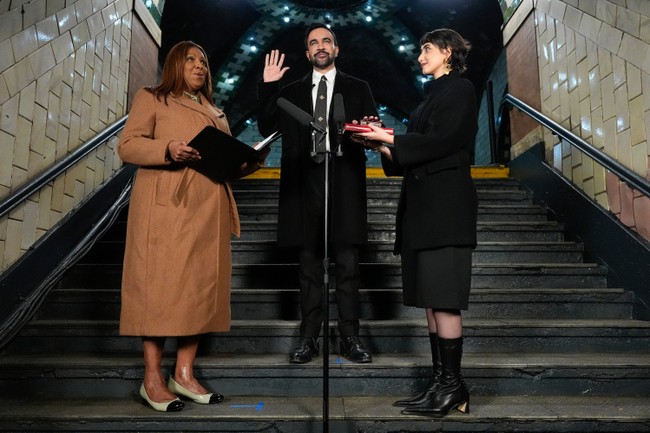
New York’s new mayor promised big change and showed up with a block party that lacked the basics, a debut that plays into familiar warnings about socialism and the consequences of voting for radical promises over practical results.
Zohran Mamdani took office with a confident message and a public event meant to celebrate the moment, but the inaugural block party landed as a fiasco: attendees reported no food and no bathrooms, an unexpected reality for people who expected at least a basic civic courtesy. That failure is the kind of thing critics on the right have long pointed to as proof that grand, centralized promises collapse when put into practice. Voters were promised transformation; instead a logistical flop became the story of day one.
People who showed up to watch the ceremony found themselves standing cold, hungry, and uncomfortable, waiting to see whether the new administration would rise to the occasion. The optics matter because competent governance starts with small things: planning, accountability, and public service basics like sanitation and food for an open-air event. When those basics are missing, it feeds a narrative that rhetoric and ideology have outrun competence, and that is a political problem for those who insisted a radical agenda was the right route.
Those who voted for sweeping changes in the name of fairness should expect scrutiny when the rubber meets the road. It is fair to note — as some defenders do — that a single event does not prove the future of a city, but neither does it inspire confidence. People who backed radical change deserve honest answers when planning fails at the moment their leaders are meant to show they can deliver.
Backers of Mamdani stood outside City Hall during the inauguration without access to bathrooms and with no food concession stands as they crammed into barricade pens during the New Year’s Day festivities.
Revelers watched the inauguration on a series of big television screens as 4,000 invited guests sat in City Hall’s plaza to take the oath of office.
“It’s not exactly what I was expecting,” said Brooklyn resident Shane Turner, 30. “I was expecting food and music.”
“I could’ve watched this from home,” a 25-year-old Queens woman added.
The quoted complaints land hard because they describe a simple mismatch between expectation and reality, the sort of everyday failure that becomes political when it seems systemic. Supporters are asking whether this was a one-off logistical error or a glimpse of management priorities that place ideology ahead of execution. Critics see the event as evidence that a radical vision lacks operational muscle and that romantic promises will not feed a hungry public.
There is a pattern in history where ambitious political projects trade efficiency for symbolism, and those on the right warn that leads to decline. New York already faces challenges that demand clearheaded problem solving, not performative gestures; failing to provide basic amenities at a public inauguration raises questions about how the new administration will handle more consequential issues. Practical competence matters when budgets are tight and residents expect services that keep the city functioning.
It is also fair to point out that leaders should be judged by early actions, because early actions set expectations and reveal priorities. Mayor Mamdani’s staff picks and public messaging matter, and observers on the right see appointments that read as ideological first and managerial second. That matters because building trust takes results, and results start with meeting basic public needs and showing the capacity to run city operations efficiently.
Critics will also point to historical examples where centralized control and utopian promises led to shortages and hardship, and they will argue that the block party offers a glimpse of what can go wrong when goals outpace logistical reality. Supporters will say critics are overstating a single misstep, but in politics perception shapes momentum and trust. Either way, the image of an inaugural crowd without food or bathrooms becomes a talking point in a city already polarized about direction and leadership.
“Democracy is the theory that the common people know what they want, and deserve to get it good and hard.”
Editor’s Note: Zohran Mamdani is an avowed Democratic Socialist, and he is now the mayor of New York City. Holy bread lines, Batman!


Add comment