
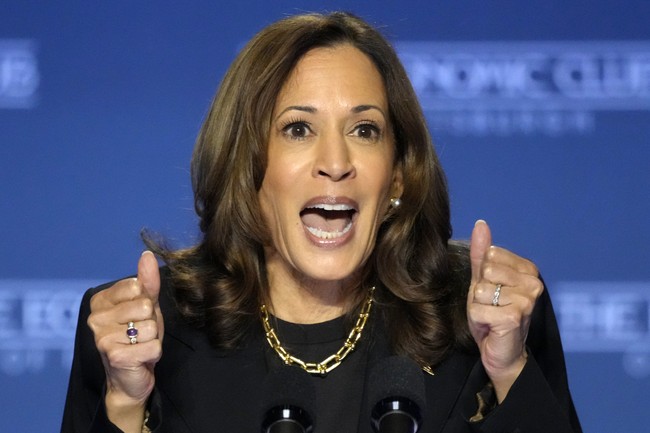
This piece examines Laura Kuenssberg’s BBC interview with Kamala Harris, focusing on how the exchange exposed both Harris’s shaky answers and the broader failure of parts of the media to press Democratic leaders on President Biden’s fitness to serve. The article highlights Kuenssberg’s direct line of questioning about cognitive concerns, Harris’s awkward responses, and what those answers imply about Democratic leadership and the demands of the presidency.
The interview began as a routine profile but turned pointed when Kuenssberg pressed Harris about whether she had discussed President Biden’s fitness for office. The line of questioning pulled into focus months of public speculation about Biden’s stamina and mental sharpness, a topic many in Washington have been reluctant to confront directly. For conservatives watching, the moment felt like overdue accountability from a seasoned journalist that the American media often avoids.
Kuenssberg asked if Harris had raised concerns with Biden and whether it was odd that Biden did not raise his own frailty with Harris. The question landed because it demanded a binary answer: did Democratic leaders accept Biden’s condition as acceptable, or did they overlook clear problems? Harris’s reply tried to split the difference and leaned on a semantic distinction between running for office and performing the job itself.
Kamala said there was a “serious difference between capacity to be president of the United States and the capacity to run for president of the United States” and framed her worry around “his ability, with the level of endurance, energy that it requires, especially running against now the current president,” while insisting she was not questioning Biden’s capacity to occupy the highest position in the land. That sentence, verbatim, reveals the central contradiction of her claim: she acknowledged concern about Biden’s stamina while denying any doubt about his competence to hold the office.
That distinction doesn’t hold up under scrutiny because the real world doesn’t separate campaigning from governing in neat compartments. The job of president involves constant travel, daily briefings, rapid decision making, international summits, and crisis management—tasks that demand both stamina and clarity. The electorate needs leaders who can make hard calls and take responsibility, not vague reassurances that dodge the obvious question about whether the person at the helm can meet those demands consistently.
Kuenssberg’s follow-up cut to the heart of that issue when she said, “Isn’t it a strange message to the public to say, you know what you need to be tougher and more able to run a political campaign than actually to be the person behind the desk in the Oval Office, to be the person making decisions in the Situation Room. So did you just not think it was that bad or did you feel you just couldn’t raise it?” That direct quote underlines the political problem Democrats face: voters expect leaders who prioritize the country’s safety and stability over internal party loyalties or political calculations.
Harris’s attempt to explain why she refrained from saying anything about Biden’s fitness centered on concerns about appearing self-interested. She suggested that any private conversation might be dismissed as motivated by her own political ambitions. But the argument that worrying about public perception should trump a candid discussion about a president’s capacity simply skirts the duties of responsible leadership and fails to reassure skeptical voters.
From a Republican viewpoint, the episode highlights two failures: one by Democratic leadership and one by much of the mainstream media. Too many reporters have treated questions about Biden’s condition as taboo, while too many Democratic officials appeared unwilling to prioritize national well-being over political optics. When a prominent interviewer forces an answer, the evasive response becomes evidence in itself.
The exchange also raises practical questions about who actually carries out presidential responsibilities when capability is in doubt. Voters deserve transparency about the chain of command and the people who make critical decisions when the president is indisposed. Suggesting that “others” fill in for the president without explaining how accountability and oversight function only feeds distrust and fuels the narrative that power has quietly shifted behind closed doors.
Beyond the immediate political theater, Kuenssberg’s line of questioning served a civic purpose: it compelled a high-ranking official to confront a topic Democrats would rather avoid. Harris’s answers were revealing because they showed discomfort and defensiveness instead of clarity. That discomfort will matter to voters who want leaders with plain answers and a readiness to confront hard realities rather than spin.
The interview is a reminder that voters care about competence and candor above partisan loyalty, and that journalists can still play a role by asking uncomfortable but necessary questions. For Republicans and independents alike, the moment underscored a persistent worry about Democratic stewardship and raised fresh doubts about whether the party’s leaders are prepared to prioritize the country over politics.
I Made $22694 Fr0m this by w0rking 0nline inLast m0nth. details 0n this website…..
0pen This….Www.Cashprofit7.site