
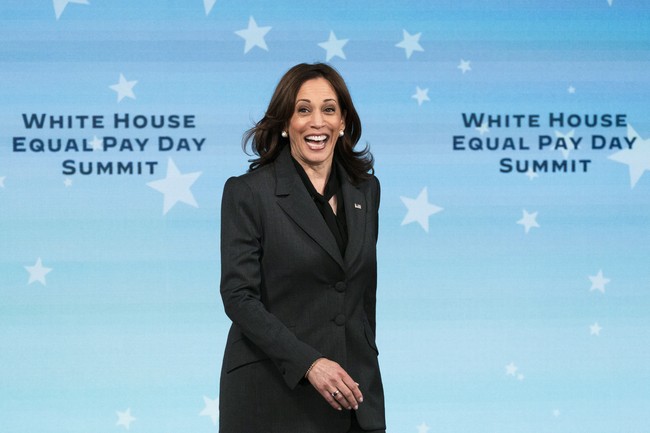
KAMALA HARRIS is warning about election rigging while pushing for aggressive turnout tactics, even as reports show more than 270,000 non-citizens registered to vote. This article looks at her remarks on cheating, redistricting, and the Electoral College, contrasts them with allegations about non-citizen registrations, and highlights the political context and skepticism from the right.
Kamala Harris staged a blunt warning that Republicans are “cheating” and argued Democrats must be “ruthless” to make elections “too big to rig.” She framed the party’s response as a turnout mission and a defensive strategy against supposed interference with polling places. The rhetoric was forceful and framed as urgent at a National Urban League event, with repeated emphasis on mobilization.
She also claimed voters have faced last-minute polling place changes, saying, “Make sure you’ve checked on your polling place because they have been playing games around moving the polling place where your grandparents always voted.” That allegation was offered without substantiating evidence during her remarks. Republicans and others skeptical of the claim say it amounts to projection, noting how the Democrats have handled redistricting in the past.
Harris repeatedly returned to the turnout argument: “Registering folks to vote and having an agenda that is about turning out the vote in the greatest numbers we have ever seen so that in light of and in this environment where they are cheating, we will be too big to rig. Too big to rig.” She added, “It means being ruthless. They are ruthless. We need to be ruthless too.” Those lines were delivered as a call to arms rather than a policy proposal.
Her language struck many on the right as not just combative but inconsistent with Democrats’ recent behavior on election rules. Critics point out that the party often seeks rule changes when outcomes are unfavorable, and that calls to be “ruthless” raise questions about respecting established frameworks. Conservative commentators described the remarks as evidence of a willingness to change rules rather than compete within them.
Harris tied her broader complaint to redistricting, saying, “What they are doing to cheat —19 states have done redistricting. And there are many more that didn’t have to do redistricting because they already had cut the lines in a way that excluded blocks of voters.” She claimed those map changes are part of a plan to hold power by excluding likely opposition voters. Republican observers counter that Democrats have also engaged in map-drawing battles and have criticized courts when their maps were rejected.
She floated revisiting the Electoral College as a remedy, signaling a readiness to rewrite long-standing institutions rather than simply ramp up turnout. That suggestion fed into complaints among conservatives that Democrats default to structural fixes when their candidates lose under current rules. For many Republicans, such proposals read as attempts to tilt the system to their advantage.
Meanwhile, a DHS review of state voter rolls has been cited by conservative sources claiming roughly 278,000 non-citizens are registered to vote in federal elections. The administration’s own statements have suggested the figure could be higher because not all states shared files for a full review. Those numbers are presented by critics as a stark example of how election integrity is at risk and why stricter voter ID and citizenship checks are needed.
https://x.com/RNCResearch/status/2083274936458547564
Republicans have pointed to the alleged scale of non-citizen registration as proof that election vulnerabilities are already real, not hypothetical. They argue measures such as the SAVE America Act, with enhanced ID and citizenship verification, are common-sense protections to prevent unlawful voting. The party frames its push as fixing loopholes rather than suppressing turnout.
Harris’ speeches sometimes mix forceful political messaging and broad claims that invite scrutiny, and this instance was no different. Her version of events—stressing cheating and urging ruthless countermeasures—was met by conservatives as a mix of projection and strategic posturing. Many on the right also note that the Democrats have sought to influence or change election rules when outcomes go against them.
The contrast between inflammatory rhetoric and concrete evidence is central to the debate. Democrats emphasize protecting access and expanding participation, while Republicans cite registration and citizenship concerns to demand stricter verification. That clash over priorities—access versus verification—drives much of the current political argument over election law and reform.
For Republican critics, the most credible threat today is not rhetorical claims about future rigging but the reported presence of hundreds of thousands of improperly registered voters now on the rolls. They see that as a tangible problem requiring legislative fixes, not just urgent turnout drives. This stance frames the GOP push for voter ID and proof-of-citizenship laws as necessary to restore confidence in outcomes.
Harris’ insistence on mobilizing massively and being “too big to rig” caps a broader Democratic strategy of turnout-first responses. To conservatives, it reads like a tactic that presumes changing the electorate or rules instead of competing under existing norms. The debate is likely to harden as both sides move from rhetoric to legislative and legal fights over election administration and verification.


Add comment