
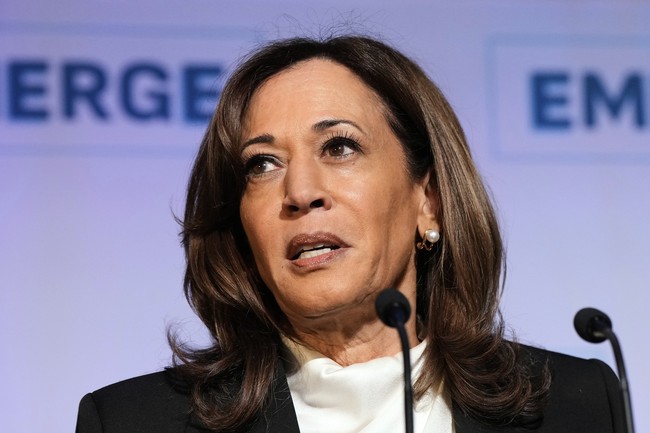
I’ll walk through a short, punchy take on Kamala Harris’s recent answer about the most effective presidents, why her choices tell us more about partisan instincts than historical reality, how that moment highlights Democratic priorities, and why conservatives see it as political theater rather than serious judgment.
The National Urban League exchange put Kamala Harris on the spot with a simple request: “In your view, rank the top three most effective presidents in American history,” he requested. That question sounds straightforward, but the answer revealed how modern partisan identity shapes even basic historical judgment. For Republicans watching, her picks read like a mirror of liberal priorities rather than a sober ranking of leadership and outcomes.
Harris started with Franklin Delano Roosevelt and gave him cautious praise, saying he “did some good things,” and mentioned his attempt at court expansion. Pointing out FDR’s court-packing push and the internment of Japanese-Americans is not an effort to erase accomplishments, it’s to remind voters that big power grabs come with real costs. Conservatives are right to flag those trade-offs when a politician elevates a leader mainly for policy nostalgia.
She also highlighted John Kennedy and Lyndon Johnson, which likely points to civil rights progress and youthful inspiration. Those moments matter, but so do the methods and consequences of political strategies used to achieve them. Republicans argue that effectiveness should be measured by durable results that protect liberty and national strength, not just by legislation authored or speeches given.
Barack Obama made her list next, with nods to the Affordable Care Act. For many on the right, mentioning Obamacare as a pinnacle of effectiveness is baffling because the system remains dysfunctional in significant ways. From a conservative angle, calling a statute with ongoing problems a top achievement suggests a party focused on ideology over outcomes.
Notably absent from her answer were George Washington and Abraham Lincoln, names that routinely top anyone’s list of transformative presidents. Washington established the republic’s traditions and Lincoln preserved the Union through its greatest crisis. Overlooking those two in favor of modern Democratic icons tells viewers something about the lens she and her party use to view history.
Also missing was Joe Biden, which surprised some observers and amused others. Republicans see that omission as a tacit admission of the Biden era’s failures rather than clever politics. If you expect a vice president to boost her boss, skipping him speaks volumes to a conservative audience watching for cracks in the Democratic coalition.
The reaction from across media was telling, too, with even some left-leaning commentators reacting with disbelief or laughter. That response underscores how detached the choice felt from traditional measures of presidential effectiveness like national security, economic stewardship, and constitutional fidelity. For conservatives, those yardsticks remain the priority when judging leadership.
https://x.com/Acyn/status/2083254709465588192
The wider context matters: Democrats are contemplating 2028 options, and Harris’s public moments feed into how the party is perceived. Republicans see this as proof that the Democrats are out of touch, elevating style and identity while failing to grapple with policy consequences voters live with every day. Tactical missteps in discussions about history become ammo in the next campaign cycle.
When a politician frames historical greatness through a narrow partisan view, it signals priorities to voters. Conservatives argue the nation needs leaders who emphasize results that secure borders, restore fiscal sanity, and uphold constitutional limits on power. Moments like this one let the public decide whether a candidate’s sense of history aligns with those goals.
Public perception shapes political viability, and flubs on basic questions amplify doubts. To Republican watchers, her answer wasn’t just an odd list; it was confirmation of long-standing concerns about judgment, competence, and what counts as achievement. That’s why short exchanges like this can have outsized impact in a campaign world where narrative matters as much as policy.
Expect both parties to weaponize the moment: Democrats will defend the picks as values-driven, while Republicans will use them to highlight what they call liberal blind spots. For voters who prioritize national strength and practical results, however, the episode reinforces a familiar take. That’s the political reality Harris’s remark now sits inside.
At the end of the day, swapping historical nuance for partisan shorthand doesn’t convince skeptical voters. Republicans will keep pointing to omissions and contradictions as evidence that the Democrats remain out of touch with mainstream concerns. The exchange was short, but in politics, short moments often say more than long speeches.


Add comment