
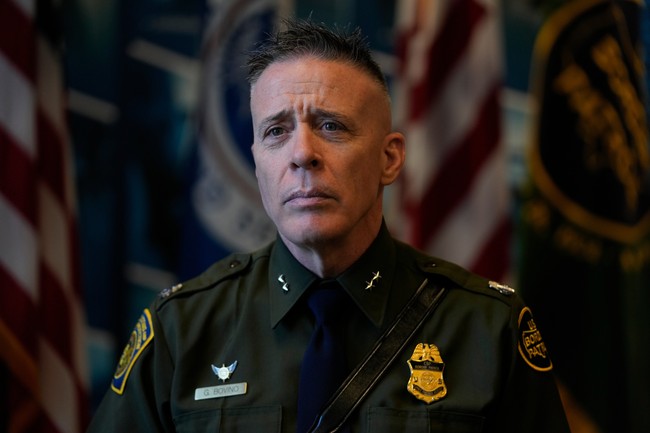
Greg Bovino, the Border Patrol commander who rose to national attention during the Minneapolis ICE operations, is retiring after a 30-year law enforcement career; this article recounts his reassignment, the controversies he faced, the arrests attributed to the operations he led, and the reactions from both critics and supporters.
Greg Bovino spent three decades in Border Patrol ranks and became a lightning rod when Interior ICE operations landed in Minneapolis. He was reassigned from that mission in January and returned to El Centro, California, where he resumed duties as Chief Patrol Agent before announcing his retirement. His role alongside then-DHS leadership made him a central figure in a highly charged national debate about enforcement and public safety.
The Minneapolis surge drew intense media scrutiny and political backlash, and one high-profile casualty of the controversy was Kristi Noem, who was removed as DHS Secretary on March 5. A new nominee, Sen. Markwayne Mullin (R-OK), is set to replace her pending Senate confirmation later this month. Bovino himself was replaced on the Minneapolis mission by Border Czar Tom Homan before heading back to the southern border sector he once led.
Critics accused Bovino of heavy handed tactics, and protests around the operations were loud and persistent. Supporters, however, credit his teams with arresting thousands of dangerous criminals during coordinated interior operations. Those arrests reportedly included gang members, murderers, and child sex abusers, and the enforcement push was described by allies as a hardline effort to restore rule of law where federal policy had been lax.
At a public appearance after his reassignment, Bovino spoke plainly about his pride in his agents and their work. The brief clip he released was not a retirement announcement; it was a show of solidarity and morale for officers he called the “Mean Green Machine.” The comments reinforced a posture familiar to conservative audiences: tough enforcement, support for law enforcement personnel, and a refusal to be cowed by political pressure.
Team: Behind me, there are a few individuals there. That’s the original, “turn and burn” [a phrase meant to evoke “fast pivoting”]. The folks that helped make America.
But you know what? I’m very proud of what you, the Mean Green Machine, are doing in Minneapolis right now, just like you’ve done it, across the United States, over these past tough nine months, and I want you to know that you’re the modern-day equivalent of turn and burn. Makes me very proud. Also want you to know that I’ve got your back, now, and always.
I love you. I support you, and I salute you.
Some of the fiercest opposition focused on specific incidents tied to the Minneapolis operation, including the fatal shooting of a protester during unrest. That incident became a focal point for critics who argued the tactics were reckless, while defenders emphasized the broader record of arrests and the dangerous criminal profiles uncovered. The tension between accountability for individual incidents and praise for overall enforcement effectiveness remained unresolved in many public discussions.
Bovino led Border Patrol’s raids in major US cities including Los Angeles, Chicago, Charlotte, New Orleans and Minneapolis, netting thousands of arrests including convicted gang members, murderers, child sex abusers and more.
“The greatest honor of my entire life was to work alongside Border Patrol agents on the border and in the interior of the United States in some of the most challenging conditions the agency has ever faced,” Bovino, 55, told Breitbart.
Colleagues and conservative commentators framed Bovino as an aggressive and results-oriented leader who answered the call to enforce federal immigration laws. They argued that the operations were necessary to disrupt criminal networks and remove violent offenders from communities. For many on the right, Bovino’s willingness to lead interior enforcement signaled a return to the kind of border and interior security policy they favor.
Even as controversies swirled, the practical outcome supporters highlight is straightforward: thousands of arrests of people with serious criminal histories. That enforcement record is held up as evidence that determined leadership and federal attention can make a measurable difference in public safety. Now that Bovino is leaving the agency after a long career, the debate over tactics and oversight will continue, but his tenure will be remembered for its outspoken defense of agents and for a hardline approach to interior immigration enforcement.


Add comment