
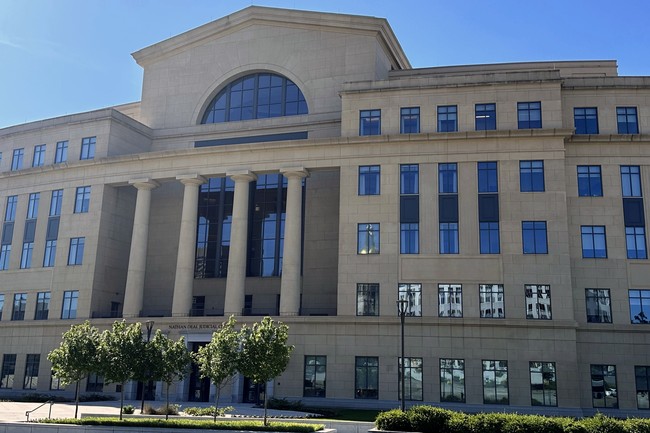
The Georgia Supreme Court recently stepped in after a Clayton County prosecutor filed a court order that included fake case citations generated by artificial intelligence. The high court found multiple citations that did not exist or were misattributed, vacated the trial court’s order denying a motion for new trial, and instructed the trial court to issue a corrected order not drafted by counsel for either side. The prosecutor who prepared the problematic order was admonished and suspended from practicing before the state Supreme Court for six months. The episode has sparked debate about AI use in legal work and responsibilities for verifying citations.
The controversy began when a clip surfaced of Chief Justice Nels S.D. Peterson questioning Clayton County Assistant District Attorney Deborah Leslie about the accuracy of case citations in a trial court order related to the State v. Hannah Payne murder case. In the courtroom exchange, Justice Peterson told Leslie that “there are at least five citations to cases that don’t exist,” and pushed for clarity about how those citations made it into the order. Leslie replied that she “did not believe so” and offered to research the matter and provide a supplement. The viral nature of the video put immediate public pressure on the prosecutor’s office and the court system.
“Unfortunately, in reviewing the trial court’s order denying the motion for new trial, there are at least five citations to cases that don’t exist, and there’s at least five more citations to cases that do not support the proposition for which they’re cited, including three quotations that don’t exist,” Justice Peterson said at the time.
“My understanding is that you prepared the … denial order for the trial court,” Justice Peterson said. “Were those citations in the version of the order that you submitted to the trial court?”Leslie said in response at the time that she “did not believe so,” later adding, “I’m not aware of that, but I would be glad to research that and provide the court with a supplement.”
After the exchange, the Clayton County District Attorney’s Office disclosed that AI tools had been used and that the errors were not intentional. The office reported that disciplinary steps were taken internally, including suspension and a performance plan for the attorney involved, and that a grievance had been filed with the State Bar of Georgia. Despite internal discipline and an apology from the district attorney, the Georgia Supreme Court imposed its own corrective measures aimed at preserving the integrity of judicial orders. The court emphasized the need for accuracy in legal filings and for trial courts to be cautious when reviewing proposed orders prepared by counsel.
The Supreme Court’s action vacated the lower court’s denial of Payne’s request for a new trial and directed the trial court to issue a fresh order that does not contain fabricated or misattributed citations. The decision stopped short of deciding the merits of Payne’s or the State’s arguments, focusing instead on the procedural impropriety introduced by faulty citations. The court made clear that the new order must not be prepared by counsel for either party, underscoring the seriousness with which it views the contamination of court records by erroneous authorities. That move preserves judicial impartiality while forcing a clean slate for the procedural posture of the case.
The prosecutor who filed the problematic order, Deborah Leslie, was admonished and suspended from practicing before the Georgia Supreme Court for six months. The court also formally admonished the DA’s office for failing to verify citation accuracy before filing documents with the trial court and with the state high court. A footnote in the opinion reminded readers that disciplinary actions by the State Bar of Georgia, the Judicial Qualifications Commission, or other entities could still proceed, which means professional consequences may continue beyond the court’s sanctions. The court plainly signaled that accountability mechanisms remain in play.
Observers on social media and among legal commentators reacted strongly, with some calling for disbarment or criminal penalties, while others focused on broader lessons about AI and lawyer diligence. The court, for its part, did not ban AI use; instead it encouraged trial judges to scrutinize proposed orders carefully, “with the understanding that artificial intelligence software, with all of its potential risks and benefits, may have been used to prepare such proposed orders.” That guidance tries to balance innovation with a clear duty to verify authorities relied upon in court documents.
The incident is a cautionary tale for law offices and courts dealing with AI-generated material: reliance on automated tools without human verification can produce serious procedural fallout. Courts depend on attorneys to provide accurate legal authorities, and when citations are false or misattributed, the integrity of judicial decision-making is threatened. Moving forward, attorneys and courts alike face pressure to adopt verification processes that prevent AI errors from infiltrating the official record. The long-term effects of this episode on rules, practice, and disciplinary standards are still unfolding.
Watch:
The full opinion vacating the trial court’s order instructed the trial court to reissue an order free of fabricated citations and made clear the decision does not resolve the underlying legal claims in the case. The matter remains in the trial court for further proceedings consistent with the high court’s directions, and additional disciplinary processes may follow. The episode underscores the duty attorneys owe to the court to verify the accuracy of authorities and shows how quickly a lapse in that duty can trigger wide-reaching consequences.



Add comment