
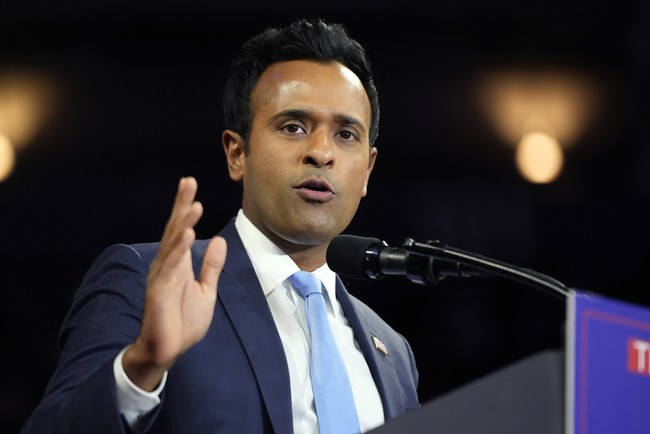
Vivek Ramaswamy has secured the Republican nomination for Ohio governor, setting up a high-stakes November contest against Democrat Dr. Amy Acton. This article lays out what happened in the primary, who the players are, how the race unfolded, and what it means for voters and the broader political landscape in 2026.
Decision Desk HQ called the race with most precincts reporting, and the business leader Vivek Ramaswamy emerged as the Republican nominee over challengers who ran insurgent campaigns. One rival, Casey Putsch, built an audience as a YouTuber and car designer, while another candidate was removed from the ballot under a procedural state law. Ramaswamy’s win closes the primary chapter and launches the general election fight that will define Ohio’s direction next year.
Businessman Vivek Ramaswamy has won Ohio’s Republican primary for governor, NBC News projects, advancing to what could be an expensive and competitive general election in a state that has been brutal for Democrats in recent elections.
Amy Acton, a former state health director, won the Democratic nomination Tuesday without opposition.
Ramaswamy, 40, defeated Casey Putsch, a political novice known for his “car guy” videos on YouTube. Putsch’s campaign played out largely through social media missives, some of them targeting Ramaswamy’s Indian American heritage. A third GOP candidate, Heather Hill, was removed from the ballot under a provision in state law after her running mate for lieutenant governor withdrew from the race.
Ramaswamy’s running mate for lieutenant governor is state Senate President Rob McColley. Acton is running with David Pepper, a former Ohio Democratic Party chair and past nominee for state attorney general and auditor.
Ramaswamy’s campaign has been about bold ideas and shaking up the status quo, themes that resonated with Republican voters hungry for clear leadership. He presents himself as an outsider-turned-effective candidate who wants to cut red tape and bring pragmatic change to Ohio. The campaign struck a contrast with opponents who tried to build support through niche followings rather than broad policy platforms.
On the Democratic side, Amy Acton secured her party’s nomination without opposition, positioning herself as the safe, experienced choice after her tenure as state health director during the pandemic. Her platform promises to tackle costs and corruption, framed in progressive language about fairness and equity. That message will be tested head-to-head against a Republican pitch focused on economic growth and public safety.
The matchup promises to be expensive and closely watched, because Ohio remains a battleground that can swing national narratives. Republicans see an opportunity to protect a critical state and keep momentum through 2026, while Democrats aim to make gains by energizing urban and suburban voters. Expect heavy advertising, targeted ground operations, and nonstop media attention as the campaigns sharpen their messages.
Ramaswamy’s choice of running mate, state Senate President Rob McColley, signals a move to consolidate support inside the state’s GOP infrastructure and to emphasize legislative experience. That pairing blends Ramaswamy’s outsider brand with institutional know-how, aiming to reassure voters about governance capability. Meanwhile, Acton’s pick of David Pepper pairs her public health profile with a seasoned party operative and former statewide nominee.
The primary campaign also exposed some of the uglier elements that can arise in modern politics, with social media amplifying personal attacks and identity-based jabs. Such tactics highlight the risks of low-info engagement and the fragmentation of political discourse into online echo chambers. For serious voters, the substance of policy proposals and concrete plans for schools, jobs, and public safety should matter more than viral moments.
Looking ahead, both parties will need to define the stakes clearly for Ohioans: who can deliver lower costs, safer communities, and a stronger economy. Republicans will press the case for leadership that defends individual freedom and cuts wasteful spending, while Democrats will argue for protections and investments woven into a message of fairness. Voters will decide which vision best matches their priorities when they cast their ballots in November.


Add comment