
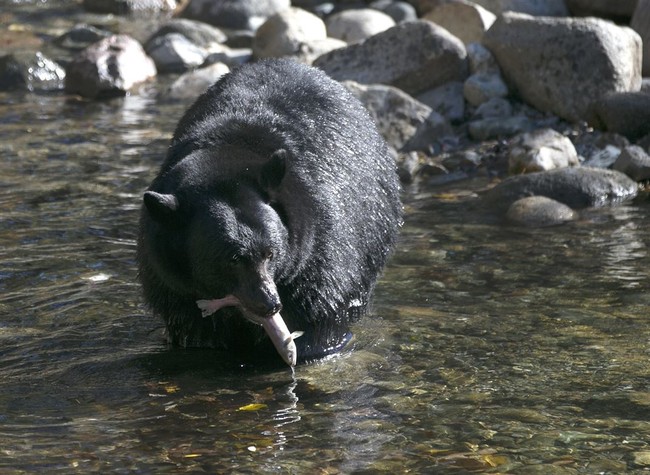
Checklist: I’ll frame the debate around science versus emotion, recap the history of Florida’s bear hunts, explain what a regulated hunt means, examine the roles of wildlife professionals and hunters in conservation, and highlight statistics and safety concerns that shape the policy choices that led Florida to revive the hunt.
Florida has restarted a black bear hunt this winter, and the disagreement over it comes down to whether policy should follow feelings or data. This piece looks at how past events, management practices, and practical realities created the environment for a renewed, regulated hunt. The headline matters: “Science, Not Emotion” signals that decisions about wildlife should rest with trained professionals who study populations and habitats. The debate is noisy, but the technical work driving wildlife policy is quiet and methodical.
Ten years ago, a bear hunt in Florida shocked many when graphic images of carcasses at check-in stations spread online. “Ten years ago, a Florida bear hunt shocked the public when photos spread online of bloody carcasses of mother bears loaded in pick-up trucks and splayed out on concrete slabs at hunter check-in stations.” The harvest that weekend exceeded expectations and the quick suspension that followed left a lot of public anger and long memories. Those images shaped perceptions about hunting for a long time, and they remain central to opponents’ arguments.
That 2015 episode raised immediate questions about what the harvest composition actually was and what conclusions could be drawn from a single weekend’s numbers. The earlier hunt ended after an estimated 304 bears were killed the first weekend, near that year’s quota of 320. People asked whether the animals taken were predominantly mothers and whether the data really supported broader claims. Those questions are important because management actions should rely on verified population and demographic data, not anecdotes or shock photos.
“Hunters said the quick success rate was proof of a “robust” bear population. Wildlife defenders called the state-sanctioned hunt “a slaughter” and succeeded in discouraging officials from authorizing another one, until this year.”
“The first regulated Florida black bear hunt in a decade has been underway since Dec. 6. But unlike the 2015 version, it’s almost invisible to anyone but hunters. They report their kills over the phone, instead of taking slain bears to check-in stations open to public view.”
That quote captures the tension: hunters point to harvest success as an index of population health while critics emphasize the emotional impact of seeing dead animals. The current hunt was designed to be less public-facing than the one that caused outrage, with reporting methods changed to avoid the spectacle of carcasses on display. If management aims to be both effective and less inflammatory, reducing public spectacle is one administrative choice among many.
Regulated hunts mean biologists set quotas and seasons based on monitoring, not on social media outcry. Wildlife agencies track population surveys, reproductive rates, mortality, and habitat conditions to recommend adjustments. These data inform quotas and spatial limits so takes stay within sustainable bounds and preserve the species’ long-term viability. That process may look dull to headline-hungry critics, but it keeps wildlife populations healthy without giving in to transient emotional pressures.
Apex predators such as black bears influence the way people interact with landscapes, and that relationship changes when animals start associating humans with food. Predators tend to classify animals they meet as food or foe, and when they learn people are safe and food is available, behaviors can shift. While fatal attacks are rare, the record shows some risk: over the past decade there have been 11 fatal bear attacks, mostly by black bears, and three fatal mountain lion attacks recorded in a similar period.
Numbers matter in public safety as well as conservation. Black bears are the most common bear species in North America and are more likely to live near people than larger bear species, which increases the chance of encounters. Managing population size and behavior helps reduce human-wildlife conflict and can be an integral part of public safety policy in areas where bears and people overlap. Decisions driven by science aim to limit those conflicts while sustaining healthy populations.
Critics of hunting often rely on emotional appeals rather than offering workable management alternatives. When they do present figures, those numbers are sometimes debatable or taken out of context. Practical wildlife management needs funding and boots-on-the-ground work, and historically that support has come substantially from hunters’ license fees and excise taxes on sporting equipment. Those revenues pay for surveys, habitat projects, and enforcement that benefit many species, not just game animals.
People who actually manage wildlife—biologists, technicians, and agency staff—compile the data and make the technical recommendations that form the backbone of regulated hunts. Professionals balance reproduction rates, habitat capacity, and human safety when they advise policymakers. That balance is not perfect, and it deserves scrutiny, but it is grounded in measurable criteria rather than on the most outraged social media reaction.
The revived Florida hunt reflects an institutional choice to rely on those professionals and on the traditional funding model that supports conservation work. That choice will continue to be contested in the public square, but it is rooted in the mechanics of wildlife management: monitoring, setting quotas, and adapting as new data arrive. For now, Florida’s approach emphasizes the role of science and regulation over spectacle and emotional protest.

Add comment