
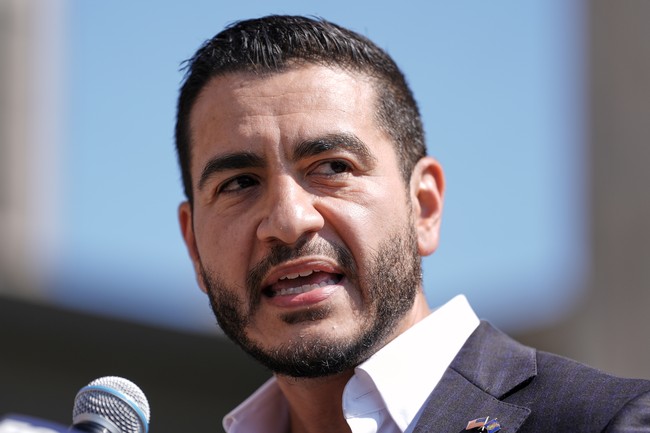
Here’s a concise take: I will describe the contentious Fox interview, quote the candidate’s juvenile reply verbatim, outline how his comments played in Michigan, note the contrast with his opponent’s background, and place the embedded media where it originally appeared. This article covers the El-Sayed interview, the reaction it drew, and why it matters for the Michigan Senate race.
The Democratic nominee for the Michigan Senate seat, Abdul El-Sayed, faced a rough night on national television during an interview with Fox’s Jesse Watters. The exchange quickly tilted from awkward to damaging as El-Sayed repeatedly dodged direct questions and frequently talked over the host. Those tactics didn’t hide the substance of his responses, and several lines landed poorly with viewers and likely voters across the state.
At issue was more than an off-key interview style; El-Sayed offered answers that many judged extreme or simply confusing. One of the most jarring moments came when he compared sex changes for minors to circumcision, a remark that Watters called “sick” on air. For a state like Michigan—where cultural and parental concerns play into voters’ calculations—that type of comparison is not likely to help a candidate already struggling with credibility.
After the segment aired, El-Sayed tried to shift the spotlight by targeting his opponent, Trump-backed Republican Mike Rogers, and by suggesting Rogers had avoided tough interviews. Those attacks looked weak because they weren’t supported by the facts of the exchange. Watters had said he never invited Rogers to be on the show, which is not the same as refusing to face hard questions; El-Sayed’s claim that Rogers “wouldn’t even do tough interviews on Fox” misrepresents what was actually said.
We could debate it on 9/15 if you weren’t such a coward. Didn’t realize until yesterday you wouldn’t even do tough interviews on Fox until @JesseBWatters told me so. (Btw, he agrees that you’re a beta. Kept laughing at you every time I’d bring it up. Wouldn’t even deny it!)
That blockquote, posted after the interview, speaks for itself—its tone underscored why critics called El-Sayed juvenile. Name-calling an opponent “a beta” plays poorly when the opponent served in the U.S. Army and was an FBI Special Agent before coming to Congress. Mike Rogers’ background in military and federal law enforcement positions him as a traditionally strong, disciplined candidate, the opposite of the childish framing El-Sayed used.
Observers noted that El-Sayed’s strategy looked increasingly desperate: when substantive attacks fail, he seems to resort to cheap shots and inflammatory analogies. Instead of explaining or defending the policy positions that concern voters—like his past comments about the Green New Deal or how he would handle Michigan’s economy—he flung rhetorical mud and hoped something would stick.
https://x.com/AbdulElSayed/status/2092345874231738656
The substance of the interview matters because voters expect candidates to provide clear, sober answers on complex issues, not flippant comparisons or personal insults. In a competitive Senate race, any moment that confirms fears a candidate is extreme or unserious will be seized on by opponents and the media. El-Sayed’s interaction with Watters offered plenty of fodder for that narrative.
Republican strategists will pack those clips into ads and social posts that contrast El-Sayed’s remarks with Mike Rogers’ record of service and his law-and-order resume. That contrast is stark: one side offering a focused public service history, the other trading in spectacle and provocative lines. For undecided voters, the optics of temperament and judgment often weigh as heavily as policy points.
Beyond political theater, the exchange revealed a deeper campaign problem: El-Sayed appears to struggle when pressed to explain how his policy stances translate into practical solutions for Michigan families. When an interview reveals more confusion than clarity, it gives the opposition a clear opening to question competence. In a tight race, competence and composure can decide the outcome.
The interview’s fallout also shows how quickly a single televised moment can reshape a campaign narrative. Whether viewed as a misstep in style or a substantive red flag, that exchange will be replayed and reframed across the fall campaign. For the Republican candidate, it becomes a useful contrast; for El-Sayed, it becomes another hurdle to clear if he hopes to win over skeptical voters across Michigan.



Add comment