
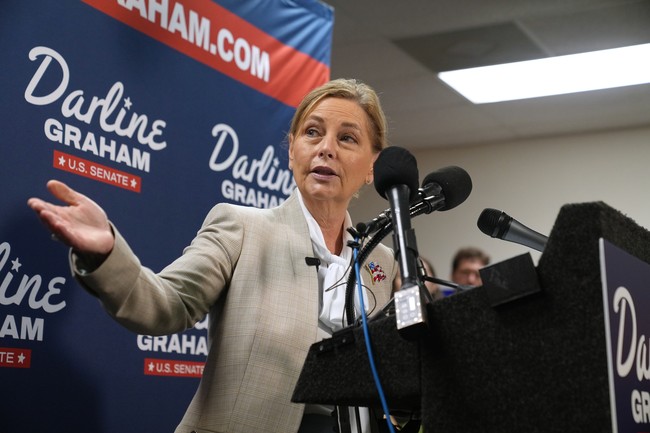
Decision Desk HQ has projected Darline Graham as the Republican nominee in the South Carolina special runoff for U.S. Senate, where she beat Rep. Ralph Norman by a 53 to 47 margin with most precincts reporting, setting up a November matchup against Democrat Dr. Annie Andrews.
The runoff capped a charged primary that pitted brief incumbency and name recognition against a long-serving House member with a conservative record. Graham benefited from the Graham name, immediate incumbency advantage after filling the late Sen. Lindsey Graham’s seat, and high-profile endorsements. Norman ran on his record in Congress and conservative credentials, but lingering questions about past endorsements worked against him. Voter turnout and sentiment in the Palmetto State favored a candidate tied to a familiar brand.
https://x.com/DecisionDeskHQ/status/2092411558580154775
Prediction market Kalshi had tipped in Graham’s favor and came fairly close to the final margin, reflecting how traders and bettors saw the race as it tightened. Polling from several firms painted a competitive picture at different points, but momentum shifted in the closing stretch. The runoff format rewarded a campaign that could consolidate the GOP base and bring out conservative voters in late summer. Grassroots organization and last-minute endorsements proved decisive.
Norman’s campaign emphasized a strong conservative voting record and experience in Washington, but his 2024 endorsement of Nikki Haley over then-former President Donald Trump resurfaced as a vulnerability for some primary voters. Republican primary electorates often weigh loyalty to Trump and perceived alignment with the party’s broader direction, and that dynamic played a role here. Norman tried to counter by leaning into his legislative accomplishments and promises for a conservative Senate vote. In a tight race, every perceived misstep mattered.
Graham faced criticism for a debate performance that some considered underwhelming, yet endorsements from President Donald Trump and Senator Tim Scott helped to blunt concerns and offered a credibility boost. Those national and state-level endorsements signaled to Republican voters that Graham was a reliable pick for the party’s priorities. The brief period of incumbency after succeeding her brother gave her a platform to demonstrate steadiness in office. That combination of factors nudged undecided primary voters her way.
Winning the Republican nomination does not end the political grind; it shifts the battle lines to the general election, where turnout and messaging will change. Graham will square off against Dr. Annie Andrews, a Charleston pediatrician, in November, forcing both campaigns to adjust to a different electorate that includes independents and swing voters. The general election will test whether the same factors that decided the primary — name recognition, endorsements, and conservative unity — translate into broader voter appeal. Campaign strategy, fundraising, and local issues will matter heavily in the months ahead.
South Carolina Republicans will watch whether this result energizes the base statewide and how national players view the seat as part of the Senate math. For the GOP, holding or expanding Senate control remains a top objective because of the legislative agenda at stake. Local Republican organizations will now pivot resources toward a November campaign that may draw national attention and dollars. The outcome could influence tactics in other competitive states facing similar dynamics.
Key takeaways for Republican voters are clear: endorsements from prominent party figures can sway tight races, last-minute momentum matters, and perceived loyalty to party leaders carries weight. Campaigns that secure unity after a heated primary tend to be better positioned for November, provided they can broaden their appeal beyond the primary electorate. Additionally, prediction markets and targeted polling offered useful signals about where the race was headed. The interplay of name recognition, incumbency, and national endorsements defined this runoff.
Editor’s Note: The 2026 Midterms will determine the fate of President Trump’s America First agenda. Republicans must maintain control of both chambers of Congress.



Add comment