
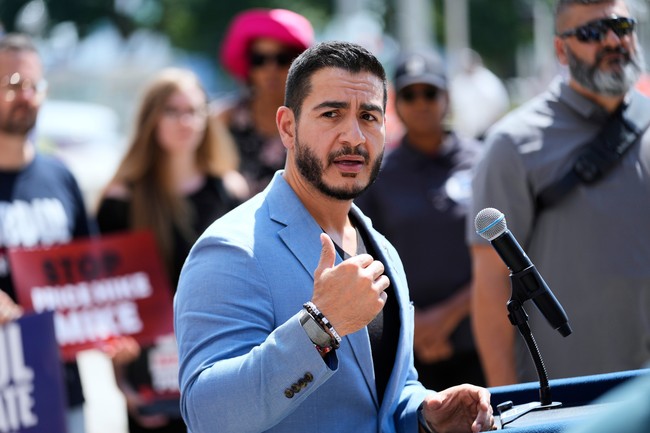
This article examines Michigan Senate candidate Abdul El-Sayed’s recent social media posts, the backlash they drew, and why those posts damage his appeal to moderate voters while also amplifying attacks from his opponents.
El-Sayed has kept a steady stream of provocative X posts that have landed him in hot water, suggesting a strategy that trades long-term electability for short-term attention. Critics on the right and center say his online behavior looks irresponsible for someone seeking a statewide office. The pattern is clear: posts aimed at energizing a base instead alienate the swing voters who decide Michigan races. That dynamic matters because the general election will hinge on the middle, not the fringes.
One example that sparked outrage was a prior tweet that assumed Vice President JD Vance’s white grandfather would be racist toward his wife, Usha Vance. That tweet drew immediate criticism for stereotyping Midwestern voters, a risky move in a state like Michigan where appealing to everyday people matters. Instead of backing off, El-Sayed and his team kept posting, which only extended the story and made it harder to control the narrative.
Then came his most recent post, which referenced an exchange involving President Donald Trump and an aide named Natalie Harp. El-Sayed wrote, “Natalie, I think he’s had a little too much iPad for the week,” El-Sayed posted, referring to President Donald Trump. “He needs his rest.” That line was clearly meant to land a cheap shot at Trump by invoking a staffer’s name, but the move misfired politically.
Using a female staffer as a conversational prop won’t play well with many swing voters who view those tactics as petty or misogynistic. Voters in the center want candidates focused on issues like jobs, borders, and public safety, not online sparring that drifts into personal territory. By repeating a tactic similar to an earlier misstep by Sen. Jon Ossoff, El-Sayed demonstrated either poor judgment or a willingness to prioritize grievance-posting over message discipline.
There’s a second problem beyond alienating moderates: El-Sayed’s tweet effectively amplified an attack against himself that his opponents will happily repeat. The Trump campaign’s clip that started this thread pokes at past associations and statements linked to El-Sayed, including his appearances with controversial online figures. By engaging with the clip on its terms and not rebutting the substantive points, El-Sayed let the punchline and the hit piece spread further.
The Streisand effect is in full force here; attempts to score quick points on social media have drawn far more attention to the original accusations he would prefer to minimize. When a candidate uses the same tactic as the person who started the culture war exchange, it looks defensive and shrill, not strategic. That’s especially damaging in a state where credibility and steadiness matter to undecided voters.
Responses from Republican operatives and former candidates were swift and blunt. One GOP strategist called the campaign “bad” and criticized the instinct to air these takes online. Another voice pointed out that attacking women who are not in the political fight is cowardly and raises questions about how he would treat female staffers in office. Those criticisms aren’t just partisan sniping; they track with what independent-minded voters notice about tone and temperament.
https://x.com/AbdulElSayed/status/2091160636008849863
“This is what I’m talking about,” said GOP strategist Matt Whitlock, posting screenshots of the posts directed at Harp and Usha Vance. “Just a bad campaign, bad candidate, bad instincts. Sitting at home on a Saturday morning tweeting bad takes that any normal campaign would shut down.”
“He goes after Usha. He goes after Natalie [Harp]. This coward picks on women who are not in his fight. Imagine how he would treat female staffers in the halls of Congress,” said Tudor Dixon, a Republican former gubernatorial candidate in Michigan.
El-Sayed’s approach looks even worse when contrasted with his likely Republican opponent, Mike Rogers, who has emphasized outreach to a broad spectrum of voters. While El-Sayed trades in online heat, Rogers has been aiming messages at persuadable Democrats and independents. That contrast reinforces the choice voters face between a candidate who courts the base online and one who presents himself as a steady representative for the whole state.
Campaigns live and die on discipline, timing, and message control. Social media stunts that provoke headlines can be useful if they advance a clear policy argument, but these posts have no policy backbone. They mainly create headlines and distraction, and in this cycle that distraction looks like the candidate’s worst instincts on display. For Michigan voters who prefer competence over controversy, those instincts matter.
If El-Sayed wants to change the narrative, he would need to shift from personality-driven jabs to sustained, substantive engagement on the issues that affect Michiganders. Until then, his social media pattern will be an easy target for opponents and a warning sign for undecided voters worried about tone and judgment. The political cost of these decisions is not theoretical; in tight statewide races, tone and credibility are decisive factors.


Add comment