
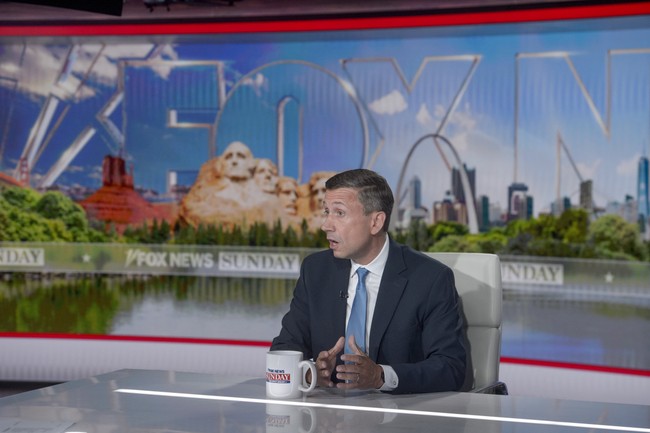
It’s no surprise that Democrats often twist the truth, but lately, they’ve really outdone themselves. They’re dodging and deflecting on issues like the Los Angeles riots, ICE immigration sweeps, and what they misleadingly call Medicaid “cuts.” It’s a bit like watching a circus where the main act is their ability to spin stories to fit their narrative.
The latest spectacle involves DNC Chairman Ken Martin. In a PBS interview, Martin was questioned about New York City mayoral nominee Zohran Mamdani’s failure to denounce the antisemitic “globalize the intifada” chant. Instead of condemning it, Martin embraced the idea of the Democratic Party being a “big tent,” suggesting there was room for all kinds of views, even those that are plainly destructive.
After his comments went viral, Martin rushed to social media, accusing the “right-wing lie machine” of twisting his words. He claimed he never supported the intifada chant, calling it reckless and dangerous. Yet, during the PBS interview, he failed to explicitly condemn it, waiting until public pressure mounted before taking a clearer stance.
Martin’s attempt to explain himself came across as half-hearted at best. The Free Beacon and others pointed out that he used the word “disagreement” to describe the chant, as if it were a minor squabble about dinner plans. This is hardly the firm condemnation such a serious issue demands.
The idea of the Democrats as a “big tent” party has been touted often by Martin and others. However, this inclusiveness seems to extend to those who openly support antisemitic rhetoric. Martin’s comments revealed a reluctance to distance the party from individuals like Mamdani, who have aligned themselves with the pro-Hamas, antisemitic BDS movement.
This isn’t the first time Democrats have struggled with addressing antisemitism within their ranks. Figures like Reps. Ilhan Omar and Rashida Tlaib have been criticized for similar views, yet continue to enjoy support from the party. Martin’s comments only underscore the party’s ongoing challenge in dealing with this issue.
When confronted about Mamdani, Martin’s response was to highlight the Democratic Party’s diversity. Yet, embracing diversity should not mean turning a blind eye to dangerous ideologies. It’s unsettling to see party leaders so willing to accommodate those who spread messages of hate.
The situation is a frustrating one for many observers. It seems as if every time the Democrats are called out, they deflect by accusing the other side of lying. Meanwhile, they continue to harbor individuals with extremist views, further muddying their message.
The Democrats’ handling of antisemitism has been criticized by many, including some Jewish members of their own party. It’s a glaring contradiction when figures like Rep. Jerry Nadler endorse candidates with troubling views, yet claim to stand against such rhetoric.
Martin’s performance during the PBS interview was a missed opportunity to take a firm stand. Instead, he chose to emphasize the supposed inclusiveness of the Democratic Party, while sidestepping a clear rejection of antisemitism.
It’s disappointing to see such a lack of accountability. The Democrats often accuse others of bigotry, yet fail to address the prejudices within their own ranks. This selective outrage does little to advance their claims of being a party of tolerance.
For many, the handling of this situation is a reminder of the challenges the Democratic Party faces. They claim to champion diversity and inclusion, but their actions often suggest otherwise. The party’s failure to confront antisemitism head-on is a stark example of this disconnect.
The Democrats’ reluctance to address these issues head-on only fuels criticism from the right. It’s a cycle that continues to play out, with little resolution in sight. As long as party leaders like Martin avoid directly confronting antisemitism, the problem is likely to persist.
The broader implications of this issue extend beyond just the Democratic Party. It highlights a troubling trend in politics, where leaders are more concerned with placating certain factions than taking a principled stand. This kind of approach only serves to deepen divisions.
It’s a situation that leaves many feeling frustrated and disillusioned. The hope is that leaders will eventually rise to the occasion, taking a firm stand against all forms of hate. Until then, the political landscape remains as contentious as ever.
As observers watch the situation unfold, there’s a sense of urgency for change. The need for leaders who are willing to speak out against extremism has never been more apparent. It’s a call to action that extends beyond party lines.
The Democrats’ current approach to handling internal dissent is a lesson in what not to do. Embracing diversity should not mean giving a platform to those who promote hate. It’s a balance that the party has yet to strike successfully.
For now, the conversation continues, with many hoping for a shift in the narrative. The stakes are high, and the need for strong leadership is clear. Only time will tell if the Democrats can rise to the challenge and address the issues within their ranks.
The ongoing debate around these issues is a reminder of the complexities of modern politics. It’s a landscape where nuance is often lost, and clear stances are hard to come by. Yet, the demand for change remains, urging leaders to take a stand for what is right.
Here’s the exact reason I left the Demonrats party and will NEVER return!!! I’m not a racist and will not support a party that supports racism!!!!!
Great comment Ron, and thank you for switching sides as many Democrat voters are doing now.
Thank you both Michael and Ron! What you said is to me the “crux of the entwined evil” that is the Democrat Party! And it absolutely reminds me of what so called Democrat Socialists a hundred years ago in Germany were screaming just before WWII when “Adolph Hitler ranted to his rise to power, death and destruction!” As far as I’m concerned this party doesn’t exist and should not!
Your welcome brother.