
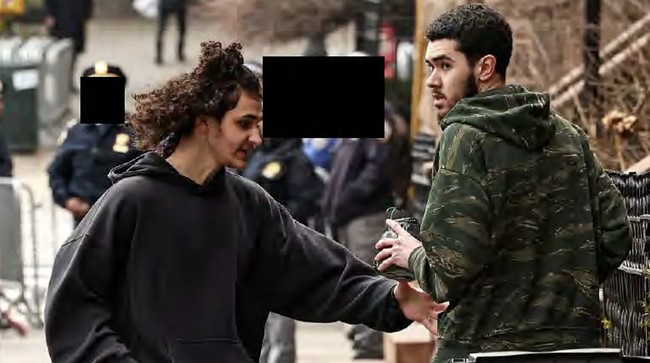
CNN published what reads like a sympathetic profile of two accused attackers who allegedly tried to detonate bombs at a protest in New York, framing the pair as ordinary teens on a casual city outing. That framing sparked swift backlash after surveillance and court claims showed the incidents involved homemade explosive devices, one thrown into a crowd while the suspect cried “Allahu Akbar,” and another left near police officers. CNN deleted and revised its social post and intro, then issued a statement saying the original post “failed to reflect the gravity of the incident.” The coverage and the network’s response reveal a broader problem: media outlets sometimes prioritize tone and narrative over the clear facts of alleged violent acts in our cities.
The basic facts are stark and alarming. Two teenagers from Pennsylvania, identified as Emir Balat and Ibrahim Kayumi and described as the children of immigrants, are accused of building at least two improvised explosive devices and taking them into Manhattan. Video reportedly shows one device thrown into a crowd at an anti-Muslim protest and another dropped near NYPD officers, and a third device was later found in a vehicle near the scene. Those are not minor details; they are central to understanding what happened and the level of danger posed.
Instead of foregrounding those dangers, CNN’s initial social post and online copy framed the trip through a soft, almost picturesque lens. That framing presented the defendants as if they were simply enjoying a warm day in the city before fate intervened, an approach that downplays agency and alleged intent. When journalists soften the narrative around violent acts, they risk confusing readers and undercutting public concern about real threats in public spaces.
Here is the exact language CNN used in its social post, presented intact:
Two Pennsylvania teenagers crossed into New York City Saturday morning for what could’ve been a normal day enjoying the city during abnormally warm weather.
But in less than an hour, their lives would drastically change as the pair would be arrested for throwing homemade bombs during an anti-Muslim protest outside of Mayor Zohran Mamdani’s home. Here’s what we know so far.
The same flowery approach showed up in the article intro as well, and that opening also minimized the accused actions by couching them in terms of a sudden “dark turn.” Presenting alleged bombings that way blurs responsibility and diverts attention from questions everyone should expect reporters to ask. Who radicalized these teens, who supplied materials, and whether there were additional conspirators are critical lines of inquiry that deserve clear, forceful reporting.
Two Pennsylvania men on Saturday followed the route taken by thousands as they crossed the George Washington Bridge into New York City. But less than an hour later, their trajectory took a dark turn as they were arrested for throwing homemade bombs during an anti-Muslim protest outside of Mayor Zohran Mamdani’s home.
CNN later deleted the social post and altered the story intro, then issued a statement saying the post “failed to reflect the gravity of the incident.” That response reads like damage control rather than a correction rooted in accountability. Deleting a post after public outrage is not the same as acknowledging a pattern of repeatedly soft-pedaling violent incidents or committing to tougher, clearer reporting standards.
Public trust in media depends on consistent facts-first coverage, especially when alleged acts of violence are involved. When outlets prefer literary phrasing over direct confrontation of serious allegations, they create space for misinterpretation and leave the public unsure what to believe. Coverage of events tied to ideology, religion, or politics demands even greater rigor precisely because of the way words shape public perception.
It is reasonable to expect networks to treat allegations of mass violence with the gravity they deserve, to investigate how suspects became radicalized, and to avoid euphemism that minimizes danger. The city and its residents deserve reporting that clarifies, not cushions, the facts. Journalists must do more than apologize after the fact; they should build coverage that resists narrative shortcuts and centers public safety and accountability.
The swift removal and subsequent edits by the network do not cure the initial lapse in judgment. Readers need consistent standards and immediate transparency when editorial decisions obscure the seriousness of an event. Coverage that uses feel-good phrasing to describe alleged terror acts risks normalizing violent behavior and distorting the public record.


Add comment