
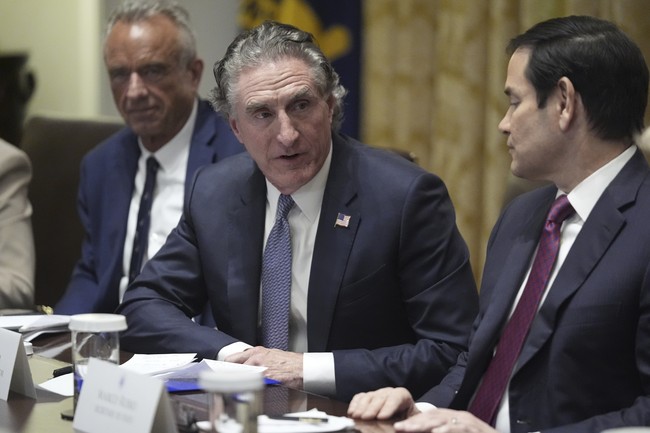
The piece examines Secretary of the Interior Doug Burgum’s firm responses to cable hosts about repairs to the National Mall’s Reflecting Pool and other monuments ahead of America’s 250th, highlights media attempts to turn routine maintenance into controversy, and outlines the administration’s claims about restorations, cost context, and public safety measures.
The left-leaning media erupted over what should have been a straightforward story: repairing leaks and restoring public spaces before a major national celebration. For years many of these parks, fountains, and monuments suffered from deferred maintenance, and the decision to fix them is being framed as political theater instead of civic upkeep. That reaction tells you more about the media narrative than about the work itself.
Doug Burgum went on television to explain the scope and intent of the repairs and to call out the shrill media framing. He didn’t duck questions and he didn’t sugarcoat the situation; he laid out facts about monuments that had been neglected and why crews were working now. The tone was calm but unapologetic, and that approach exposed how these interviews were often more about scoring points than getting answers.
Here he is with Dana Bash on CNN.
Reporters tried to make a story out of routine crowd control procedures by asking why the Reflecting Pool area was fenced on July 4. The explanation was practical and ordinary, but the hosts pushed for outrage anyway. That effort collapsed as soon as Burgum explained the real reason the area was closed to the public.
https://x.com/RapidResponse47/status/2073767397136244761
Burgum spelled it out plainly: the pool was fenced because the largest fireworks display in the country was being set up along the pool’s edges, creating a safety perimeter. The hosts’ attempt to suggest secrecy or malfeasance evaporated when the safety rationale was presented. The insistence on manufacturing scandal where none exists reflects a media class looking for headlines instead of solutions.
“No, it was closed because the largest fireworks display in the country was set up, and it lines either side of the Reflecting Pool. You can’t have people around fireworks when they’re being set up. Now that the fireworks will come down, the fence will come down. The fence was there because of the fireworks.”
ABC’s questions about costs were the next angle, but Burgum responded with specifics about what had been done and why the spending was defensible. He pointed to dozens of restored monuments, fountains that now run after years of neglect, and a drop in graffiti sites that had plagued the mall. Framing repairs as waste ignores the visible results and the benefits to public safety and heritage preservation.
The administration claims they have repaired 48 monuments and 22 fountains that had not seen functioning water for years, and that over 1,000 graffiti sites have been addressed. Those are concrete tallies that matter to people who visit the Mall, not abstract talking points for late-night pundits. Restoring water features and cleaning memorials is about dignity, tourism, and honoring those the monuments represent.
One striking point Burgum made was that a prior $34 million expenditure under a different administration did not resolve the pool’s leakage problem, which continued to lose tens of thousands of gallons daily. The current work reportedly stopped those leaks and introduced measures like nanobubblers to control algae, showing an emphasis on durable fixes rather than temporary bandages. If true, that distinction matters when taxpayers want results, not press releases.
This story also touches on law and order themes, with officials claiming that cleanup efforts have helped reduce crime around public spaces. Making parks and monuments safe again is an underrated priority that benefits families, veterans, and visitors alike. Critics who focus narrowly on optics miss the broader public-interest case for maintaining national landmarks.
The media’s reflexive hostility toward anything associated with the current White House remains evident in the coverage tone and line of questioning. Rather than asking follow-up questions about technical fixes, timelines, or ongoing maintenance plans, many hosts opted for gotcha moments. That choice undermines the press’s role as a source of public information and instead positions it as an adversary to civic improvement.
At its core, the controversy reveals competing narratives about stewardship and priorities: one side emphasizing restoration and preparation for a milestone year, the other determined to see scandal. The practical facts—repairs completed, fountains restarted, graffiti removed, and safety measures implemented—should be weighed by the public more than pundit-driven outrage. In the meantime, the work continues and the Mall prepares to host the nation’s birthday without the drama the media hoped to manufacture.


Add comment