
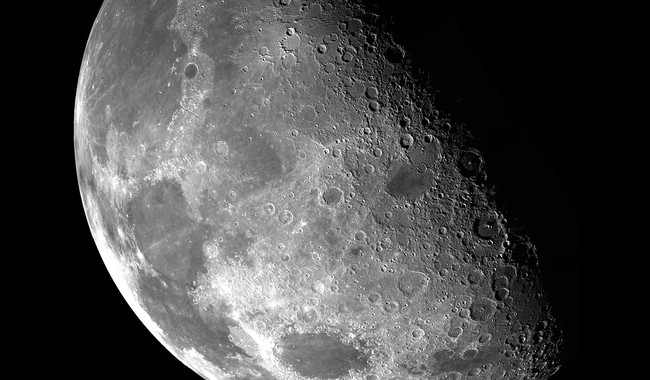
The Artemis II crew has sent back photographs of the Moon’s far side and distant Earth that feel new and urgent, and NASA’s lunar flyby this week packs historic milestones, scientific observation and a test of deep-space operations as Orion carries astronauts farther from home than any humans in decades.
The mission’s images are striking: the Moon’s shadowed hemisphere appears alien, textured and remote, and Earth is often no more than a pale crescent in the black. Those frames remind us that space exploration still delivers moments of pure perspective, showing the planet and its nearest neighbor as parts of a vast, indifferent canvas. The Artemis II crew are both tourists and scientists, tasked with returning photos and data that will shape future missions.
Another photograph underscores how small Earth looks from deep space, a thin curve against an endless void that highlights the distance Orion has traveled. Seeing our planet reduced like this gives the mission a cinematic quality, but it also drives home the technical challenges of operating so far from immediate help. The crew’s ability to take crisp, scientifically useful photos while managing systems and schedules is a reminder of training and equipment coming together under pressure.
Those images are more than postcards. During Monday’s flyby, the team intends to gather measurements and observations intended to inform landing site selection and to map regions in ways unavailable from Earth. The mission will also track historic Apollo locations and scout areas of interest for future exploration, blending nostalgia with practical reconnaissance. The scientific return will help shape decisions about where astronauts might safely touch down in future Artemis missions.
As Artemis II swings around the Moon on Monday, astronauts will track historic Apollo sites, scout future landing zones and capture rare views of nearby planets.
NASA outlined the assignment Sunday during its daily Artemis II mission status briefing at Johnson Space Center in Houston.
“The two Apollo sites they’ll be able to see here at the beginning are the Apollo 12 and 14 landing sites as they progress through the several hour period where the moon is illuminated,” Artemis II Lunar Science lead Kelsey Young said.
The flight plan encompasses a long sequence of operations that test communications, navigation and crew routines during periods of blackout when Orion passes behind the Moon. Maintaining telemetry, scheduling observations and preserving crew health on these timelines takes careful staging and rehearsed procedures. These are the sorts of logistical hurdles that turn bold plans into repeatable programs.
The Artemis II timeline carries symbolic and practical milestones: reaching a distance beyond the Apollo-era record, executing a close approach to lunar terrain for observation, and handling predicted loss of signal as the spacecraft moves into eclipse. Those moments are more than checkboxes; they represent how far American human spaceflight capabilities have progressed in hardware and mission design. Each milestone will be analyzed to reduce risks for subsequent missions involving crews landing on the lunar surface.
Monday, April 6
- 12:41 a.m.: Orion [the spacecraft that carries the four Artemis II astronauts around the Moon] enters lunar sphere of influence
- 2:20 a.m.: Crew sleep begins
- 10:50 a.m.: Flight Day 6 begins, Crew wake up
- 1 p.m.: NASA+ coverage of lunar flyby begins.
- 1:56 p.m.: The crew will surpass the record for human’s farthest distance from Earth previously set by Apollo 13, at 248,655 miles from Earth.
- 6:47 p.m.: Predicted loss of communications as crew heads behind the Moon (estimated 40-min.)
- 7:02 p.m. Orion closest approach to the Moon
- 7:05 p.m.: Orion reaches maximum distance from Earth
- 8:35 p.m.: Orion enters period with Moon eclipsing the Sun
- 9:20 p.m.: Lunar observation period (flyby) concludes
- 9:32 p.m.: Solar eclipse period concludes
- 10:50 p.m.: Live downlink event
Photography from Artemis II will be compared with decades-old Apollo imagery and modern orbital maps to refine geological context and help identify interesting features. Scientists will look for differences in lighting, shadowing and surface texture that only flyby perspectives can reveal. These observations inform future instrumentation needs and help plan where robotic or human explorers should focus their efforts.
There’s also a human element: the crew gets a rare chance to witness the Moon’s far side directly and to experience the distance that separates us from Earth. That experience will produce not just data but reflections recorded by crew conversations, images and mission commentary that feed public interest and scientific curiosity. As the mission completes its flyby and begins the return arc, engineers and researchers will start the careful work of turning those images and measurements into actionable plans for the next chapters of lunar exploration.
It’s a busy, precise operation: navigation checks, observational windows and data downlinks all have to line up to maximize scientific value during a short but critical period of lunar proximity. The photos and readings returned now will be studied for months, serving as raw material for decisions about where humans will walk next on the Moon. Artemis II is both a test flight and a scouting expedition, and its visual record is already reshaping our view of the lunar far side.


Add comment