
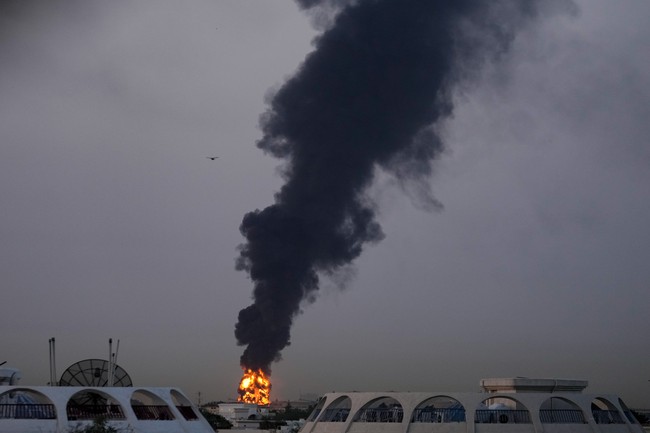
The UAE’s Minister of State at the Ministry of Foreign Affairs, Lana Nusseibeh, gave a clear, sharp message about Iran’s recent attacks: they threaten global stability, commerce, and regional security, and the UAE stands firmly with the United States in pushing back. She outlined how Iran’s campaign of missiles and drones targets Gulf neighbors, threatens the Strait of Hormuz, and aims to reshape the region by coercion rather than diplomacy. Nusseibeh argued for collective action and warned that allowing Iran to dictate global prices for essentials is unacceptable, reinforcing a U.S.-led response as the right course. Her remarks spotlight a decisive moment where allies must choose strength over appeasement to protect trade, energy, and peace.
The interview made one thing plain: the UAE sees Iran’s strikes as more than local aggression. “Iran’s attack on Gulf allies of the United States and Jordan is an attack on the entire world and the world economy,” she said. Nusseibeh emphasized that interfering with the Strait of Hormuz is not just a regional provocation; it’s a global economic threat that demands an international response. From a Republican viewpoint, her stance validates a policy of firm deterrence and coalition pressure rather than hesitant diplomacy that risks emboldening Tehran.
She painted a stark picture of Iran’s intent and capabilities. “Effectively, Iran is trying to give the global economy a heart attack,” she said. “We should not allow Iran, a state sponsor of terrorism, to set the global price for food and gas.” Those sentences cut to the core of why allies should act together: the ripple effects of disrupted shipping and energy flows would hammer everyday people and markets worldwide. Nusseibeh argued that President Donald Trump’s call for a coalition was about recognizing the shared stakes many nations have in the Gulf, not about shirking responsibility.
The facts she cited are hard to shrug off: Iran launched an unprecedented barrage of missiles and drones, and much of the fallout has landed on the UAE. Nusseibeh noted that Iran fired over 2,200 missiles and drones at the UAE, an escalation aimed at coercion rather than negotiation. Tehran apparently calculated that overwhelming strikes might split Gulf states from the U.S., but the reaction has been the opposite: deeper alignment and a readiness to defend shared interests. This is exactly the moment allies should double down on interoperability and intelligence sharing to prevent further escalation.
Nusseibeh also framed the confrontation in ideological terms, explaining why Iran views the UAE as a target beyond mere geopolitics. The UAE projects an open, prosperous model that stands in contrast to Tehran’s repression. She said Iran attacked because the UAE represents values and success that threaten the regime’s narrative, and that threat makes the emirates a deliberate target in Iran’s wider campaign to intimidate neighbors.
“The answer is because we are an idea that threatens Iran. Because we are open, we are progressive, we are tolerant, we’re a vibrant economy” Nusseibeh observed, calling out the ideological roots of Tehran’s aggression. That line explains why the UAE’s response is more than transactional; it’s existential. By defending the UAE, partners are defending an alternative to Iran’s theocratic model, which has financed proxies and pursued nuclear and missile programs at the expense of regional stability.
Nusseibeh laid out a clear, measured policy preference: pursue diplomacy when possible, but make sure Tehran understands there are real consequences for state sponsorship of terrorism. She argued that Iran’s strikes show a regime unprepared to engage seriously on “well-understood concerns” like its nuclear program and ballistic missiles, choosing instead to press advantages through force. The UAE’s position is pragmatic—back negotiations, but only from strength, with partners ready to act if Tehran crosses red lines.
On the subject of U.S.-UAE ties, Nusseibeh left no doubt where her country stands. “The UAE has fought side by side with the United States in over six coalitions in our history. We have shared values, we have shared history with the United States. We have interoperability with the United States. They are a clear partner to us in regional security, and we intend to double down on that. Today we are looking at a threat to the international community at large that needs to be stopped in whatever way possible.” That declaration underscores a commitment to collective defense and strategic partnership rather than hedging or neutrality.
Iran’s strategy of attempting to isolate and intimidate Gulf states has backfired, strengthening bonds with Washington and other concerned partners. Nusseibeh made the practical case that allowing Iran to set terms for energy and food markets would be catastrophic for consumers and national economies everywhere. From where the UAE stands, deterrence backed by solid alliances is the sensible path forward to keep trade routes open and to prevent Tehran from gaining leverage through aggression.
Editor’s Note: For decades, former presidents have been all talk and no action. Now, Donald Trump is eliminating the threat from Iran once and for all.


Add comment