
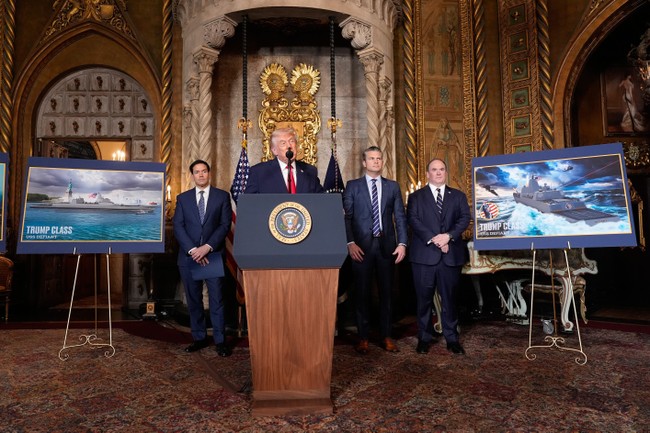
I’ll explain the new “Trump-class” naval initiative announced in the Oval Office, report who spoke and what they promised, highlight the planned fleet and job-creation benefits, and preserve the key quotes and embeds as shown.
President Donald Trump, with Secretary of War Pete Hegseth and Secretary of the Navy John Phelan at his side, unveiled an ambitious naval build-up described as a revival of American sea power. The plan centers on a new line of “Trump-class” battleships, beginning with the U.S.S. Defiant, and is framed as both a national security necessity and an industrial renaissance. Secretary of State Marco Rubio joined the event and echoed the administration’s emphasis on restoring domestic shipbuilding and maritime might. The announcement cast the effort as long overdue and vital to deterrence.
The president stood before images of the U.S.S. Defiant and made clear his backing for immediate construction of these vessels. He argued that the ships will outclass anything the world has seen and stressed the historical precedent of American battleship construction. Trump tied the program to a broader economic promise, saying the project will bring back shipyards and thousands of skilled manufacturing jobs. The White House framed the ships as symbols of “peace through strength” and of renewed U.S. industrial capacity.
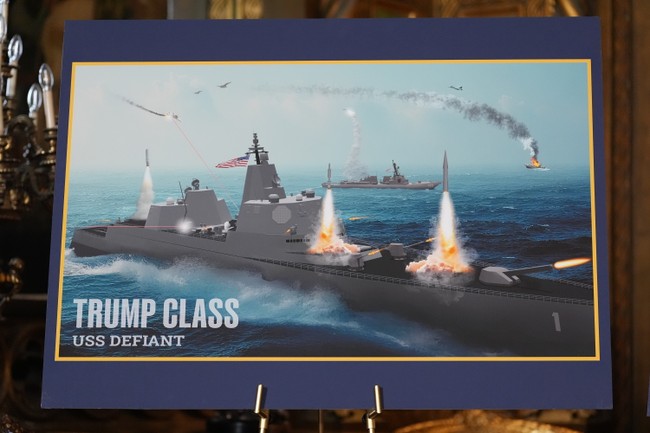
…very large, the largest we’ve ever built… battleships,” Trump said. “You know, we used to build the Iowa, the Missouri, the Wisconsin, the Alabama, many others. We had big battle ships. These are bigger, but they will be 100 times the force, the power. There’s never been anything like these ships. These have been under design consideration for a long time.
[…]
These are the best in the world, they’ll be the fastest, the biggest, and by far, 100 times more powerful than any battleship ever built.
WATCH:
The administration presented the initiative as both a deterrent and an economic stimulus, noting the dual returns on security and jobs. Trump emphasized that restarting large-scale shipbuilding will revive coastal and inland shipyards and spur private-sector investment. He described the loss of that industrial base as a national mistake that this program seeks to correct. Officials painted the ships as catalysts for a broader commercial shipbuilding revival.
WATCH:
The initial plan calls for two battleships to get underway immediately, with the Defiant leading a projected series of ten vessels. Alongside the battleship program, the Navy is said to be expanding its carrier fleet and evolving carrier design to meet modern threats. Trump celebrated recent maritime interdiction claims and linked successful sea patrols to lives saved and crime reduced, arguing that strong naval power reduces the flow of drugs and criminal networks. He stressed the practical benefits of maritime control as part of homeland security.
After the president spoke, he invited Secretary of War Pete Hegseth to address the room and explain the doctrine behind the push. Hegseth framed the project as restoration of an American warrior ethos and an active investment in deterrence that previous leaders allegedly neglected. He framed the return to major surface combatants as a deliberate choice to back words with resources. Hegseth insisted the move represents an unapologetic reassertion of American strength.
Mr. President you’re exactly right, there are no fishing poles, no fisherman, and no fishing boats. Just drug dealers and narcoterrorists, and with every strike, we’re saving American lives. No other president was willing to do real deterrence, that’s exactly what’s happening.
It’s an honor to be here Mr. President, Mr. Secretary, Secretary Rubio, to talk about what “Peace through strength” really looks like. You can talk about it, or you can invest in it and you can build it. And that’s exactly what President Trump is doing.
Hegseth highlighted recruitment, rebuilding the armed forces, and deterrence as practical outcomes of the new investments. He declared plainly that American strength is back, underscoring a Republican argument that credible force prevents conflict. The War Department framing tied the ships to a multi-domain posture that includes space and advanced systems. Officials asserted these steps will reshape strategic calculations for decades.
This new class, these new investments, will be the types of things that for decades, for centuries, the American people will look back and thank President Trump for having the vision and the willingness to invest right now, in capabilities we need today, tomorrow, and long into the future. So, Mr. President, thank you for this investment.
Secretary of the Navy John Phelan described the Trump-class requirement as validated by fleet commanders and essential to future naval operations. He promised a highly capable vessel marrying heavy offensive guns with command-and-control of drones and warships. Phelan argued logistics and industrial capacity underpin victory and that rebuilding shipyards amplifies both military and commercial maritime industries. He framed the Defiant as a visible symbol of American resolve wherever it sails.
What I’ve learned is not only is the president’s idea a good one, it’s something that the Navy desperately needs and now has a formal requirement for. The future Trump-class battleship, the U.S.S. Defiant, will be the largest, deadliest, and most versatile — and best looking warship anywhere on the world’s oceans.
I want to thank the President for his vision to make this game-changing capability for the United States Navy.
The IOWA was designed to go on the attack with the biggest guns. And that’s exactly what will define the Trump-class battleships. Offensive firepower from the biggest guns of our era. This ship isn’t just to swat the arrows, it is going to reach out and kill the archers.
Now this new battleship will command everything from warships, to drone, and everything in between. We’re going to make battle groups great again.
Logistics wins war, and that kind of shipbuilding is the spark that will ignite the industrial base and help power the commercial shipbuilding that the president has called for.
WATCH:
Secretary Rubio closed by framing the project as not only a military step but an industrial and generational investment in American manufacturing. He cast the shipbuilding push as restoring the nation’s capacity to make things again and as a long-term gain for national security and prosperity. The administration set an aggressive timeline, with construction said to begin immediately and a two-year target for the Defiant’s build window. The event presented the program as decisive action to reclaim maritime dominance and domestic industry.
WATCH:
The president answered questions about timing and reiterated his commitment to swift construction and rapid expansion of naval power. The announcement closed with officials emphasizing that these ships are intended to deter threats and back up American foreign policy with credible, visible force. The entire presentation was positioned as a clear choice to invest in defense, industry, and American leadership at sea.


Add comment