
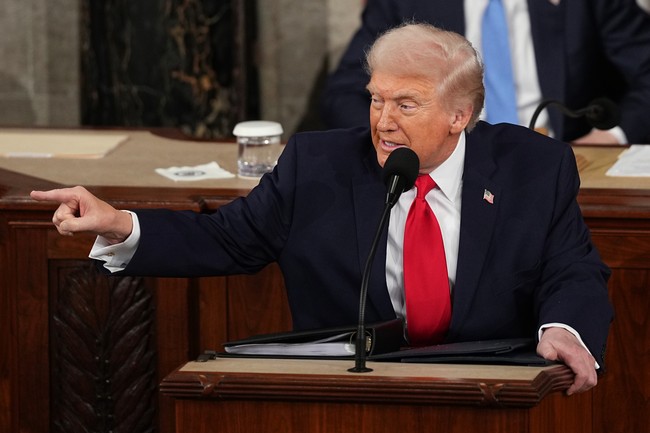
President Trump’s State of the Union left the Democratic side visibly rattled, with dramatic walkouts, audible interruptions, and a string of sharp moments that provoked raw reactions. Republicans and onlookers saw a performance that highlighted divisions and forced many Democrats into uncomfortable displays of emotion. The night mixed praise for military heroes with partisan conflict, and the gallery’s responses became the story as much as the speech itself.
Early on, Representative Al Green’s outburst and subsequent removal set the tone for a tense night. Within minutes, a handful of Democratic lawmakers were on their feet, some leaving in plain sight while others tried to maintain composure. The atmosphere felt less like a measured exchange and more like a high-stakes theater of confrontation.
Former President George W. Bush press secretary and Fox News political analyst Ari Fleischer called it what it was: disrespectful. The criticism underscored how unusual it was to see decorum break down during what is traditionally a ceremonial, unified moment. Viewers on both sides noticed the stark contrast between presidential protocol and the raw reactions in the chamber.
House Minority Leader Hakeem Jeffries urged a disciplined approach, asking his members to sit in what he described as “silent defiance,” but several representatives ignored that guidance. Ilhan Omar and Rashida Tlaib, in particular, voiced their objections loudly, drawing immediate rebukes from the president and sparking viral clips online. Those exchanges quickly became shorthand for how the night unfolded for many viewers.
.@realDonaldTrump lambastes Democrats on holding up the DHS funding bill while @IlhanMN shouts at him from her seat.“You should be ashamed of yourself — not standing up. You should be ashamed of yourself – not standing up to end deadly sanctuary cities that protect the criminals and enact serious penalties for public officials who block, in many cases, drug lords, murderers [from getting deported].”
Some Democrats reacted visibly: tears, clenched jaws, and muttered words that were captured on camera and replayed across social feeds. Senator Elizabeth “Fauxahontas” Warren and Senator Michael Bennet appeared on the verge of tears, with Warren muttering under her breath and Bennet chewing his lip. Those snapshots fed a narrative that Republicans seized on — that the opposition was emotionally unprepared for the policy critiques and personal stories the president delivered.
Certain moments were meant to unite rather than divide, especially when the president honored service members who had been attacked in the capital. The tribute to Army National Guard Specialist Sarah Beckstrom and U.S. Air Force Staff Sgt. Andrew Wolfe was meant to be solemn and healing, and it did provide a high point for many in the audience. Yet some members of Congress did not stand, and that refusal drew its own headlines and social commentary.
The president also told stories that pulled strong reactions, like the account of Sage Blair and the controversy surrounding medical decisions for minors. That segment produced visible discomfort from some progressive representatives, and those reactions became as much a part of the narrative as the policy proposals themselves. Clips of its aftermath circulated quickly, framing public perception before policy details could be digested.
Across the chamber, faces and body language told an immediate story about the partisan temperature. Some lawmakers appeared furious, others stunned, and still others looked as if they were trying to process the evening in real time. The visual record of the night reinforced how polarized the moment had become.
Commentators and pundits weighed in almost immediately, turning the gallery’s moments into talking points for the cable hour. Supporters of the president argued the reactions proved their point about the opposition’s priorities, while critics accused the administration of staging political theater at the expense of decorum. Either way, the footage of the night will be used in the coming days by both sides as evidence that the culture wars are far from resolved.
Ultimately, the State of the Union became a mix of patriotism, policy and theater. It offered Republicans material to press their agenda and gave Democrats moments to decry and criticize. The visual and viral nature of the night means those reactions will continue to shape the storylines around the speech long after the cameras power down.


Democrats stopped being pro-American long ago. Trump just made them admit it publicly.