
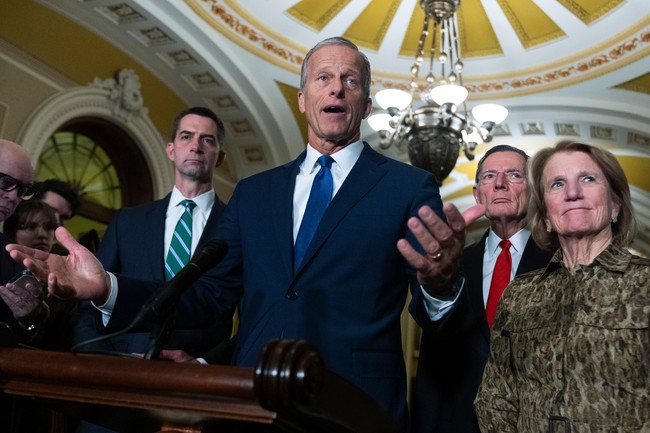
Senate Majority Leader John Thune’s handling of the SAVE America Act has reignited scrutiny of how he first rose to power in 2004, when his narrow defeat of Tom Daschle hinged on questions of residency and voter registration integrity. Critics say the choices Thune now makes in the Senate clash with the tactics and themes that built his reputation two decades ago, and they want him to match past rhetoric with present action.
John Thune’s 2004 victory over Tom Daschle is still a political touchstone for many conservatives, remembered as a fight over authenticity and voter rules. Thune unseated the then-Senate minority leader by just 4,508 votes, and the campaign’s energy came from spotlighting perceived gaps in how residency and voter registration were being handled. That fight shaped a narrative that Thune could take on entrenched insiders and win by pressing election-related issues that resonated with voters back home.
At the center of that campaign was a residency controversy involving Daschle’s Washington, D.C., residence and his voter registration in South Dakota, which fueled complaints that he had become disconnected from his constituents. Conservative activists and independent researchers framed the story as a problem of lax enforcement and insider privilege. For many grassroots activists who backed Thune, exposing those details felt like protecting the ballot box from manipulation and maintaining local control over who votes where.
Alongside residency concerns in 2004, there were widespread claims about voter registration drives and irregularities that inflamed the electorate. Republican poll watchers challenged numerous ballots amid allegations of duplicate registrations and other irregularities tied to organized registration efforts on reservations. Thune’s supporters credited his campaign’s focus on those issues with delivering the margin that won the seat and with energizing a base that cared deeply about election integrity.
Today Thune sits in one of the most powerful roles in the Senate, and the expectations that come with that office are different from the grind of a single statewide race. The SAVE America Act, the main election-integrity vehicle this session, would require documentary proof of citizenship for voter registration and mandatory photo ID at the polls, among other changes. It drew strong support from many conservative voters and House Republicans, but it ran into a Senate where procedural rules and the 60-vote norm remain decisive.
As majority leader, Thune has been criticized for declining to use aggressive procedural tactics to try to force a vote or overcome the filibuster threshold for the SAVE America Act. He has argued that legislative reality and arithmetic matter in Washington, insisting that leadership must be pragmatic about what can pass. “It’s about the votes. It’s about the math,” Thune told reporters, defending his decision to let the bill proceed in regular order. “I have to be the clear-eyed realist about what we can achieve here.”
That line has not gone over well with many activists who helped elevate him, who view procedural caution as political surrender when the policy aligns with the fight that launched his career. Critics say letting the bill stall signals tolerance for a status quo they believe permits sloppy registration practices and undermines trust in elections. They argue a leader who once hammered residency and registration loopholes ought to marshal every tool to institutionalize tougher standards nationwide.
https://x.com/RYboating/status/2054530900353057255
Thune’s defenders counter that federalizing election rules clashes with traditional conservative principles favoring state-administered elections and local control. They warn that a one-size-fits-all federal approach risks unintended consequences and constitutional fights that could worsen public confidence rather than restore it. Those arguments appeal to a strain of conservatism that prizes incremental reform and deference to states, even as they frustrate grassroots activists pushing for sweeping federal mandates.
The tension reveals a deeper choice about how conservatives pursue election integrity in a divided Senate: prioritize achievable, state-focused reforms and long-term strategy, or push hard for dramatic national rules that energize the base now. For many activists, Thune’s past campaign is not just history; it is a standard by which they judge his current credibility. They see inconsistency when a leader who benefited politically from election-integrity messaging now hesitates to force a fight on the same issues.
As the political season cranks up and candidates and activists weigh priorities nationwide, Thune faces increasing pressure to reconcile leadership pragmatism with the activist energy that propelled his rise. The debate over the SAVE America Act and the tactics to pass it shows how past victories can morph into expectations, and how those expectations can become a persistent test of political identity and resolve.


Add comment