
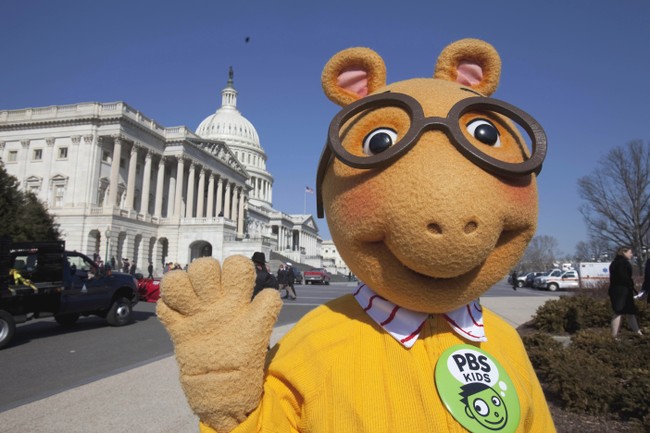
The Corporation for Public Broadcasting has been dissolved after nearly six decades, a result of congressional rescission of federal funding and a board vote to formally wind down the nonprofit; this piece walks through what happened, why Republicans supported the move, the reactions from CPB leadership, and the broader questions about how public media could survive without taxpayer dollars.
The 58-year-old Corporation for Public Broadcasting is officially gone, and conservatives are celebrating what they see as a long-overdue end to taxpayer subsidies for outlets perceived as left-leaning. For years Republican lawmakers argued that federal support funneled into PBS, NPR, and affiliate stations amounted to funding ideological content. That debate finally ended when Congress rescinded funding, and the CPB board chose dissolution rather than limping along defunded.
Republicans framed the funding cut as a defense of taxpayers and a rejection of government-backed media narratives. The move was enabled by a Republican House and Senate leadership that decided to act where previous Congresses would not. Supporters point out the $1.1 billion funding shortfall created by the rescission and argue that Democrats who once screamed about the consequences failed to find replacement money when it mattered most.
The drama from CPB leadership was immediate and theatrical, with public statements emphasizing the gravity of the decision and the need to protect public media assets. Patricia Harrison, CPB’s president and CEO, framed the choice as necessary to preserve the system’s integrity. Her statement reads in part, “When the Administration and Congress rescinded federal funding, our Board faced a profound responsibility: CPB’s final act would be to protect the integrity of the public media system and the democratic values by dissolving, rather than allowing the organization to remain defunded and vulnerable to additional attacks.”
That line about “democratic values” is the predictable rhetoric, and it didn’t sit well with critics who see the CPB as an institution that spent decades cozying up to liberal cultural narratives. For many conservatives, ending federal support was never about destroying educational content but about preventing the federal purse from underwriting partisan programming. The dissolution is being cast as accountability finally catching up to an institution that long avoided market discipline.
The board of the Corporation for Public Broadcasting voted to dissolve the organization after Donald Trump‘s successful effort last year to roll back federal funding.
The move is not a surprise: After it became clear that funding would not be restored, the CPB announced in August it would be shutting down operations. It had about 100 employees, and a transition team has been in place since the fiscal year ended September 30.
When critics warned that rescinding federal funding would cut off weather alerts or leave rural Americans in the dark, Republicans scoffed at the melodrama. The internet and commercial broadcasters continue to exist, public safety communications are not exclusively tied to CPB funding, and plenty of private and local outlets can fill informational gaps. Those alarms, many argued, were political theater meant to frighten lawmakers into maintaining subsidies.
The legal and administrative steps to dissolve CPB proceeded methodically, with a board vote and paperwork filed to comply with nonprofit rules. A Joint Status Report noted the timeline for voluntary dissolution filings and the distribution of assets after settling debts. With operations already scaled back, management moved to execute the board’s decision and begin winding down responsibilities to affiliates and grantees.
On December 10, 2025, CPB held a board meeting at which the directors unanimously voted to formally dissolve the corporation and for management to take all necessary steps to effectuate dissolution of the corporation. Under the D.C. Non-Profit Code, a nonprofit corporation is required to provide Office of Attorney General (“OAG”) with advance notice of the corporation’s voluntary dissolution. D.C. Code § 29-412.02(g). Thereafter, a nonprofit corporation files Articles of Dissolution with the Mayor of D.C., through the Corporations Division (DCRA), after settling debts and distributing assets. As a result, CPB intends to file its Notice of its Voluntary Dissolution on or about January 15, 2026 and its Articles of Dissolution on or about January 30, 2026.
One practical question lingered throughout this fight: if the programming is really indispensable, why not shift to a commercial model instead of relying on taxes? Critics, including conservative commentators, repeatedly floated the idea that public media could sell ad time or forge corporate partnerships to fund content. That option was rarely embraced publicly by CPB or its supporters, who preferred the shield of federal funding to market tests.
One thing that rarely gets discussed is the option of going with a commercial model. Why is it considered a non-starter for these outlets to resort to the standard practice of selling ad time? For all of the touted quality of the content on the network and the expressed need for PBS to be available, one would think that corporate arrangements could be made to keep the network afloat.
The collapse of CPB serves as a lesson in consequences: institutions that rely on steady federal support can be swept away when political winds shift. Conservatives argue this is healthy for the media ecosystem — it forces organizations to adapt, win viewers and donors, or fail. To defenders of taxpayer stewardship, letting public outlets compete in the marketplace is preferable to indefinite subsidies that mask ideological bias.
In the months ahead, local stations and remaining public media entities will make choices about funding, partnerships, and programming models. Some will pursue commercial avenues, others will seek philanthropic support, and a few may not survive the transition. For those who wanted government out of media funding, the CPB’s dissolution is a vindication of that view and a concrete change from policy to consequence.



Add comment