
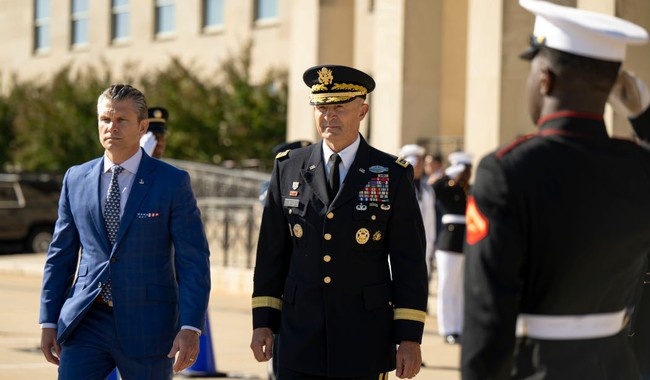
At Normandy, U.S. Defense Secretary Pete Hegseth used the sacred ground of Colleville-sur-Mer to deliver a blunt message about the state of the West, tying the sacrifices of 1944 to modern challenges and arguing that open borders and soft leadership are threats to the freedoms won by earlier generations.
Hegseth spoke on the 82nd anniversary of D-Day at the Normandy American Cemetery and deliberately framed the visit as more than a remembrance ceremony. He honored the fallen while warning that liberty must be actively defended, not assumed. His remarks pushed back on the easy complacency of many European capitals and called for realistic policies to secure Western societies.
Allied commanders chose Normandy in 1944 because it offered the best chance to break into Fortress Europe and catch German planners off guard. The invasion overcame cliffs, tides, and fortified positions to deliver the largest amphibious assault in history. About 156,000 Allies landed that day, including 73,000 Americans, and the cost was staggering yet decisive.
https://x.com/visegrad24/status/2063314776613130436
The first day of the landings produced immense sacrifice, with Allied casualties exceeding 10,000 and more than 4,400 dead, many of them Americans at Omaha Beach. Those losses helped establish the Western Front, relieve Soviet pressure in the east, and set a course for Nazi Germany’s defeat within a year. The graves at Colleville-sur-Mer are a stark reminder that freedom often comes with a high price.
Hegseth did not shy from drawing a contrast between the seaborne assault of 1944 and the contemporary movement of people and ideas across Europe’s borders. He warned that “beaches are stormed by different dangerous ideologies,” a phrase meant to wake policymakers to demographic and security shifts. For him, the comparison serves to highlight that threats evolve and that leaders must adapt their defenses accordingly.
Today’s challenges are not tanks and artillery but porous borders, strained integration systems, and cultural friction that can erode social cohesion. Poorly managed migration has pressured public services, reshaped urban demographics, and in some places contributed to rising crime and instability. Those are practical problems that demand practical, sometimes tough solutions rather than platitudes about compassion without responsibility.
Hegseth framed his remarks as a rebuke to passive leadership, urging European countries to stop treating symptoms as if they were benign or inevitable. He asked when political elites will confront these realities instead of treating them as secondary concerns. The point was blunt: national survival depends on the will to act and on policies that preserve social order and cultural continuity.
Pete Hegseth (United States Secretary of War) warns Europe must fight ‘migrant invasion’ in D-Day speech – ‘Today beaches are stormed by different dangerous ideologies.’
The speech comes just one day after JD Vance suggested British student Henry Nowak would still be alive if Britain had taken firmer action on what he termed a ‘mass invasion of migrants’.
Addressing attendees at the Normandy American Cemetery in Colleville-sur-Mer during commemorations for the 82nd anniversary of the D-Day landings on Saturday, the US Secretary of War drew a stark comparison between the historic Allied assault and immigration.”
Sadly, today, different European beaches are stormed by different, dangerous ideologies,” he said.
Those comments will anger some and alarm others, but the purpose was to force a sober conversation about preservation of a way of life. Hegseth tied American leadership to the postwar order that kept Europe peaceful and prosperous for decades, and he suggested that order is not self-perpetuating. If allies wish to remain free and prosperous, they must accept the responsibilities that come with sovereignty.
Strong borders and clear national priorities are not illiberal by default; they are tools for sustaining a political community capable of defending liberty. Nations that cannot control who crosses their frontiers lose the capacity to preserve institutions and customs that define them. The rows of crosses in Normandy remind us that the flag and the country are worth defending in concrete ways.
Honoring the fallen at Colleville-sur-Mer means learning the practical lessons of sacrifice: vigilance, resolve, and clarity of purpose. Hegseth’s speech aimed to restore that sense of purpose by linking memory to policy, and by insisting that freedom’s defenders must be willing to act. The message is simple and demanding: liberty requires guardians who understand both history and hard choices.



Add comment