
The Department of War has sealed agreements with major tech firms to bring frontier artificial intelligence into classified military networks, raising questions about speed of decision-making, human control, and how to validate AI in lethal contexts while competitors pursue similar paths.
Military planners and tech leaders are racing to understand how AI will change the battlespace, and the Pentagon’s recent contracts are a direct response to that urgency. Advanced algorithms can compress analysis and decision loops that once took humans minutes or hours into milliseconds, shifting how commanders will sense and act. That speed promises advantages but forces policymakers to confront difficult questions about oversight and error.
The deals put cloud giants, chipmakers, startups, and cutting-edge labs inside the Department’s secure environments. Deploying these tools on IL6 and IL7 networks aims to accelerate data synthesis and situational awareness, and supporters argue it will augment warfighter decision-making in complex operational environments. Critics worry about privacy, target selection, and whether machines might be allowed to make lethal choices without reliable human control.
The Pentagon said Friday that it has reached deals with seven tech companies to use their artificial intelligence in its classified computer networks, allowing the military to tap into AI-powered capabilities to help it fight wars.
Google, Microsoft, Amazon Web Services, Nvidia, OpenAI, Reflection and SpaceX will provide their resources to help “augment warfighter decision-making in complex operational environments,” the Defense Department said.
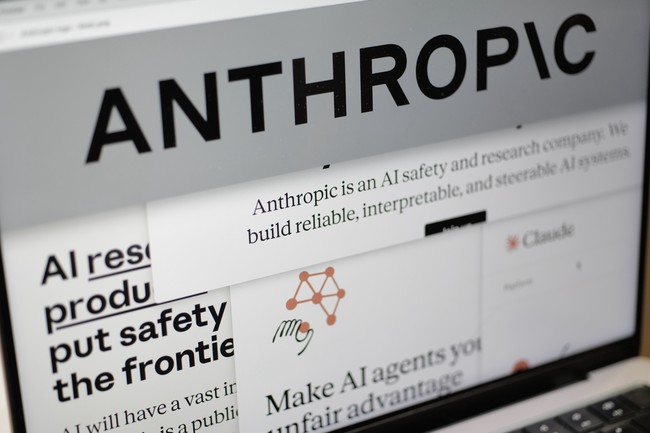
Notably absent from the list is AI company Anthropic, after its public dispute and legal fight with the Trump administration over the ethics and safety of AI usage in war.
Independent analyses emphasize both promise and peril. AI can shrink the sensor-to-shooter cycle, improve logistics, and predict maintenance needs, which could save lives and resources in intense campaigns. It can also surface sensitive personal data in the process or produce errors that cascade into misidentification on the battlefield, creating moral and legal headaches.
The technology can help the military reduce the time it takes to identify and strike targets on the battlefield, while aiding in the organization of weapons maintenance and supply lines, according to a report in March from the Brennan Center for Justice.
But AI has already raised concerns that its use could invade Americans’ privacy or allow machines to choose targets on the battlefield. One of the companies contracting with the Pentagon said its agreement required human oversight in certain situations.
Adding more firms to the roster appears to be ongoing as the Pentagon finalizes access to a broader set of capabilities. Reports indicate Oracle later joined the initial group, expanding the field to eight companies and deepening the mix of cloud, compute, and research partners. That growing roster highlights the Department’s intention to tap multiple architectures and approaches rather than betting on a single supplier.
Yet technical capacity does not settle the policy questions. When an AI system can recommend or execute actions in microseconds, the military must decide what role a human retains and how to certify that the system selects legitimate targets. There is no historical precedent for validating automated target selection at this scale, and standards for testing, auditing, and rules of engagement must be created.
Operational transparency and robust validation will matter for both domestic politics and international norms. Allies will want assurances that automated systems respect law of armed conflict principles, and adversaries will study any gaps. The United States will need methods to vet models, verify provenance of training data, and lock down classified environments against tampering.
Practical safeguards include enforced human-in-the-loop policies for lethal effects, detailed logging and audit trails, and rigorous red-team testing against deception and adversarial inputs. Those measures are technical but also institutional; commanders, lawyers, ethicists, and technologists must share authority over deployment decisions. Absent clear boundaries, speed advantages could become reputational and strategic liabilities.
Nothing about modernizing the force with AI negates the need to outthink rivals who will try to match or exploit these tools. Moscow and Beijing are investing heavily in machine-enabled warfare, from autonomous logistics to intelligence analysis, and the U.S. response must be both defensive and creative. Understanding the capabilities on both sides is the baseline of deterrence and resilience.
The new agreements mark a turning point: the Pentagon is deliberately integrating commercial frontier AI into hardened networks, and that reality demands urgent attention to governance. Policymakers and military leaders must move fast to craft rules, testing regimes, and oversight mechanisms that let commanders harness speed while preserving human judgment and legal responsibility.
https://x.com/DoWCTO/status/2050232609108623768?s=20

Add comment