
Checklist: Critique Nancy Pelosi’s interview and legacy; Highlight key moments she touted—the SOTU tear, January 6, and the Affordable Care Act; Note her retirement and the shift in Democratic politics; Preserve direct quotes and embeds exactly as provided.
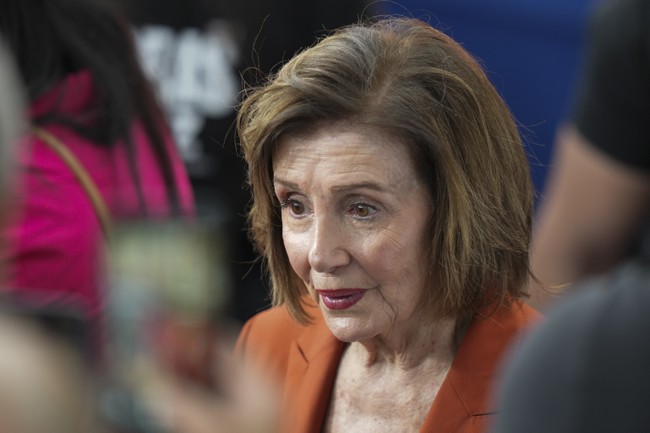
On ABC’s This Week, Jonathan Karl sat down with former Speaker Nancy Pelosi to look back on her long political career and her plans to retire at the end of 2026. Pelosi confirmed she will not seek another term, and the interview dwelt on the moments she believes define her legacy. The timing felt odd, aired during the slow news stretch between holidays, but the content was rich with Pelosi self-appraisal and partisan nostalgia.
Pelosi spent much of the conversation celebrating her time in power and revisiting the theatrical moment when she tore up President Trump’s State of the Union speech in 2020. She described that act as meaningful and enduring, claiming the photograph of that moment is her “most requested” autograph. To many conservatives, that episode symbolized everything wrong with a Washington elite more interested in spectacle than sober governance.
The infamous moment came on February 4, 2020, when the then-House Speaker from California ripped up Donald Trump’s State of the Union speech on the floor of the House of Representatives moments after he had concluded giving his address. Pelosi thinks it was a profound statement that will go down in history. I think she’s right that it will go down in lore, but not for the reasons she envisions: in my view, it will be remembered as one of the most toxic modern-day examples of banana republic-style politics in our country. I imagine the Founders would have been appalled.
But the “Speaker Emerita” still thinks she’s some sort of hero[.]
She also spoke proudly about her role in January 6 and of the work of the J6 Committee, calling their efforts “wonderful” and expressing “very proud” sentiments for that panel. In the interview she recounted how her daughter, Alexandra Pelosi, happened to be there filming and described those events as part of a family witness to history. Conservatives have pushed back hard on that narrative, arguing the whole episode has been reinterpreted to settle political scores and silence dissent.
Pelosi suggested the Democrats would regain the House in 2026 and anointed Rep. Hakeem Jeffries as the next House Speaker, saying he “will be ready.” That optimism underestimates the party’s internal shift toward younger, more progressive figures who are reshaping Democratic priorities. Pelosi’s old-guard approach no longer sets the party’s direction in many districts that now favor more radical proposals.
When asked about her legacy, Pelosi chose the Affordable Care Act as her crown jewel, repeatedly returning to the law as the reform she most wants to be remembered for. She said, “The healthcare bill was a way of not only meeting health needs, but financial needs of families.” Many on the right argue that ACA’s outcomes have fallen short, leaving healthcare costs high and subsidies unsustainable for the federal budget.
Former House Speaker Nancy Pelosi (D-Calif.) said she hopes to be remembered for the Affordable Care Act (ACA), one of the most consequential pieces of health care legislation in American history.
“How do you want to be remembered?” ABC News’s Jonathan Karl asked Pelosi in an interview that aired Tuesday.
“Not so fast, I’m still here,” Pelosi jokingly replied. “Well, I’m very proud of the Affordable Care Act. I think that it was — just made a big change in terms of what working families need for their health and their financial health.”
“We’ll continue to have that fight. It’s not a value that is shared with the Republicans. So, if I were [to be] remembered for one thing, it would be the Affordable Care Act,” she added.
Her claim that ACA improved families’ financial health sits awkwardly beside persistent complaints about rising premiums and narrower networks in some markets. Critics on the right say the subsidies and entitlements baked into the system will strain federal finances and push the country closer to more expansive, government-driven healthcare schemes. Those outcomes contradict Pelosi’s rosy summary of the law’s impact.
Pelosi framed her tenure as one of determination, political savvy, and institutional defense, but conservatives view much of it as partisan overreach. She boasted about holding power for decades, yet the political landscape has shifted to favor different voices and priorities within the Democratic coalition. Her departure signals a generational and ideological change that will redefine who leads the House Democrats going forward.
Throughout the interview Pelosi mixed sharp political lines with theatrical moments and family anecdotes, confident in the narrative she wants history to hold. She warned that former President Trump “will pay a price in history,” while conservatives counter that accountability should be evenhanded and focused on restoring constitutional norms. Regardless of how supporters or detractors score her legacy, Pelosi’s final years in office will be a focal point for debates over partisanship, institutional norms, and the future direction of the Democratic Party.
Salem Radio host and CNN commentator Scott Jennings mockingly suggested that, because of Pelosi’s prolific day trading skills, President Trump should hire her to be in charge of the Social Security Administration.
WATCH:
In case you missed it, here’s the Pelosi ABC “This Week” interview.
WATCH:


She is NOTHING but an Evil Old Hag Partisan Criminal Politician who has served Satan and the Enemies of America very well! Serving the US Constitution and the actual Citizenry; NOT SO MUCH, and actually she poisoned America with evil which actually killed off many American Citizens!
Nothing but Hell awaits her and she is going to pay for it all in the deepest pit of hell for eternity!