
I’ll call out the political roots of Los Angeles’s homelessness crisis, point out the gap between rhetoric and results from Democrat leaders, highlight Barack Obama’s recent remarks and quoted lines verbatim, and place the blame squarely on progressive policies while keeping the tone sharp and direct.
Former President Barack Obama recently described Los Angeles’s homelessness situation as “morally — ethically speaking… an atrocity.” That blunt language landed on a podcast and set off a wave of reactions from conservatives who have been warning about the consequences of permissive policies for years. The critique is notable because Obama helped shape the national conversation, yet his admission feels overdue to those watching California’s decline. People on the ground are living the results while politicians offer explanations that don’t change outcomes.
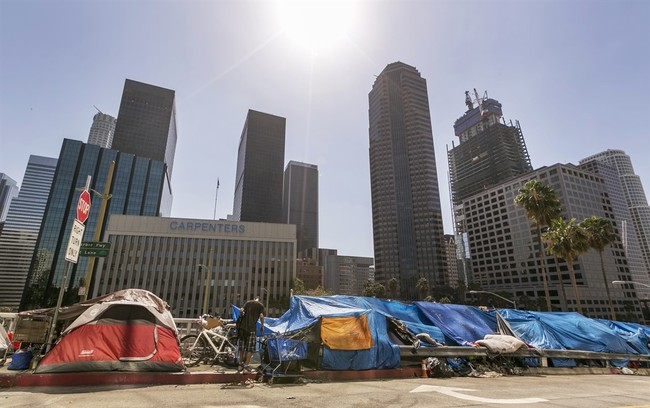
When a national figure says what locals have been saying for a decade, it’s a validation of concerns many voters have been raising. The remark that “the average person doesn’t want to have to navigate around a tent city in the middle of downtown” is as straightforward as it gets, and it highlights the daily reality residents face. Still, reality and policy often diverge in big cities governed by progressive majorities. Electing the same faces and expecting different results is not a plan; it’s a pattern.
“I think it is morally — ethically speaking — it is an atrocity that in a country this wealthy, we have people just on the streets, and we should insist on policies that recognize their full humanity — people who are houseless — and be able to provide them with the help and resources that they need,” Obama said.
“We should recognize that the average person doesn’t want to have to navigate around a tent city in the middle of downtown,” he added. “That’s a losing political strategy.”
It’s tempting to applaud the sentiment while asking why the policies that produced the crisis remain in place. Governors and mayors who champion sanctuary directives, generous benefits without accountability, and relaxed enforcement have large influence in California. Yet those same officials often escape meaningful political consequences despite worsening conditions. Voters who endure the results deserve answers, not excuses.
Conservatives have long argued that a blend of enforcement, accountability, and targeted services works better than blanket giveaways and decriminalization of public disorder. California’s experiment with an alternative approach has been costly and visible. Streets crowded with tents and public spaces transformed into crisis zones are the kind of outcomes that erode trust in government competence. When former national leaders describe such scenes as an atrocity, it’s a sign the status quo has reached a tipping point.
One of the more striking parts of the interview comes when Obama attempts to translate moral concern into political strategy: “That doesn’t mean that we care less about those folks.” He goes on to say that Democrats need to “try to figure out how do we gain majority support and be practical in terms of what we can get through at this moment in time and build on those victories.” Those lines frame the problem as primarily tactical rather than structural.
But we should also recognize that the average person doesn’t want to have to navigate around a tent city in the middle of downtown.
Political tactics matter, but tactics without accountability have produced the current mess. Los Angeles and Sacramento are run by leaders who have defended policies that prioritize ideology over results. When leaders insist more of the same will fix a situation they created, it strains credibility. Voters see the consequences in daily life and want leaders who will change course.
The real debate should be about what policies reduce homelessness sustainably, not who gets the moral high ground. That means honest conversations about enforcement, mental health care, treatment options, and clear standards for public space. It also requires pushing back on ideas that have been tried and failed on a massive scale. Standing up for safe streets and accountable programs is not cruelty; it’s practical governance.
Obama’s comments are a rare public acknowledgment from a leading Democrat that the crisis is severe and visible even to national figures. But acknowledgment without action is just a soundbite. For Californians who live amid the fallout, the question is simple: will their leaders change policies that have demonstrably delivered worse outcomes? Until that happens, the rhetoric will ring hollow and the problem will deepen.
Editor’s Note: Gavin Newsom, Karen Bass, and the “progressives” are ruining California.



Add comment