
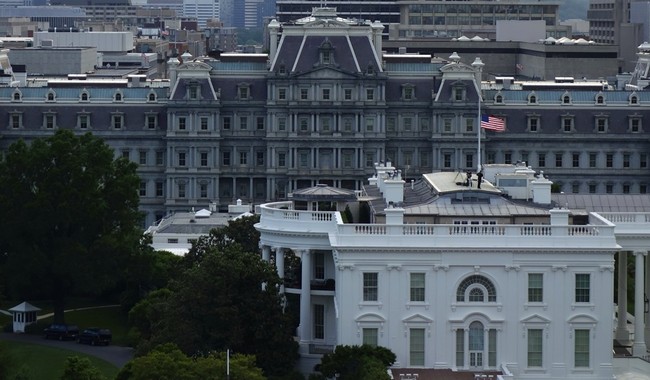
The Trump administration proposed cleaning and repainting the 137-year-old Eisenhower Executive Office Building, but preservation groups rushed to court and won a temporary freeze, prompting outrage from conservatives who view the move as judicial overreach and a protection of grime over restoration.
President Trump called the building “an ugly building” and suggested painting it stark white to match the refreshed look he wants for the White House complex. Administration officials agreed not to proceed with any beautification through the end of the year while litigation plays out, a pause that critics say turns trivial renovations into a constitutional squabble. The dispute has become a symbol for many Republicans of judges and preservationists blocking a popular, cosmetic project.
That reaction isn’t surprising given how politicized every small White House decision has become. Conservatives see a clear double standard when privately funded improvements for the presidential residence attract fierce opposition, while bureaucrats and agencies routinely spend massive sums on their own renovations without similar scrutiny. The contrast fuels the suspicion that the left will use any legal tool to frustrate a Republican president’s agenda, even when the change is purely cosmetic.
The sudden declaration from GSA [General Services Administration] comes after the DC Preservation League and Cultural Heritage Partners, a law firm focused on historic preservation, filed a complaint on Friday against the Trump administration after President Donald Trump speculated about painting the building next to the White House stark white.
During a Fox News interview last week, Trump said that the Eisenhower Building “was always considered an ugly building” and lamented its historic gray color — the exterior facade is mostly composed of polished granite, slate, and ornate cast-iron trim — saying that “gray is for funerals.”
Conservative commentators have been blunt. As one observer put it, “Once again, we have to ask why we had an election a year ago to pick a president when judges can simply prevent him from doing anything they don’t approve of?” That sentiment captures the anger over what many see as unelected judges intervening in routine executive choices. The fight over paint quickly morphed into a fight over who gets the final say on the look and function of federal property when the president’s vision clashes with preservationist sensitivities.
White House spokesman Davis Ingle summed up the administration’s view in a short, pointed statement emphasizing pride in the presidential residence. The message framed the repainting as restoring pride and giving the White House the “glory it deserves,” and dismissed opposition as partisan outrage. That tone reflects a broader conservative belief that governing should include obvious, visible improvements that reflect national pride, not an endless negotiation with preservation lawyers.
President Trump is making the White House beautiful and giving it the glory it deserves. Only people with a severe case of Trump Derangement Syndrome would find a problem with that.
On the other side, preservation advocates argue the building’s fabric and historic appearance deserve protection and that any changes must be carefully vetted. Greg Werkheiser of Cultural Heritage Partners praised the temporary freeze and warned that the court battle will be consequential for landmarks nationwide. Their position is that longstanding materials and finishes are part of the building’s historical record and must be defended through legal channels.
“The government’s temporary freeze of the president’s plans marks a significant step forward,” Greg Werkheiser, founding partner of Cultural Heritage Partners, said in a statement. “The court battle lies ahead, and we are fully conscious of just how much is at stake for this wonderful building and for the rest of America’s treasures protected under law.”
Republicans counter that venerability does not equal sanctity when the result is a rundown appearance that reflects badly on the presidency. From their view, the building’s gray, dingy facade isn’t a historic virtue so much as a visual liability, and restoring or updating it is a reasonable exercise of executive stewardship. To critics, the legal challenge smells less like a defense of art and history and more like a partisan attempt to thwart visible signs of Trump-era restoration.
The episode is part of a larger pattern Republicans highlight: routine actions taken by conservative leaders often face outsized resistance from agencies, courts, and preservation groups, while similar moves under other administrations draw little fire. That perceived inconsistency fuels the argument that the left deploys lawfare selectively to achieve political aims, turning neutral civic projects into proxy battles. When aesthetic choices become litigated issues, the heart of the complaint is less about paint and more about who gets to govern.
Given the temporary court order, the administration will hold off for now, but the clash is likely to continue in filings and hearings. For many conservatives, this fight is a test case about the limits of judicial authority and how far preservation law should reach into small-scale improvements. The dispute over the Eisenhower Building’s color may seem trivial to some, but to others it is another front in the ongoing battle over control of public space and the ability of elected leaders to implement visible change.



l Get paid over $110 per hour working from home. l never thought I’d be able to do it but my buddy makes over $22150 a month doing this and she convinced me to try. The possibility with this is endless….
Copy This ____________ EarnApp1.Com