
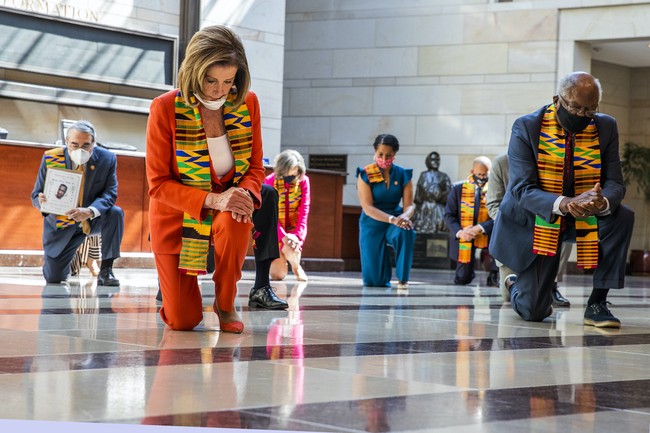
The Democrats treated the fifth January 6 anniversary like a scripted school play, full of staged grief and theatrical outrage, while critics called out the overreaction and pointed to political motives; Republicans and commentators pushed back hard, and one Vice President got the last laugh with a single viral image. This piece examines the spectacle on Capitol Hill, the performative statements from top Democrats, the online mockery that followed, and how a single JD Vance post summed up the response.
You could feel the choreography from the moment statements rolled out from party leaders. Prominent Democrats framed January 6 as an existential threat to the republic, deploying dramatic language meant to cement a lasting narrative about that day. To many conservatives and unaffiliated observers, the rhetoric smelled less like sober reflection and more like political theater designed to fuel a narrative for the midterms and beyond.
“The insurrection and attack on the U.S. Capitol were among the most dangerous threats to the rule of law in America since our nation’s founding,” Schiff said. That kind of hyperbole ignores a century of genuinely catastrophic events and invites ridicule more than reflection. Comparisons to World Wars and 9/11 are natural in the minds of many, and when leaders pick one incident as uniquely dire, it opens them up to challenges about perspective and proportion.
“January 6, 2021, showed us how fragile our democracy is,” Kamala . For a lot of Americans, the takeaway is different: it proved that a small, chaotic breach of a building is not the same as an organized attempt to overthrow government institutions. The line between warning about future risks and weaponizing the past for present political advantage is thin, and critics argued Democrats crossed it with dramatic ceremonies and solemn rituals.
“The day democracy was placed at greater risk than it has been in a century, and more than a century,” Senate Minority Leader Chuck Schumer echoed. Such declarations read like a script written to maximize outrage rather than foster sober national debate. When leaders repeatedly use apocalyptic language, they invite skepticism and push people to view solemn memorials as cynical public relations exercises.
On Capitol Hill the visuals were vivid and, to many, off-putting: candle lighting, impassioned speeches, and ritualistic gestures that bordered on the theatrical. House Minority Leader Hakeem Jeffries and Senator Schumer staged events that critics likened to a quasi-religious service rather than a measured political response. For a segment of the public, that kind of pageantry undermines the sincerity of the message and signals an effort to manufacture a sense of perpetual emergency.
Not surprisingly, social platforms lit up with mockery and memes as commentators, pundits, and everyday users took aim at the solemnity. Conservative voices and independent observers alike seized on the gap between the drama on display and what they called an inflated narrative. The backlash was immediate and fierce, turning solemn statements into fodder for satire and relentless online ridicule.
The White House itself disrupted some of the Democrats’ talking points, releasing information and critiques that undercut the polished narratives circulating in some corners. That move shifted some of the framing and gave critics more material to question the motives behind the commemorations. In the midst of all this, pundits and hosts across media took turns dissecting the spectacle, amplifying the partisan split.
Online reactions varied from stiff rebukes to gleeful mockery, and a handful of media figures happily stoked the outrage machine. Radio host Clay Travis added his voice to the pile, leaning into the comedic angle and amplifying the skeptical response to the ceremonies. These moments made it clear that political theater rarely persuades people outside the choir; often it just fuels partisan fire.
With so many voices piling on, one response rose above the rest for sheer economy and punch. Vice President JD Vance posted a single AI-generated image that captured the absurdity many conservatives felt, and that one image spread like wildfire. Sometimes the sharpest political commentary requires neither long essays nor solemn proclamations—just a simple, biting image that lands perfectly.
Theatrics will keep coming as both parties sharpen messages heading into the election year, and this anniversary felt like an early round in a larger messaging war. Democrats leaned into ritual and moral urgency, while Republicans and independent critics framed that approach as melodrama meant to sway voters. The clash highlighted how the same event can be cast in wildly different lights depending on who controls the microphone.
Editor’s Note: The mainstream media continues to deflect, gaslight, spin, and lie.
Add comment