
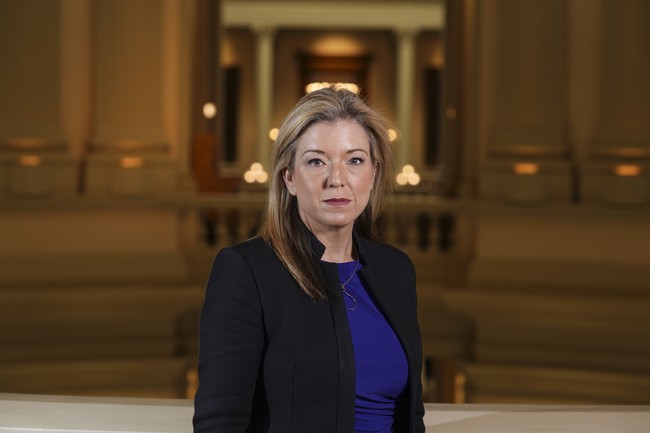
The Georgia Supreme Court race turned into a fight over transparency and free speech after a federal judge temporarily stopped a state judicial commission from publicly revealing alleged conduct violations by two Democratic-backed candidates, raising questions about whether voters are being kept in the dark and whether judicial power is being used to shape election outcomes.
Voters deserve basic information about who is asking for their votes, especially in a contest that could flip the court from a conservative to a liberal majority. A federal judge in Georgia issued a temporary restraining order preventing a state judicial committee from issuing a statement about alleged violations by two candidates who campaigned together and appeared at reproductive rights events. That move effectively muzzled a watchdog panel right before a decisive election, and people on both sides should be uncomfortable with judges deciding what voters can know.
The Judicial Qualifications Commission cited conduct rules that bar candidates from coordinating campaigns or taking positions on issues they might later face on the bench. The panel argued the candidates’ shared appearances and joint campaigning crossed that line. Instead of letting the committee publish its findings and let voters judge the significance, a federal judge stepped in and cited the First Amendment to block the disclosure.
A federal judge in Georgia barred a state judicial committee from publicly commenting on judicial conduct rule violations the panel says two Democratic-backed state Supreme Court candidates committed ahead of Tuesday’s election.
U.S. District Judge Leslie Gardner, issuing a temporary restraining order, “ruled on Monday “that the special committee convened by the Judicial Qualifications Commission (JQC) of Georgia was not allowed to issue a Sunday statement accusing Miracle Rankin and Jen Jordan of violating judicial conduct rules after campaigning together and appearing at reproductive rights events.
The judge’s ruling quoted constitutional protections and found the candidates’ speech about reproductive rights, endorsements, and support from pro-choice organizations was protected. The text of the order read in part that none of the language contained explicit pledges and that the candidates would suffer “immediate and irreparable” injury if the committee released the letters. Those are legal findings, but the political optics are raw: a judge tied by family to a high-profile political figure makes a call that benefits particular candidates just days before an election.
In her ruling, Judge Gardner wrote that Rankin and Jordan were protected by the First Amendment. “Accordingly, Plaintiffs’ speech regarding ‘reproductive rights,’ abortion, or having endorsements or support from pro-choice platforms, ‘EMILYs LIST’, or other organizations (not directly representing a political party) is protected by the First Amendment. Here, none of the language cited by Defendants in the JQC Letters contain explicit pledges,” it read. Gardner also said Rankin and Jordan would suffer ‘immediate and irreparable’ injury from this information.
This legal framing matters, but so do voters’ right to information. If candidates appear together, campaign for the same causes, or join partisan events, that signals affiliations and priorities that should be disclosed. Blocking a watchdog body from publishing findings about possible rule violations strips away context voters need to weigh candidates’ judicial philosophies and independence.
There’s also a glaring conflict of perception: the presiding judge is the sibling of a nationally prominent partisan activist. That family link fuels questions about impartiality, regardless of the legal merits. When a judge connected to an influential political figure halts a transparency move that helps certain candidates, it looks like the judicial process is being used to influence outcomes rather than to neutrally interpret the law.
The race itself was never truly nonpartisan in practice, with prominent national figures endorsing candidates on both sides and state leaders publicly backing incumbents appointed by a prior administration. Campaigning for a judiciary is always a tricky balance between free speech and the need to maintain the appearance of neutrality for judges. But voters should get more information, not less, about where prospective justices stand and who they’re allied with.
Preventing the release of the JQC’s findings raises questions about the proper role of courts in run-up disputes and sets an uncomfortable precedent about what kinds of scrutiny candidates can face. If commissions tasked with policing judicial conduct can be silenced before an election, the incentive for transparency and accountability takes a hit. That outcome does not serve the public interest in an era when courts hold enormous power over policy and rights.
The immediate legal argument rests on speech protections, but the broader issue is democratic: are voters meant to decide with full information? A rushed order that keeps potentially relevant information from the public undermines confidence in both the electoral process and judicial impartiality. This controversy highlights the tension between constitutional protections and the public’s right to know about those who would sit on the state’s highest court.
Add comment