
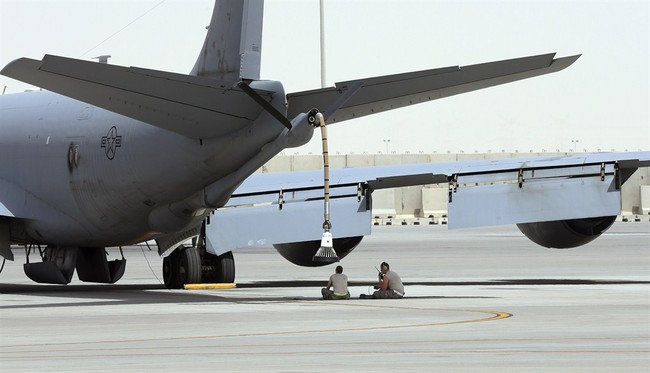
The U.S. military confirmed a KC-135 aerial refueling plane crashed in western Iraq, killing four crew members and leaving two missing as search-and-rescue continues; CENTCOM said the loss was non-combat and is under investigation, and President Trump issued a pointed warning to Iran as tensions in the region remain high.
The aircraft went down in the afternoon with six crew aboard, and CENTCOM reported early Friday that four have been confirmed deceased while efforts continue to find the remaining two. Families are being notified and the military is withholding names until next of kin have been informed. This is a painful reminder that our service members face danger even outside direct combat.
“At approximately 2 pm ET on March 12, a U.S. KC-135 refueling aircraft went down in western Iraq,” the official account of U.S. Central Command posted to X. “Four of six crew members on board the aircraft have been confirmed deceased as rescue efforts continue.” CENTCOM also emphasized the crash was not the result of combat operations.
“The circumstances of the incident are under investigation,” they report. “However, the loss of the aircraft was not due to hostile fire or friendly fire.” Officials initially said a second aircraft was involved in the event and noted that the other plane landed safely after the incident.
The KC-135 Stratotanker is mission-essential, keeping fighters and support aircraft aloft across the region by refueling them mid-air, and losing one in any circumstance is a serious operational and human loss. Aircrews who conduct aerial refueling do some of the most precise and demanding flying in the Air Force, and the ripple effects of this accident will be felt across units that rely on that capability. Safety investigators will have to piece together what happened amid wartime operational tempos and harsh regional conditions.
As officials handle notifications and the investigation proceeds, the political backdrop can’t be ignored. President Trump, speaking forcefully from a position he frames as decisive leadership, warned Tehran that American power remains unmatched. “We have unparalleled firepower, unlimited ammunition, and plenty of time – Watch what happens to these deranged scumbags today,” he wrote on his social platform.
That kind of language reflects a clear Republican viewpoint: show strength, deter aggression, and back our troops without equivocation. The families of the fallen deserve certainty that Washington will both bring answers about this crash and maintain the operational edge that protects forces abroad. Strong posture and swift, sensible responses reduce the chance that incidents like this get tangled up in strategic miscalculations.
The Pentagon’s public statements have been tight-lipped beyond the core facts, and congressional leaders had yet to issue detailed comments early Friday. In the absence of immediate public steps from Capitol Hill, military commanders on the ground and investigators will lead the initial phase of the response, coordinating search-and-rescue and evidence collection. That process will be critical for determining whether maintenance, weather, mechanical failure, or other factors played a central role.
Operationally, the loss will require rebalancing tanker availability across mission sets that support coalition and partner aviation. Commanders will assess tanker tasking and sortie schedules to make sure frontline units do not lose critical aerial refueling support during ongoing operations. Air Mobility Command and CENTCOM will both be focused on sustaining mission readiness while managing the human side of the tragedy.
The nation owes these airmen and their families honesty, respect, and a swift but thorough investigation. While political leaders trade rhetoric, the men and women in uniform and the civil servants who support them must get the facts and the resources needed to prevent future tragedies. For now, the focus is on rescue efforts, family notifications, and learning whatever lessons emerge from the probe into this avoidable loss.


Add comment