
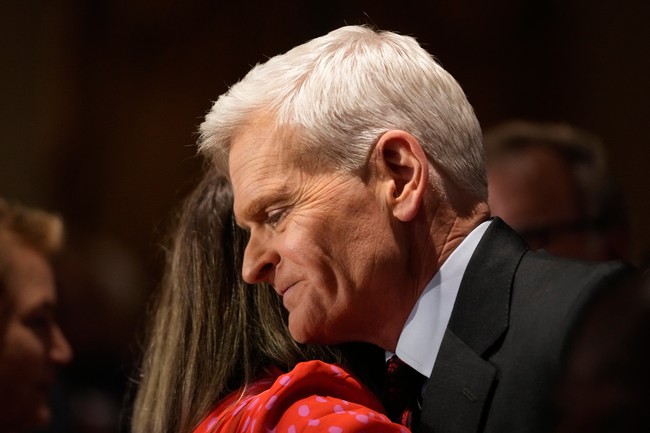
Louisiana Republicans dismissed Bill Cassidy at the ballot box and he promptly cast a consequential vote that aligned him with Democrats on war powers over Iran, a move that underscores how his political standing has crumbled and how he is now acting with little to lose.
Voters in Louisiana made their preference clear in the recent GOP primary, denying Cassidy a spot in the runoff and effectively ending his bid for a third Senate term. That result follows years of simmering tension with the party base, rooted in votes and positions that rankled conservative voters. The primary produced a head-to-head between a Trump-endorsed congresswoman and the state treasurer, leaving Cassidy out of the contest entirely.
Just days after his primary defeat, Cassidy joined a small group of Republicans in advancing a resolution that aims to curtail the president’s war-making authority regarding Iran. He voted with Sens. Susan Collins, Lisa Murkowski, and Rand Paul to discharge the resolution from committee, producing a 50-47 result. That move marked the first time this measure ever moved forward after multiple prior attempts failed.
This vote is the latest in a string of decisions that widened the gap between Cassidy and conservative voters, starting most notably with his 2021 vote to convict President Trump after January 6. Republicans in Louisiana censured him for that choice, and the memory of that vote followed him through subsequent political fights. When a Trump endorsement arrived for a rival candidate, the state GOP’s message about Cassidy was unmistakable and the primary confirmed it.
Cassidy’s behavior leading up to the Iran vote followed a familiar pattern: he delayed announcing his intentions and revealed his final choice only at the last moment. Observers who tracked his handling of impeachment fallout would recognize the tactic — stall until the heat dies down, then act. That approach may have calcified perceptions among voters that he is out of step with the party’s mainstream.
The procedural dynamics of the Senate vote mattered as much as Cassidy’s yes. Three other Republicans did not cast ballots that day, and their absences helped the resolution pass out of committee for the first time. Those no-shows included members whose presence could have blocked the measure, so the result reflects both active defections and passive failures to protect conservative positions in the chamber.
“Vote by vote, Democrats are breaking through Republicans’ wall of silence on Trump’s illegal war. Today proved our pressure is working: Republicans are starting to crack, and momentum is building to check him. We are not letting up.”
The resolution itself faces long odds even after advancing; it still must clear additional votes in the Senate and then move through the House before it could reach the White House, where a veto is expected. There are not enough votes to override a veto, so the exercise functions largely as a political demonstration rather than a likely change in policy. Democrats understand that and are using these floor fights to force public records of Republican votes ahead of the midterms.
Cassidy’s decision to support the measure looks political and personal at once: political because it places him on record with Democrats on a high-profile foreign policy issue, and personal because, having lost his primary, he has diminished incentives to appease the conservative base. For a senator labeled a lame duck by his own party, those incentives shift quickly toward positioning himself for a post-Senate role or toward legacy choices that matter more to his own judgment than to party unity. Either way, the move illustrates how electoral rejection can free a politician to act in ways that would have been unthinkable while seeking reelection.
Outside Louisiana, the episode will be read as another example of the broader stakes in Republican politics: how loyalty to party priorities and to the preferences of conservative voters matters to career survival. It also serves as a reminder that procedural outcomes in the Senate can hinge on a handful of votes and on attendance, with real consequences for the narrative heading into national elections. Cassidy’s recent path shows how quickly an established political career can shift from secure to precarious once the base turns away.



Add comment