
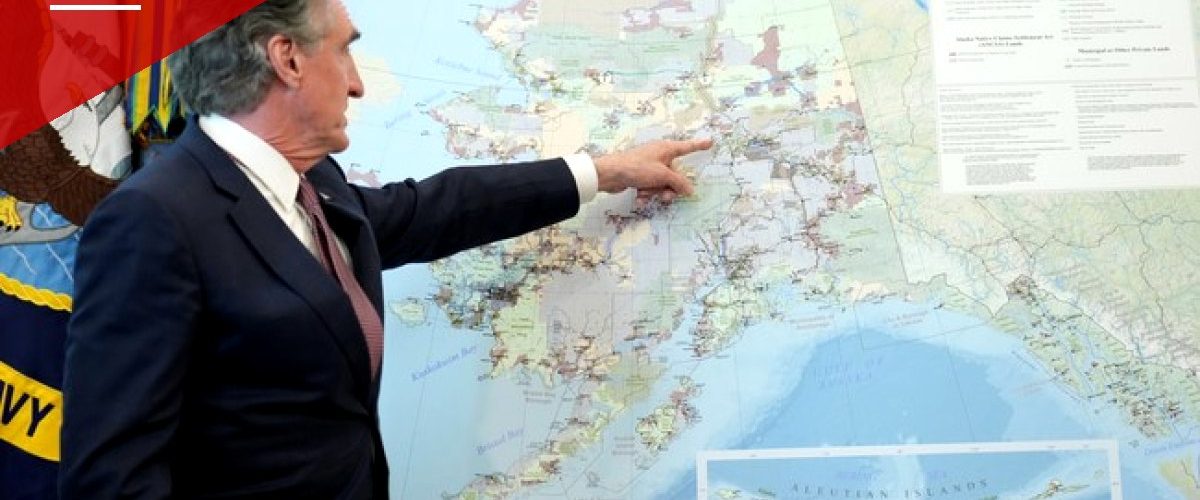
U.S. Secretary of Energy Chris Wright told Alaska mining executives, Alaska Native leaders, state regulators and mine workers this week that the state’s growing mineral industry cannot expand without a major buildup of energy infrastructure to support it.
Wright made the remarks during a visit to Anchorage, where he delivered the keynote address at the Alaska Oil and Gas Association’s annual conference. While in the state, he also convened a roundtable at the Fairbanks Pipeline Training Center focused specifically on the relationship between mining and energy supply in Alaska.
Alaska holds substantial mineral wealth, including rare earth metals largely sourced today from China, along with gold and other metals. But much of that wealth sits in remote parts of the state where electrical infrastructure is limited, and mining itself is a highly energy-intensive process.
“Our goal in this administration, and certainly in the Department of Energy, is to do everything we can to help all of you grow your businesses, move forward, and expand,” Wright told the gathered attendees.
Mining is not the Department of Energy’s core mission, but the department has long treated a reliable domestic mineral supply as central to its broader goals. Coal remains a major U.S. energy source, critical minerals such as graphite, rare earths, nickel and silver feed renewable energy production, uranium underpins nuclear power, and base metals like copper, aluminum and zinc are used to build the nation’s energy infrastructure.
“You can’t mine without huge energy resources; you can’t produce great energy resources without the metals from mining to build all the infrastructure,” Wright said. “So, I think these are two of the most awesome industries in the world.”
Dan Brearly, vice president of development and operations at Felix Gold, described the practical reality mining companies face on the ground in Alaska.
“The key thing that we do is turn big rocks into little rocks, and little rocks into metal,” Brearly said. “That needs a lot of power.”
For mines already drawing on Alaska’s limited electrical grid, that power comes at a significant cost — one that operators say they are willing to bear as the industry pushes to expand.
What Comes Next
Wright’s remarks did not address one option gaining attention elsewhere in the energy sector: small modular nuclear reactors. Operations like Felix Gold’s, which require substantial on-site power for equipment, buildings and housing, are seen by some observers as candidates for such reactors, which could reduce reliance on diesel fuel and simplify power supply at remote sites.
Congress has also shifted its posture toward Alaska’s resource development in recent years, moving away from policies that restricted access to the state’s mineral and energy reserves. Industry figures say substantial infrastructure investment will still be needed before mining operations can scale to meet demand for critical minerals currently sourced largely from abroad.



Add comment