
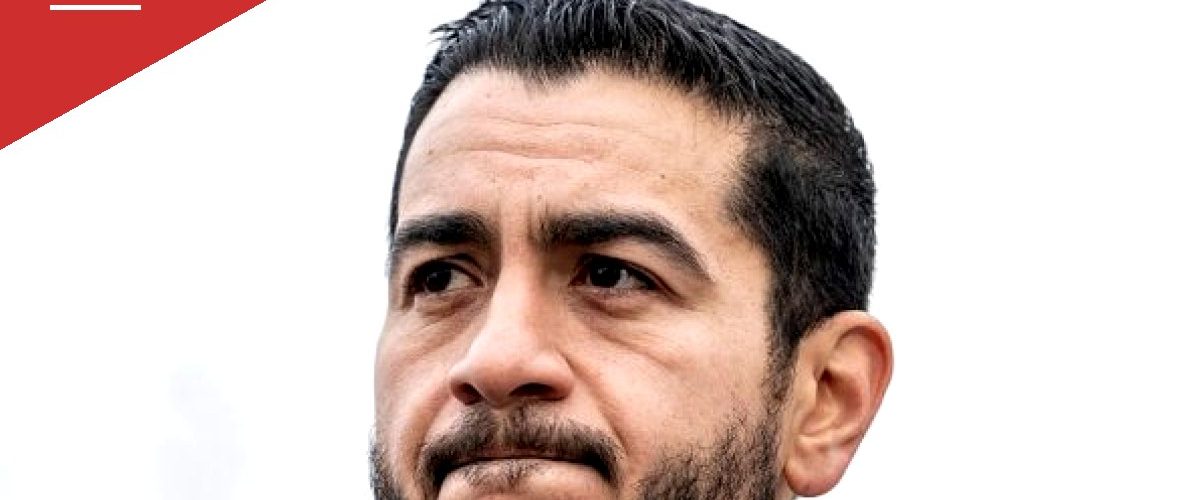
Michigan Democratic Senate candidate Abdulrahman Mohamed El-Sayed called it an “unfortunate choice” to house biological men who identify as women in men’s prisons, during a press conference in Detroit on Wednesday tied to an Epstein victim event.
The remarks came less than two weeks before the midterm election. A questioner at the event asked El-Sayed about “trans women” placed in men’s facilities, describing them as facing “very, very high rates of sexual assault” without adequate support, and asked him to address the need for “intersectionality” and “allyship” for these inmates. El-Sayed answered from behind a podium labeled “The Donald J. Trump and Jeffrey Epstein Memorial Reading Room.”
“What you’re speaking to is too often a choice that we make about failing to invest resources to keep people safe, and when it comes to investing resources to keep people safe, I think it’s important for us to realize that these are unfortunate choices,” El-Sayed said, adding that these are “unfortunate choices that we make that force people into positions of danger.”
“And what are we doing if we’re not actually invested in people’s safety, right?” he continued, saying the goal should be to “prevent it from happening, which means to make sure that people are safe and secure in their positions.”
El-Sayed did not specify how that should be accomplished, and he did not say whether he supports housing transgender-identifying men in women’s prisons instead. He said only that “we need to be really thoughtful about protecting all folks, particularly in a situation where they are incarcerated and their safety is at the hands of the state,” adding that inmates “can’t do the things or take the protections” to protect themselves and that this applies to “any and everybody who is incarcerated.”
He did not address the risk to women inmates from biological men placed in previously sex-segregated women’s facilities.
The federal backdrop
The exchange comes as the Supreme Court on Wednesday rejected an emergency request from the Trump administration to begin winding down taxpayer-funded gender-related medical services for federal prison inmates while litigation continues.
At issue is a Bureau of Prisons policy adopted this year that would end hormone therapy, surgery, and accommodations such as female undergarments, makeup, and wigs for inmates identifying as transgender. The policy follows an executive order President Trump signed on his first day back in office in January 2025, which barred federal funding for medical care intended to help inmates live as the opposite sex and directed agencies toward what the order called “biological truth.”
Government attorneys have argued the restrictions were the Bureau of Prisons’ own decision rather than a direct product of the executive order, and that maintaining prison security justified the policy on its own. The administration has also argued that hormones and related accommodations are “not medically necessary” for gender dysphoria and that transgender inmates would lose nothing medically required.
El-Sayed’s broader platform
El-Sayed has previously voiced support for minors obtaining gender-transition procedures, framing the issue in terms of medical autonomy. “I remember having great conversations with my conservative friends about right to try legislation, the idea that the government shouldn’t tell you what kind of healthcare you should have,” he has said, adding that for a minor, such decisions “should be between you and your doctor and your parents.”
His campaign platform states: “Everyone has the right to make personal decisions about their healthcare. Healthcare decisions should be made by a patient (and their parents if they are a minor) and their doctor–no one else. That includes reproductive and gender-affirming care.” The platform places this commitment within a broader call for Medicare for All, funded through taxpayer dollars, and pledges opposition to “any effort to criminalize certain medications and the use of lawfare or funding cuts to stop healthcare providers from providing full-spectrum healthcare that meet all the needs of their diverse communities.”
Add comment