
Vice President JD Vance spoke in Rocky Mount, North Carolina, laying out a sharp, pro-growth take on where the economy stands after a year of Republican leadership, citing tangible signs like rising home purchases, falling rents, lower interest rates, and generous average tax refunds for families.
Vance opened with a plain comparison that landed with voters: the personal sting of high interest offers versus the relief found at credit unions, framed as the real-world difference between competing economic directions. He stressed concrete shifts in housing and borrowing conditions and tied them directly to federal leadership choices. That framing aims to translate macroeconomic data into everyday decisions people recognize. It’s a campaign-ready narrative built on numbers and lived experience.
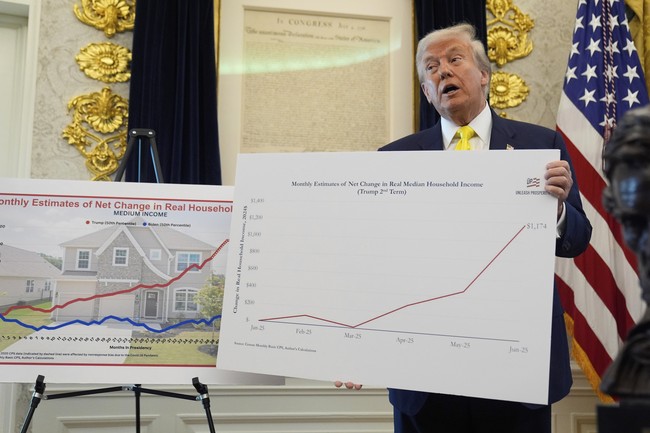
He pointed to specific improvements: new home purchases at the highest level in five years and rents easing for half a year straight, markers that signal momentum for working families. Those are the kinds of metrics that change household budgets and perceptions. Vance highlighted an average tax refund figure intended to resonate with middle-income voters. The message is simple: policy choices are making a measurable difference in people’s wallets.
That was one of many lessons the state of North Carolina taught me. But what we’re trying to do is talk about the difference between a 21 percent interest rate that the used car dealer offered me, and the 8 percent interest rate that I got offered at a credit union, and that’s pretty much the difference between the Joe Biden and Donald Trump economic plan for the United States of America. Because (applause) in just a very brief time, we’ve seen new home purchases rise to their highest level in five years, since the last time Donald Trump was president. We’ve seen the cost of rents drop for six months in a row.
We’ve seen the average tax refund that’s going to come to the people of North Carolina is about $3,700 per family, and we see interest rates that are the lowest they’ve been since the last time that Donald J. Trump was president. My friends, the president is impatient. He’s the most impatient person I have ever met, in fact. He constantly is pressing on the gas. He wants us to do more. But I stand here proud, to say that after the first year of President Donald Trump and the Congressional Republicans’ leadership, we are rebuilding the American dream. And we’re taking back this country for the people of this state.
That quoted passage serves as the speech’s core: a confident case that Republican leadership is reversing recent trends and restoring economic momentum. Vance uses a personal anecdote to make the abstract feel immediate and to draw a line between policy and personal finance. He also framed the administration’s pace as deliberate but forceful, casting impatience as a virtue. The delivery is meant to energize supporters and reassure undecided voters who care about pocketbook issues.
Messaging like this is intended to be repeated consistently through the campaign season, especially as attention spikes closer to the election. Vance urged allies to carry this story to every audience, not just friendly crowds, because persuading the broader public requires repetition and clarity. He and others believe timing matters: the electorate’s focus tends to crystallize in the months before Election Day. That makes early, sustained communication critical for shaping perceptions.
Beyond talk, Vance acknowledged the limits of message alone and emphasized the need for ongoing, verifiable economic improvement. He noted that transforming a national economy takes time and that citizens will judge results by how their bank balances look. The claim is that the indicators already shifting—housing purchases, rents, interest rates—are the start of a broader trend that voters will notice as it continues. Still, he recognized that policy outcomes, not slogans, ultimately determine political success.
Turnout was another theme: Vance stressed voting as a civic duty with existential stakes, urging citizens to treat every election as vital to the country’s future. The call to action underscored a sense of urgency that aligns grassroots energy with broader policy aims. Political operatives will view that as a reminder that wins depend on both convincing messages and committed voters at the polls. Mobilization and persuasion work together in any successful campaign cycle.
Thanks to President Trump’s leadership and bold policies, America’s economy is back on track.

Add comment