
The piece examines the public clash between Rob Reiner and Donald Trump, tracing Reiner’s activism around alleged Russian interference, his repeated attacks on Trump’s fitness for office, and the context that sharpened political tensions between the two figures.
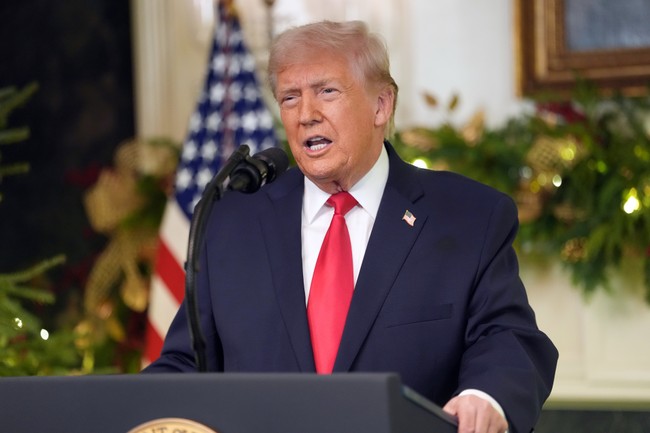
News of a tragic family killing involving Rob Reiner and his wife shocked many, and President Donald Trump remarked on the event, calling it a “sad thing” while also criticizing Reiner. That mix of sympathy and judgment set off intense reaction across media circles, because their public feud was already widely known. The backstory helps explain why comments from either side would land with additional heat.
Long before this tragedy, Reiner built a profile as a vocal critic of Trump and an organizer around concerns about Russia’s influence. He helped found the Committee to Investigate Russia, a nonprofit that positioned itself as a resource to highlight and explain alleged Russian attacks on American democracy. High-profile intelligence figures associated with the effort raised eyebrows among conservatives who saw establishment players pushing a particular narrative.
The Committee to Investigate Russia is a nonprofit, non-partisan resource provided to help Americans recognize and understand the gravity of Russia’s continuing attacks on our democracy.
Prominent former intelligence officials appeared on advisory boards connected to the committee, and their involvement has been noted by critics as part of a broader set of Washington and media actors aligned against Trump. Conservatives argued then, and some still argue now, that the Russia narrative was leveraged politically without conclusive proof that votes were switched. That skepticism shaped how many Republicans reacted to Reiner’s role and rhetoric.
When the committee released a video in 2018, viewers saw Reiner alongside figures like James Clapper and John Brennan, a pairing that underscored the partisan tone of the debate for skeptics. The video itself did not offer new evidence showing altered election outcomes, which only fed conservative claims that the campaign against Trump rested more on inference than on hard proof. For Republicans watching, the spectacle validated concerns about Washington elites coordinating messaging against a populist outsider.
Reiner’s confrontational comments about Trump were blunt and repeated across interviews and cable appearances. Those lines were designed to rally people alarmed by Trump’s presidency, but they also hardened his image among those who saw the former president as a corrective to decades of elite consensus. The rhetorical choices mattered in shaping the cultural cast of the conflict, making it personal as well as political.
“Donald Trump is the single most unqualified human being to ever assume the presidency of the United States. He is mentally unfit. Not only does he not understand how government works, he has no interest in trying to find out how it works…”
On air and in public, Reiner warned of an impending slide toward authoritarian rule if Trump remained empowered, a message that resonated with his allies but sounded alarmist to many conservatives. He argued that control of media and streets were two pillars an autocrat needs, and he urged communicators to mobilize the public against that threat. Republicans countered by framing such claims as exaggerated fearmongering intended to delegitimize a political movement that challenged established institutions.
“We have a year before this country becomes a full-on autocracy completely and democracy completely leaves us,” Reiner said. “We have to make the public absolutely aware that their democracy is being taken from them, and we have to do everything we can to make people understand that … if they lose that democracy, all of these [First Amendment rights] will be taken away from them.” [….]
“The Hollywood community is very much aware of their First Amendment rights being impinged. We saw what was happening to Jimmy Kimmel,” Reiner said Sunday. “Our job now as communicators is to start communicating to the rest of the country to let them know what is going to happen to them. The two big things that an autocrat needs is control of the media and military control of the streets.”
That rhetoric fed the perception among many conservatives that cultural elites were weaponizing national security claims to keep their preferred political order intact. For Republicans who backed Trump’s outsider agenda, Reiner’s activism felt like another front in a broader fight over who controls political narratives. The dispute therefore took on symbolic weight far beyond personal insults.
When commentators on both sides referenced Reiner’s long history of anti-Trump statements, it reinforced why Trump’s own remark would prompt a backlash and why coverage of the exchange would be so fierce. Critics of Reiner said his public posture made him a political actor rather than an impartial observer, while his supporters argued that he used his platform to warn Americans about perceived threats to democracy.
The Committee to Investigate Russia paused activity in 2019 after the conclusion of the Mueller investigation, but the episode remains a vivid example of how activism, media, and intelligence figures intersected during the Trump years. The controversy around Reiner and Trump is one more instance of how the culture wars turned figures from entertainment and government into combustible political symbols.

Add comment