
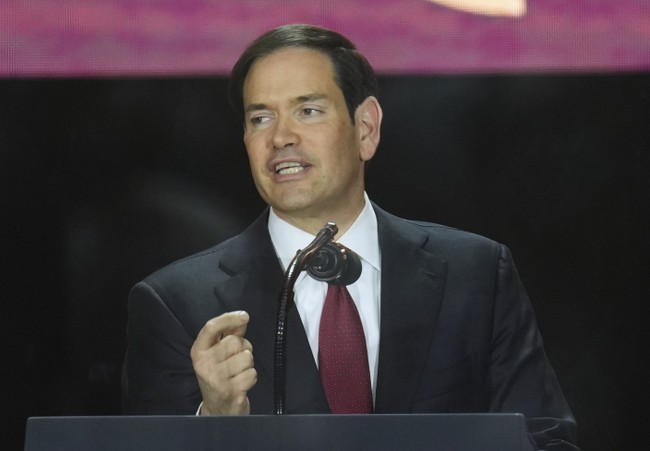
This article reports on Secretary of State Marco Rubio outlining a three-phase plan for Venezuela—stabilization, recovery, and transition—while explaining how seizure and sale of sanctioned oil will fund relief for the Venezuelan people and how U.S. leverage is being used to press the regime; it includes Rubio’s full quoted remarks and responses to criticism that the administration is “winging it.”
President Trump’s second term cabinet is presented here as a tight team, with Rubio playing a central diplomatic role alongside other senior officials. The piece notes Rubio’s frequent public presence and frames him as energetic and strategically focused on applying pressure and offering a roadmap for Venezuela’s future. That context leads directly into Rubio’s public explanation of how the administration plans to proceed.
Rubio described the effort as a deliberate three-phase approach designed to avoid chaos while using maximum leverage. The first phase he called stabilization, which depends in part on the quarantine and sanctions that have frozen Venezuelan oil assets. He stressed the practical mechanics: assets that cannot move because of sanctions are being controlled and redirected to produce revenue for the Venezuelan people.
Well, there are a lot of operational details that can’t be discussed publicly, for obvious reasons. So, as we move forward, we’ll describe our process, which is a three-fold process to Venezuela. I’ve described it to them now. Step One is the stabilization of the country. We don’t want it descending into chaos. Part of that stabilization, and the reason we understand and believe that we have the strongest leverage possible, is our quarantine. As you’ve seen today, two more ships were seized. We are in the midst right now, and in fact are about to execute on a deal to take all the oil, they have oil that is stuck in Venezuela, they can’t move it because of our quarantine and because it’s sanctioned.
We are going to take between 30 and 50 million barrels of oil. We’re going to sell it in the marketplace at market rates, not at the discounts Venezuela was getting. That money will then be handled in such a way that we will control how it is disbursed in a way that benefits the Venezuelan people. Not corruption, not the regime. So we have a lot of leverage to move on the stabilization front.
The second phase will be a phase that we call recovery. And that is ensuring that American, western, and other companies have access to the Venezuelan market in a way that’s fair, also at the same time, begin to create the process of reconciliation nationally, within Venezuela, so that the opposition forces can be amnestied and released from prisons, and brought back to the country, and begin to rebuild civil society.
And then the third phase, is of course will be one of transition. Some of this will overlap. I’ve described this to them (Venezuela) in great detail. We’ll have more detail in the days to follow. But we feel like we’re moving forward here in a very positive way.
Rubio’s timeline includes immediate, enforceable action on oil that is currently trapped by sanctions and quarantine. He gave a specific estimate of the scale: between 30 and 50 million barrels will be sold at market rates instead of at the deep discounts the regime had arranged. That revenue, he emphasized, will be managed to benefit Venezuelan citizens rather than lining the pockets of the ruling regime.
The recovery phase Rubio outlined centers on opening the market to American and western companies under fair conditions, and on national reconciliation. He said the plan intends to secure amnesties and releases for opposition figures and to let civil society leaders return and begin rebuilding institutions. That phase is meant to create the political and economic groundwork that follows stabilization.
Rubio acknowledged overlap among phases and kept operational specifics limited for security reasons, but he framed the overall strategy as already underway. He connected enforcement of sanctions to leverage, arguing the U.S. controls movement of oil and therefore controls critical sources of revenue. That leverage, he maintained, will be used to shape outcomes favorably for ordinary Venezuelans.
When accused by some senators of “winging it,” Rubio pushed back directly, invoking his own Senate experience to explain the partisan reflex at play. He defended the administration’s work as concrete and active, not speculative, and indicated additional officials would provide further details about the portfolio being managed. He stressed that the oil arrangement with PDVSA is real and producing leverage.
Some Senators were (inaudible) describing your operation variously, as in you’re winging it, there’s no plan for Venezuela going forward.
Rubio’s response underscored that enforcement creates leverage and that the administration is exercising that leverage to generate revenue and influence. He noted the Department of Energy’s role and said that further public statements would follow. The administration’s message is that these moves are both practical and strategic, aimed at restoring a functioning economy while sidelining corrupt actors.
Yeah, they’re going to say that. I used to be a Senator too, that’s what you always say when it’s the other party. Bottom line is, we’ve gone into great detail with them about the planning, we’ve described it to them. In fact, it’s not just winging it. It’s not just saying, or speculating that it’s going to happen – it’s already happening. The oil arrangement we’ve made with PDVSA (Petróleos de Venezuela, S.A., the Venezuelan state oil company) on sanctioned oil that they can’t move. Understand they are not generating any revenue from their oil right now. They can’t move it unless we allow it to move.
Because we have sanctions, we’re enforcing those sanctions. This is tremendous leverage. We’re exercising it in a positive way. The president described it last night. Secretary (of Energy) Wright will have more to say on it today, who is involved in running this portfolio. And we feel very positive that not only will that generate revenue that will be used to the benefit of the Venezuelan people, and we’re assured that that’s what the case is, but it also gives us an amount of leverage and influence and control over how this process moves forward.
The piece notes that plans often change once they meet real-world obstacles, invoking a familiar caveat: no plan survives first contact. Still, Rubio’s presentation was positioned as clear and actionable rather than vague. The administration’s approach mixes pressure with targeted economic measures intended to empower Venezuelans and to limit the regime’s access to funds.
Major operational details remain classified or withheld for tactical reasons, but the public outline—stabilize, recover, transition—provides a framework for what comes next. The next days and weeks, Rubio suggested, will bring more specifics as officials coordinate the practical steps needed to implement each phase.
Add comment